


 En
 English
 Français
 Español
Fabric vs Leather Home Office Chairs: Key Selection Factors for Buyers
Posted by Admin | 06 Nov
Content
An office chair quotation usually carries one line for upholstery, and buyers treat it as a finish choice. It is not. That line decides how the chair is cleaned, how it looks in year three, how often it is replaced, and how much of the facilities budget it consumes.
For most home office and hybrid-work specifications, fabric is the stronger default. It breathes, it accepts colour and texture easily, and it costs less per seat. Coated leather and PU lead wherever a chair has to be wiped down between users, wherever fine dust and allergen retention is a documented concern, and wherever a hard surface appearance belongs in the brief. Three variables settle the choice: indoor humidity, the cleaning capacity of the people who maintain the furniture, and the number of hours someone sits in the chair each day.
Settle the cleaning method first. Abrasion class, backing, colour range and unit price all follow from how the chair will be maintained on its worst day.
What fabric and leather mean on a contract specification
On a contract specification sheet, leather almost always means a coated split or a PU/PVC synthetic, and fabric means a woven or knitted textile whose abrasion resistance is quoted in Martindale rubs under ISO 12947-2. Those two definitions set the whole comparison.
Genuine upholstery leather falls into three commercial groups: full aniline, which is uncoated and marks easily; semi-aniline, which carries a light protective coat; and pigmented or coated split, the grade most often used on office seating. PU and PVC coverings, often sold as faux leather or leatherette, are textiles with a polymer skin. They behave nothing like hide and belong on a separate material line in any quotation.
Fabric varies just as widely. Composition, weave density, backing and finish all change the result inside the same colour card. A plain polyester weave, a chenille with a knitted backing and a loose-loop boucle can all be labelled fabric, and they will age differently under the same person in the same chair.
Definition: upholstery performance is the combination of the covering's abrasion resistance, the foam's density and resilience, and the frame's stability. Upgrading the covering does not repair a soft foam or a loose mechanism.
That is why two chairs described as leather can sit in completely different price brackets, and why two fabrics both quoted at 30,000 rubs can behave in opposite ways after 18 months of daily use.
Five factors that decide fabric versus leather
Five factors separate the two materials in a home office specification: abrasion resistance, cleaning method, thermal comfort, allergen retention and appearance retention. Each one can be checked against a document rather than an opinion, which is what makes the comparison repeatable across a multi-site order.
| Factor | Fabric | Coated leather or PU | How to verify |
| Abrasion resistance | Quoted in Martindale rubs under ISO 12947-2; contract grades are commonly specified from 30,000 rubs | Genuine leather is assessed by flex resistance under ISO 5402; coatings by rub and adhesion tests | Request the test report with laboratory name, date and specimen reference |
| Cleaning | Woven surface holds oils and ink; usually needs extraction or shampooing | Wipe with a damp cloth and a neutral pH cleaner | Ask for the cleaning code and a written care sheet |
| Thermal comfort | Heat and moisture pass through the weave | Coated surface acts as a vapour barrier | Compare on a four-hour sitting test, not a showroom minute |
| Allergen retention | Woven structure traps fine dust between yarns | Non-porous surface wipes clean | Confirm whether covers are removable and washable |
| Appearance retention | Pilling, fading and shading are possible; widest colour range | Cracking at flex points and gloss change; narrower colour range | Inspect used samples, not new ones |
| Repair | Re-covering the seat and back is practical and low risk | Panel replacement is harder to colour match | Confirm spare covers or panels are available |
- Daily sitting time runs past four hours
- Covers can be removed and laundered
- The brief needs multiple colours in one order
- Indoor humidity stays above 70 percent
- Chairs are shared and wiped between users
- Dust and allergen retention is a stated requirement
- Cleaning staff have seconds, not minutes, per chair
- The room is climate controlled year round
Where fabric performs better
Fabric is the better default for chairs used more than four hours a day in rooms that stay above 22 degrees Celsius, because heat and moisture pass through the weave instead of collecting against the body.
Breathability and thermal load
Coated leather and PU behave as vapour barriers under a seated body. The seat surface stays warmer and damper, and the moisture has nowhere to go until the person stands up. A woven or knitted fabric moves that moisture into the foam and out again during breaks. The mechanism and the durability implications are set out in this note on fabric home office chair breathability and durability.
Colour, texture and zoning
Fabric is dyed before weaving, so a full colour range can be produced within one order and one lead time. Leather dye lots shift between batches, which complicates a two-floor rollout that has to match. Fabric also supports zoning, where the same seat shell is delivered in three colourways for three departments without a new mould or a new mechanism.
Repair and re-covering
Seat and back covers can be removed and replaced, and a re-cover is usually cheaper than replacing the chair. On a 200-unit fleet, holding a small stock of spare covers converts a cosmetic problem into a 15-minute maintenance task.
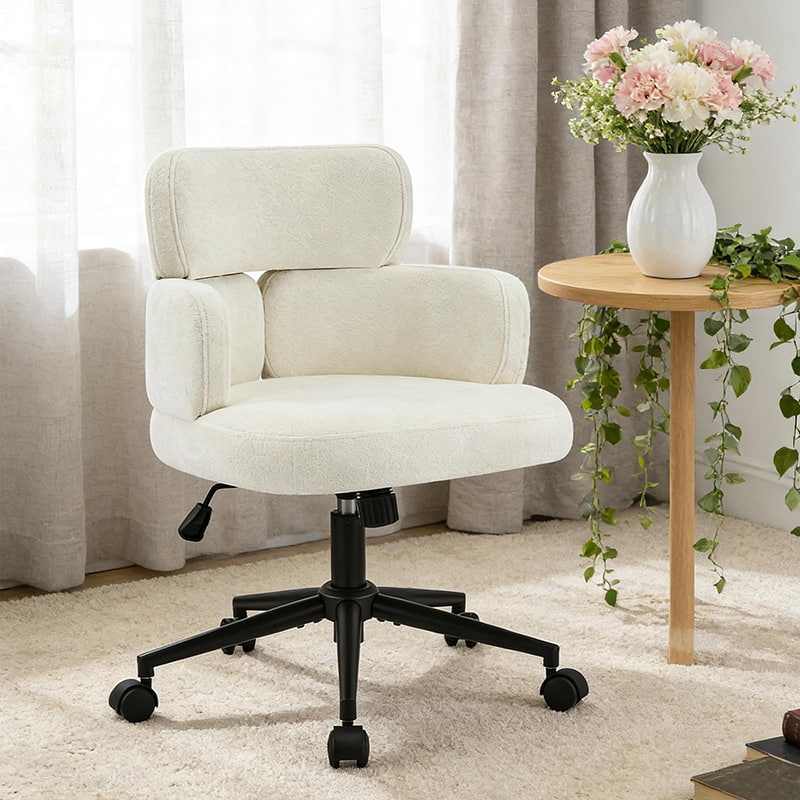 Custom Fabric Home Office Chairs with WheelsReview fabric task, executive, vanity and cross-legged chairs with adjustable height, swivel or rolling bases, and OEM fabric options for contract seating.View Product →
For a contract fabric, ask for composition, weight, the Martindale result with its test method, backing type and any flame-retardant treatment. The phrase high quality fabric is not a specification.
Where leather and PU perform better
Coated leather and PU win wherever a chair must be wiped clean in under a minute, wherever fine dust and allergen retention is a documented requirement, or wherever a firm surface appearance carries the room.
Wipe-clean maintenance economics
A damp cloth with neutral pH cleaner handles most soil on a coated surface, and a chair is back in service in seconds. Fabric soil, particularly oils, coffee and ink, usually needs extraction or shampooing, which means removing the chair from the desk and leaving it to dry.
Dust, allergens and skin contact
A non-porous surface does not trap fine dust between yarns the way a woven structure does, and it can be disinfected without wetting the foam. In shared desks, clinics and studio spaces, that single property often decides the tender.
The PU caveat: hydrolysis in warm, humid rooms
PU is not a lifetime material in unconditioned space. Polyurethane coatings degrade through hydrolysis when heat and humidity are sustained, and the first visible signs are tackiness and peeling at the seat edges. Specify a hydrolysis-resistant PU formulation, keep finished stock in a dry warehouse, and treat leather as a material with a defined service window rather than a permanent finish.
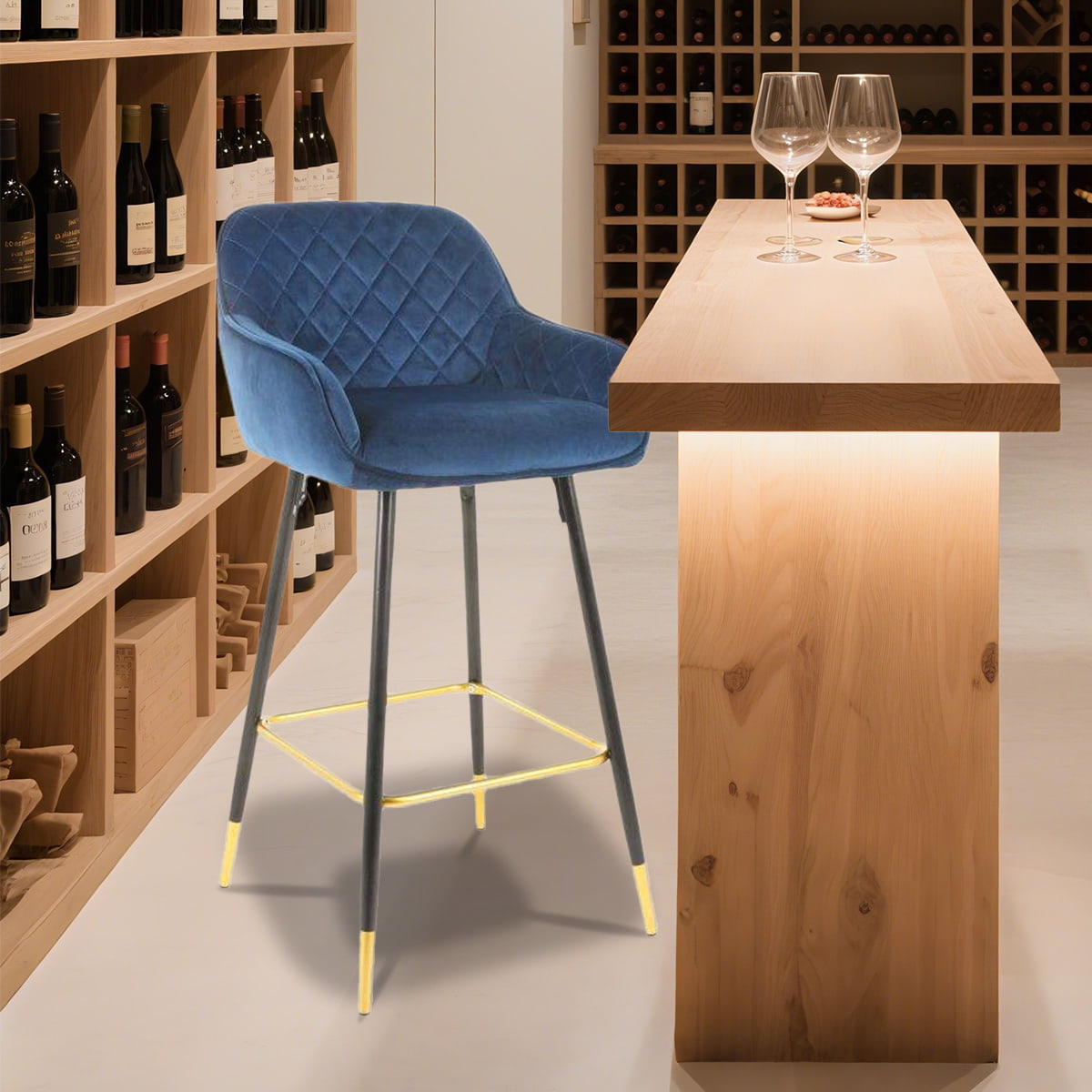
 Leather and PU Home Office Chair RangeCompare PU and leather task, executive, conference and cross-legged chairs, with height adjustment, swivel bases, and custom upholstery options for contract interiors.View Product →
Fabric is quoted in rubs, genuine leather in flex cycles, PU in both. Never compare a rub count against a flex cycle count and call it a durability result.
A four-step specification workflow for bulk orders
A workable bulk-order process takes four steps: record the room conditions, fix the cleaning regime, assign coverings by wear zone, then lock every claim to a testable value in the purchase order.
- Record the room, not the showroom. Measure average and peak relative humidity and temperature across at least one full season. Sustained humidity above 70 percent relative humidity at warm temperatures moves PU out of the specification and pushes the choice back to fabric or coated split leather.
- Fix the cleaning regime before the material. If cleaning staff have 30 seconds per chair per day, specify a wipe-clean surface on every high-contact area. If covers can be removed and laundered, fabric becomes the lower-cost option across the life of the chair.
- Assign coverings by wear zone. Seat and armrests take the contact load; backs and frames face far less. A fabric seat with a PU armrest, or a leather seat with a fabric back, is a legitimate compromise that reduces both cleaning effort and unit cost.
- Lock the specification to testable values. Name the covering composition and weight, the Martindale result with its test method, the foam density in kilograms per cubic metre, the mechanism class, and the chair standard that applies, for example EN 1335 in Europe or BIFMA X5.1 in North America.
Where a project needs an unusual covering, a two-tone scheme or a shorter lead time, buyers normally work with a manufacturer that accepts OEM and ODM orders and approves a pre-production sample chair before mass production. Anji Duomei Intelligent Furniture Technology Co., Ltd., based in the Anji chair manufacturing cluster in Zhejiang, China, runs this kind of custom upholstery and chair development process for contract buyers, from fabric selection through sample approval. A documented fabric task chair, for instance this ergonomic upholstered desk model, shows the level of detail a specification should carry.
 Ergonomic Upholstered Home Office Desk Chair DM-3072Velvet upholstered ergonomic task chair with adjustable armrests and seat height, suitable for home office use and specified fabric selection.View Product →
Name the exact covering reference, colour code and approved sample date in the purchase order, so the second container matches the first.
Practical answers for specifiers
Is leather more durable than fabric on a home office chair?
Not in any general sense, and the two materials are measured differently. Fabric durability is quoted as Martindale rubs under ISO 12947-2; genuine leather is tested by flex resistance under ISO 5402 and by coating adhesion. Above 30,000 rubs, a contract fabric typically outlives the foam beneath it, which means the covering stops being the limiting component.
Can PU leather be used in humid climates?
Only with care. Polyurethane coatings are vulnerable to hydrolysis when heat and humidity are sustained, and failures appear as tackiness and peeling rather than as a clean tear. In spaces that stay above roughly 70 percent relative humidity, specify a hydrolysis-resistant PU grade, or switch to a technical fabric or a coated split leather.
How often should fabric home office chairs be cleaned?
For a single-user home office chair, quarterly vacuuming with a soft brush head plus one annual extraction clean is a reasonable baseline. Shared and hot-desk chairs need cleaning at least monthly, and any chair that has absorbed a spill should be extracted within the same working week to stop the stain wicking into the foam.
What information is needed to compare two quotations fairly?
A quotation without these seven items cannot be compared against another quotation:
- Covering composition, weight and colour reference
- Martindale result with the test method and laboratory
- Foam density in kilograms per cubic metre for seat and back
- Chair standard applied, such as EN 1335 or BIFMA X5.1
- Minimum order quantity per colour and per model
- Loading quantity, packaging and spare parts availability
- Sample approval terms and lead time in writing
The material decision is settled by the maintenance plan, not the swatch. Take the room conditions, the cleaning routine and the daily sitting hours into the meeting, and fabric versus leather answers itself within two questions.
Related Products
-
 Yangguang Industrial Park 2, Anji County, Huzhou City, Zhejiang Province, China
-
 [email protected]
[email protected]
[email protected]
[email protected]
[email protected]
-
 +86-18357268872
QR CODE

