


 En
 English
 Français
 Español
Fabric vs Leather Lounge Chairs: Durability and Comfort Differences Explained
Posted by Admin | 04 Nov
Content
Upholstery, not the frame, usually decides when a lounge chair leaves a commercial interior. In most refurbishment schedules the metal or timber base is still structurally sound when the cover needs patching or replacing, and that outcome traces back to a specification decision made years earlier: fabric or leather.
Contract-grade woven fabric and genuine top-grain leather both reach heavy-duty abrasion classes, but they wear differently, feel different against the skin, and carry different lifetime cleaning costs. Bonded leather and PU-coated faux leather sit in a third category, and in a busy lobby or restaurant lounge that category is usually the weakest link.
Fabric and leather are not durability tiers. They are two maintenance models: fabric absorbs and gets deep-cleaned, leather repels and gets wiped.
Four figures frame the comparison before any swatch is chosen.
Durability: How Fabric and Leather Actually Wear Out
A woven fabric rated at 30,000 Martindale double rubs and a top-grain hide both qualify as heavy-duty upholstery, but they degrade through different mechanisms, and that difference decides what you repair first.
Fabric: abrasion is tested, pilling is the real risk
Textile abrasion is measured under ISO 12947-2 on the Martindale machine or ASTM D4157 on the Wyzenbeek machine. The Association for Contract Textiles classifies woven textiles from light duty at 3,000 Wyzenbeek double rubs through heavy duty at 15,000 and extra heavy duty at 30,000; on Martindale the heavy-duty band starts at 30,000 and extra heavy duty at 40,000. For a hotel or restaurant lounge, 30,000 Martindale is a defensible floor.
What a rub count does not describe is pilling, snagging and seam slippage, which is what actually makes a fabric lounge chair look old. Loose boucle, long-staple chenille and deep velvet pile catch on denim, jewellery and pet claws. A tighter plain weave or a dense jacquard in the same fibre survives visibly longer at an identical rub count.
Leather: no rub count, so grade and finish carry the weight
Leather has no Martindale equivalent. The variables that matter are hide grade and surface finish. Full-grain leather keeps the intact grain layer and top-grain is lightly sanded; both rest on dense corium fibre. Splits are cut from the lower layer, and bonded leather is made from shredded offcuts glued to a backing, which is why delamination and edge cracking appear at flex points. Finishes change the maintenance story as much as the grade does: pigmented and semi-aniline surfaces resist staining, while pure aniline absorbs spills and develops visible patina. For a closer look at how hides and pile fabrics are compared on the production floor, see this review of leather and velvet lounge chair material quality.
| Upholstery type | Abrasion rating | Typical failure mode | Best fit |
| Tight woven polyester or olefin | 30,000-50,000 Martindale | Seam slippage, surface fading | Hotel and restaurant lounges |
| Chenille, boucle, velvet pile | 20,000-30,000 Martindale | Pilling, snagging, flattened pile | Low-traffic feature seating |
| PU or PVC coated fabric | Not consistently rated | Coating cracks and peels at flex lines | Budget contract seating |
| Split or bonded leather | No rub-count equivalent | Delamination, cracked edges | Short-cycle projects |
| Top-grain and full-grain leather | No rub-count equivalent | Scratches and patina, rarely structural | Long-life lobbies and clubs |
Frame and foam settle half the question before the cover is discussed. EN 16139 covers strength, stability and durability for non-domestic seating, and EN 12520 does the equivalent job for domestic furniture, so European tender documents typically ask for EN 16139 evidence. Seat foam in contract lounges is usually specified at 30 to 40 kg/m3 high-resilience grade; blocks below roughly 25 kg/m3 lose height under repeated loading regardless of the upholstery above them.
Durability in lounge seating is a three-part property: surface abrasion resistance, cushion and seam resilience, and frame strength under cyclic load. A 50,000-rub fabric over a foam block that collapses, on a frame that works loose, is still a short-life chair.
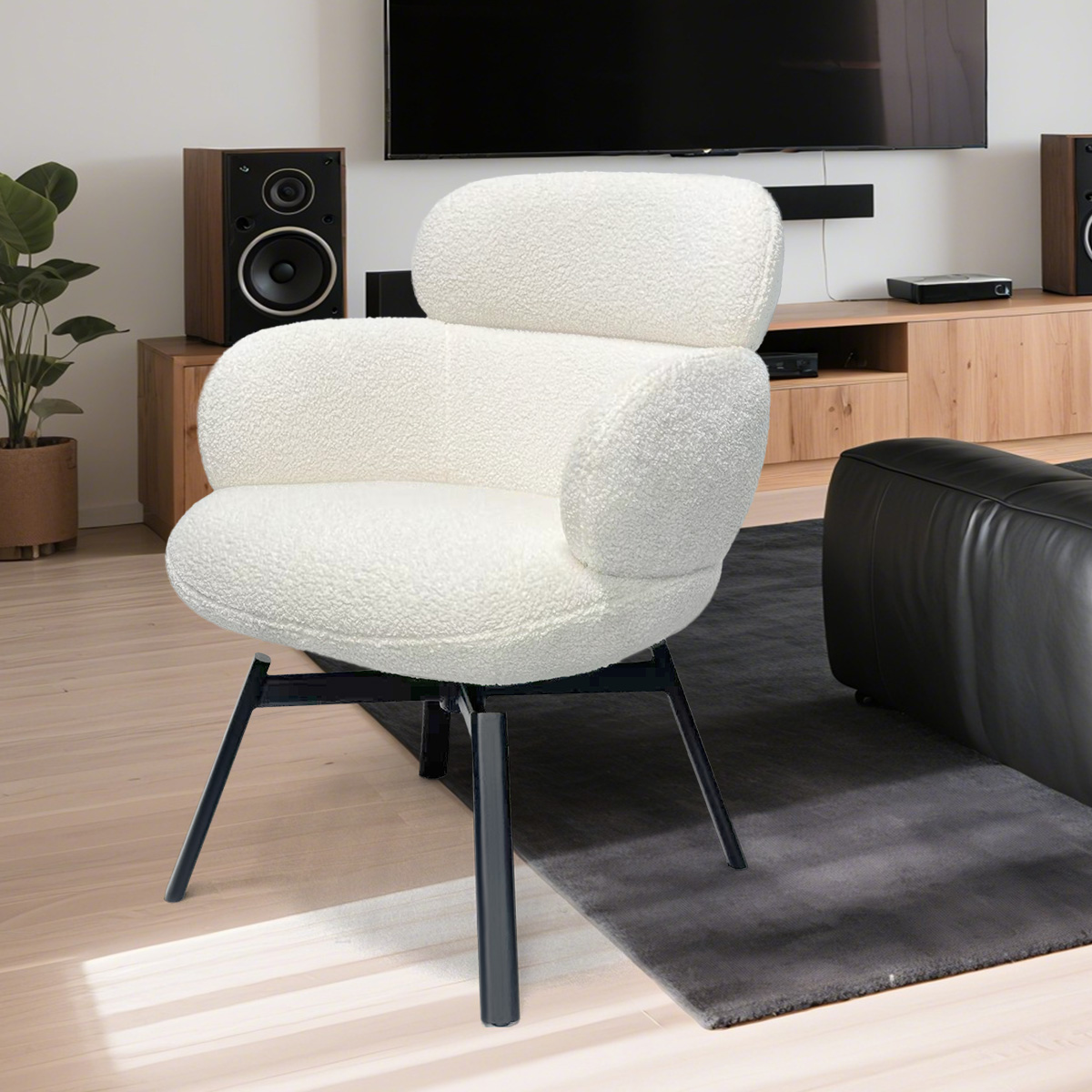
 Modern Bouclé Swivel Lounge Chair with Extra-Wide SeatPairs breathable bouclé/teddy fleece with high-density foam and a stable metal swivel base; the extra-wide seat supports lounge comfort and durability checks.View Product →
Comfort: Breathability, Heat and Seat Geometry
Fabric breathes and feels warm, while genuine leather conducts heat away and stays neutral in a warm room, but only when its finish still allows moisture vapour to pass. In practice, seat geometry changes perceived comfort more than the cover material does.
Fabric: air and moisture move through the weave
Woven upholstery passes air between yarns, so body heat and moisture escape instead of pooling. That is why a fabric lounge chair stays comfortable through a long sitting session, and also why the same chair feels cold in an unheated room. Dense synthetic weaves reduce the effect, and coated or laminated fabrics block it almost completely. In humid climates, uncoated cotton, linen and wool blends stay comfortable, while tightly woven polyester can feel clammy against bare skin.
Leather: cool to the touch, and finish-dependent
Leather moves heat away from the body quickly, which is why a hide-covered chair reads as cool on first contact. Full-grain and aniline leather keep open pores and continue to manage moisture vapour. Heavily pigmented or PU-coated surfaces block that exchange, and the result is a seat that feels warm and slightly tacky after twenty minutes. This is the single most common complaint about faux leather in warm climates, and it is a finish problem rather than a fibre problem.
Geometry: the dimensions that decide everyday comfort
- Seat height of 380 to 450 mm, measured to the compressed seat surface
- Seat depth of 500 to 560 mm, with a 60 to 80 mm waterfall front edge to reduce pressure behind the knee
- Back angle of 100 to 110 degrees from horizontal for upright conversation seating
- Arm height of 200 to 250 mm above the compressed seat
- Seat cushion of 30 to 40 kg/m3 high-resilience foam, often with a softer comfort topper
A sitter notices seat depth and back angle within two minutes. They notice whether the cover is fabric or leather only when it feels hot, cold or sticky.
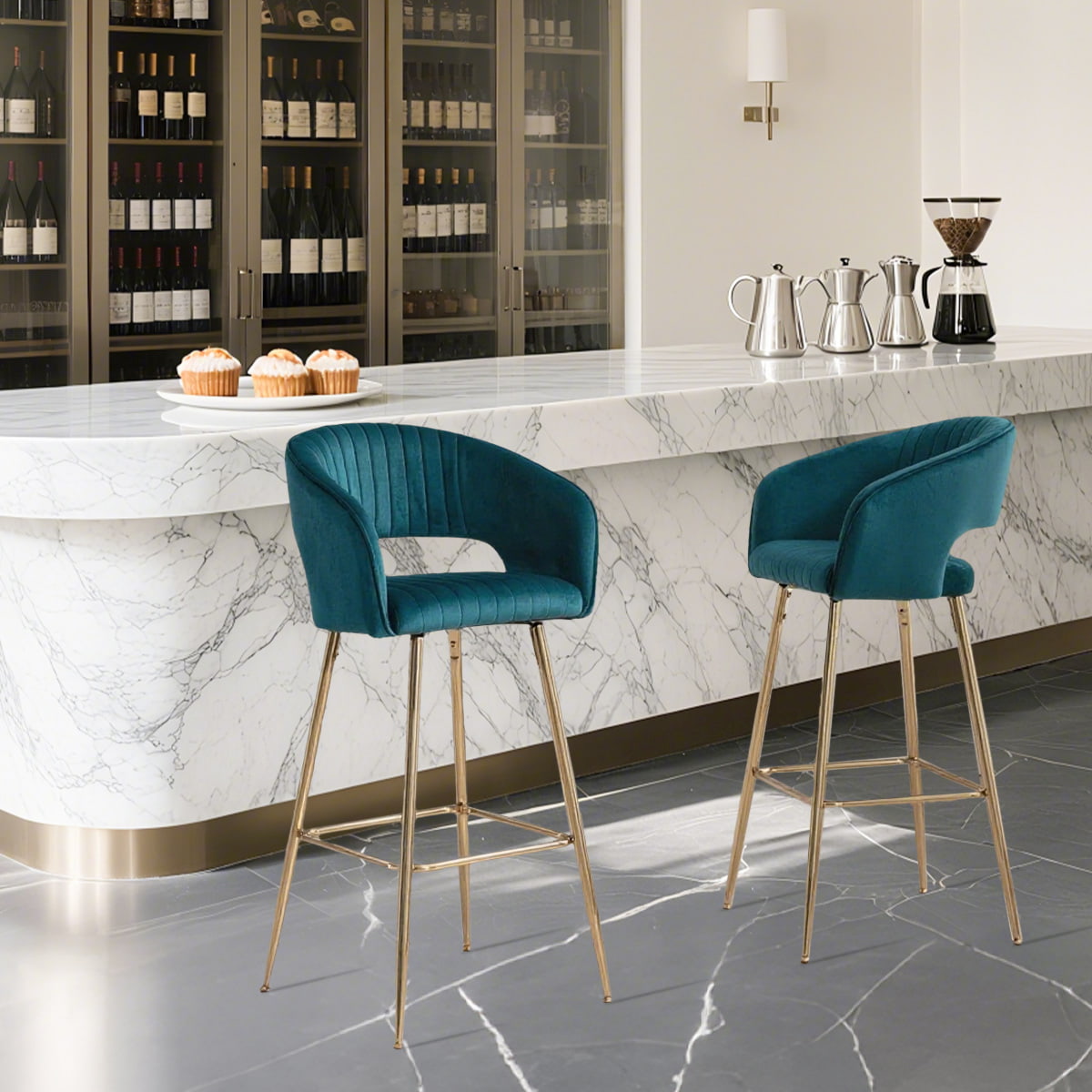
 Leather and Velvet Lounge Seating for Contract ProjectsLeather, PU and velvet lounge seating in single chairs or 2/3-seat recliners, customizable for hospitality and residential projects where cover choice and cleaning matter.View Product →
Cleaning, Spills and Five-Year Cost
Across a five-year contract cycle, cleaning and replacement usually separate fabric from leather more sharply than the purchase price does, because the two materials need different equipment, chemicals and staff training.
Fabric cleaning profile
- Vacuum weekly; grit trapped in the weave abrades fibres from the inside
- Blot spills immediately, then use water-based extraction cleaning on most weaves
- Solution-dyed synthetic weaves tolerate diluted bleach; wool and viscose do not
- Pile fabrics hold pet hair and crumbs and need brushing between deep cleans
Leather cleaning profile
- Wipe with a damp cloth and pH-neutral soap; solvents and alcohol dull the finish
- Ink, dye transfer and punctures are permanent rather than removable
- Condition every 6 to 12 months to slow surface cracking on dry hides
- Pigmented finishes clean faster than aniline, but neither tolerates scrubbing
First cost runs the other way
Leather usually costs more up front, and the gap widens with hide grade. The bar chart below is an illustrative index rather than a market survey: it compares first cost for lounge chairs built on an identical frame and foam specification, with tight woven polyester set at 100.
Illustrative first-cost index by upholstery type, tight woven polyester = 100
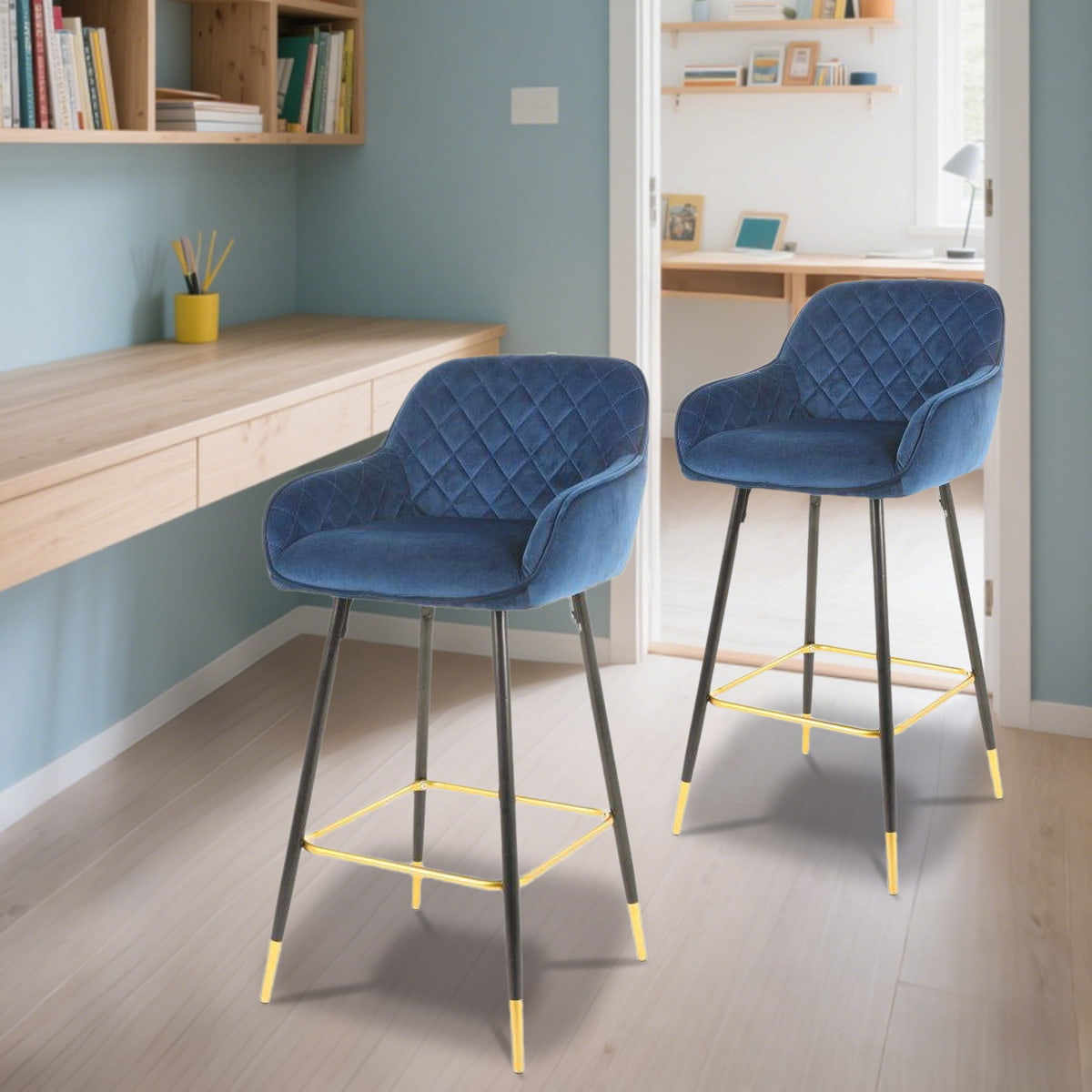
 Golden-Leg Velvet Barrel Accent Chair with Wide SeatCurved barrel back, thick high-density foam and gold metal legs make this accent chair a compact option for dining, vanity or reading corners.View Product →
A Six-Step Specification Sequence for Lounge Chairs
Working through these checkpoints in order prevents the most common specification failure: choosing a cover material before defining the traffic and cleaning regime it has to survive.
- Define traffic and cleaning regime. Count covers per day, identify who cleans the space, and confirm whether water-based extraction equipment is available on site.
- Set the abrasion floor. Use 30,000 Martindale double rubs as the minimum for hotel, restaurant and club lounges, and 40,000 where the seating faces street or terrace traffic.
- Lock foam and frame specification. 30 to 40 kg/m3 high-resilience foam, EN 16139 test evidence for non-domestic use, and a stated maximum load for the frame.
- Match maintenance to the material. Choose leather only where staff can wipe and condition it; choose fabric where deep cleaning is scheduled and equipment exists.
- Verify fire and chemical compliance. California TB 117-2013 for the United States, EN 1021-1 and EN 1021-2 for the European Union, plus REACH documentation for coated fabrics.
- Order a pre-production sample. Test the actual cover on the actual foam block for two weeks under real use before the bulk order is released.
Checkpoint worth repeating: EN 16139 evidence applies to the assembled chair, not to the frame alone. Ask for the test report on the finished model.
Where a catalogue chair does not fit the room, seat height, frame finish and cover specification can be adjusted before tooling is committed. Anji Duomei Intelligent Furniture Technology Co., Ltd., which has manufactured lounge, bar, dining, office and salon seating in Anji, Zhejiang since 2014, handles this through custom design and engineering support for contract buyers who need the standard platform modified rather than replaced.
Buyer Questions on Fabric and Leather Lounge Chairs
Which lasts longer, a fabric or a leather lounge chair?
Both complete a standard five-year contract cycle without re-covering when the specification is right: a woven cover rated at 30,000 Martindale double rubs or more, or a top-grain or full-grain hide, over 30 to 40 kg/m3 foam on an EN 16139 tested frame. Bonded leather and PU-coated fabric shorten that cycle, because their failure mode is surface delamination rather than fibre wear.
Is fabric or leather better for a hotel or restaurant lounge?
Use fabric for the majority of seats and leather for the positions that take the most spills and the most traffic. Fabric gives better breathability in long sittings and lower first cost, while leather survives wine, coffee and cleaning chemicals with a single wipe. A mixed specification of roughly 70 percent fabric and 30 percent leather is common in lobby and bar projects because it balances both maintenance models.
How many Martindale double rubs should commercial lounge fabric have?
30,000 double rubs is the heavy-duty floor under Association for Contract Textiles guidelines, and 40,000 reaches the extra-heavy-duty class. Wyzenbeek ratings use a different machine and a different scale, where 15,000 double rubs is heavy duty and 30,000 is extra heavy duty. Never compare a Martindale number against a Wyzenbeek number as if they came from the same test.
Is PU leather the same as real leather?
No. PU leather is a polyurethane coating applied to a knitted or woven backing and contains no hide fibre. It is specified by coating thickness and adhesion rather than hide grade, and its usual failure point in a lounge is cracking along the flex lines of the seat and back. It remains a reasonable choice for budget contract seating on a short replacement cycle, but it should not be quoted as leather in a tender document.
The decision rule in one line: fabric for breathability, deep cleaning and lower first cost; leather for wipe-clean maintenance in high-spill positions.
Related Products
-
 Yangguang Industrial Park 2, Anji County, Huzhou City, Zhejiang Province, China
-
 [email protected]
[email protected]
[email protected]
[email protected]
[email protected]
-
 +86-18357268872
QR CODE

