Content
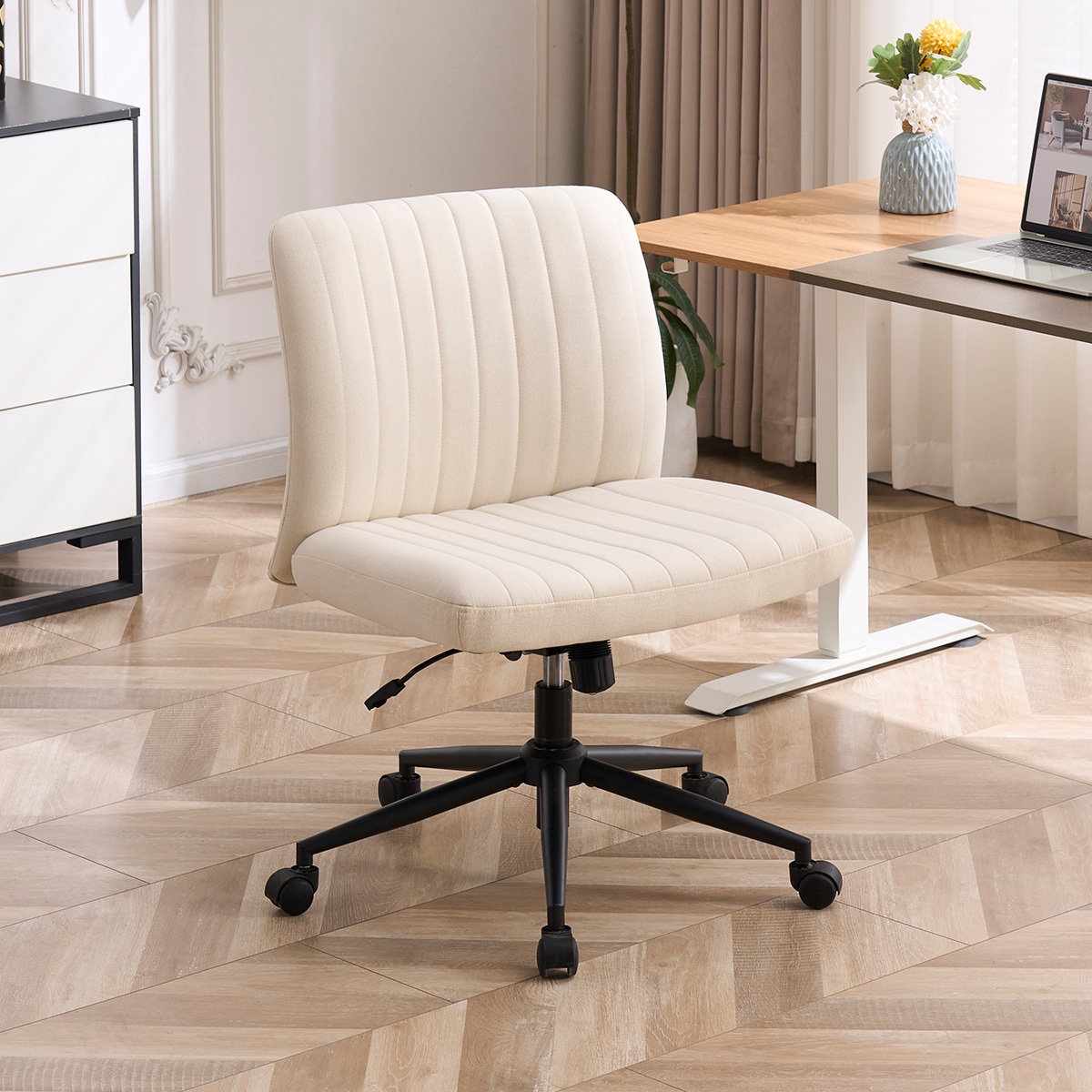
If you spend six or more hours a day at a desk, the upholstery on your chair affects your comfort as much as lumbar support or seat depth. Fabric home office chairs offer a distinct combination of softness, breathability, and visual warmth that leather and hard-shell mesh alternatives cannot replicate — but only when the fabric type, weight, and weave are matched to how you actually work.
The fabric versus mesh debate is the most common comparison shoppers make when choosing a home office seat. Both materials have legitimate strengths — the right choice depends on your climate, work hours, and aesthetic priorities.
For home offices in temperate or air-conditioned rooms, fabric upholstery consistently scores higher in comfort satisfaction surveys. A 2021 Furniture Today Industry Report found that 58% of remote workers purchasing chairs for dedicated home offices selected fabric upholstery over mesh or leather, citing tactile comfort and interior design compatibility as primary drivers.
Breathability in fabric upholstery is determined by three factors: fibre type, thread count, and weave structure. Not all fabrics marketed as breathable perform equally under prolonged sitting conditions.
The lifespan of a fabric office chair depends almost entirely on the Martindale abrasion rating of the upholstery — an industry-standard test that measures how many rub cycles a fabric withstands before visible wear occurs. Higher Martindale ratings directly translate to longer service life under daily use.
| Martindale Rating | Use Classification | Expected Lifespan (Daily 8hr Use) |
| Below 15,000 | Light domestic | 1–2 years |
| 15,000 – 25,000 | General domestic | 2–4 years |
| 25,000 – 40,000 | Heavy domestic / light contract | 4–7 years |
| 40,000+ | Heavy contract / commercial | 7–12 years |
Always request the Martindale rating before purchasing. Reputable chair manufacturers list it in the product specification sheet. Any fabric chair marketed for office use should carry a minimum rating of 25,000 rubs. Budget chairs rarely disclose this figure — which is itself a warning sign.
Beyond fabric, the chair's mechanical components determine overall longevity. Gas cylinders from certified manufacturers such as Suspa or Stabilus are rated for 100,000 actuation cycles. Nylon base plates and castors in mid-range chairs typically last 5–8 years under a 120 kg load limit. Foam seat density, measured in kg/m³, should be 45 kg/m³ or above for the seat not to compress permanently within two years.
The best fabric for a home office chair balances breathability, abrasion resistance, ease of cleaning, and visual longevity. No single material tops every category, but the following framework simplifies the decision for most buyers of fabric home office chairs.
Fabric is generally better for comfort and breathability during extended sitting. Leather (and bonded leather) offers easier liquid cleanup but retains heat, can crack over time, and creates a slippery seating surface. For daily home office use above four hours per day, fabric consistently outperforms leather in comfort satisfaction benchmarks.
Check the manufacturer's cleaning code first. Code W means water-based cleaners are safe; code S requires solvent-based cleaner only; code WS allows both; code X means vacuum only. For most polyester upholstery, a diluted upholstery shampoo applied with a soft brush, then blotted dry, removes surface soiling without damaging the weave. Steam cleaning is effective but should only be used if the fabric weight is above 200 g/m².
Yes, and it is often cost-effective if the chair's mechanical components are in good condition. A professional upholsterer can replace seat and back panels on most standard office chairs for between $80 and $180, extending the chair's life by another 5–8 years. This is a viable option for chairs with high-quality gas cylinders and bases that are simply showing fabric wear.
For a dedicated home office with 6–8 hours of daily use, look for a minimum Martindale rating of 30,000 rubs. This places the fabric in the heavy domestic to light contract category and ensures the upholstery maintains its appearance for at least five years under regular use. Ratings above 40,000 are the standard for commercial environments but offer added peace of mind for high-use home setups.
Related Products
NO.8, NO.1 Road, Sunshine Industrial Park 2, Anji County, Huzhou City, Zhejiang Province, China.
[email protected]
+86-13567991394