


 En
En English
 Français
 Español
How to Choose the Best Fabric for Bar Chairs: Durability, Cleaning & Style
Posted by Admin | 09 Oct
Content
A bar chair is the hardest-working seat in most interiors. In a busy restaurant, one stool can be occupied hundreds of times a week, kicked by shoes against the footrest, and splashed with coffee, wine, or grease. At home, the same chair sits near cooking heat and steam, slides in and out from under a kitchen island, and becomes the first seat a guest reaches for at a gathering. The fabric on that chair decides when it starts looking tired, and whether a quick wipe can bring it back.
The conclusion up front: the best bar chair fabric is not one material but the right match of abrasion resistance, cleaning behaviour, and style for the actual space. Commercial buyers should start with Martindale rub counts and spill response, then let appearance narrow the choice. Home buyers can start with looks, but should still avoid fabrics that cannot handle regular light cleaning.
Bar chairs stress upholstery more than dining chairs do. The seat edge presses into the back of the legs, the footrest collects constant shoe contact, and the raised position puts drinks and plates within easy spilling distance. That combination of friction, moisture, and impact is why the fabric decision matters more here than in almost any other chair category.
Match the Fabric to the Actual Use Pattern
Before comparing fabric names, define the conditions the chair must survive. A bar chair at a restaurant counter, a salon workstation, a kitchen island, and an office lounge face very different daily demands, and a textile that performs well in one setting can fail quickly in another.
Commercial and contract spaces
Restaurants, bars, hotels, and salons run chairs through continuous daily use. Surfaces are cleaned with disinfectants, spills are wiped on the spot, and chairs rarely get time to dry out. For these environments, choose a non-porous or coated surface: PU leather, vinyl-based upholstery, or a performance polyester with a stain-resistant finish. Verify the abrasion grade before ordering, and request the fabric's Martindale rub count in writing. In kitchens where daily wiping is simply part of the routine, waterproof, wear-resistant PU leather bar stools are a practical example of a specification built around real cleaning conditions.
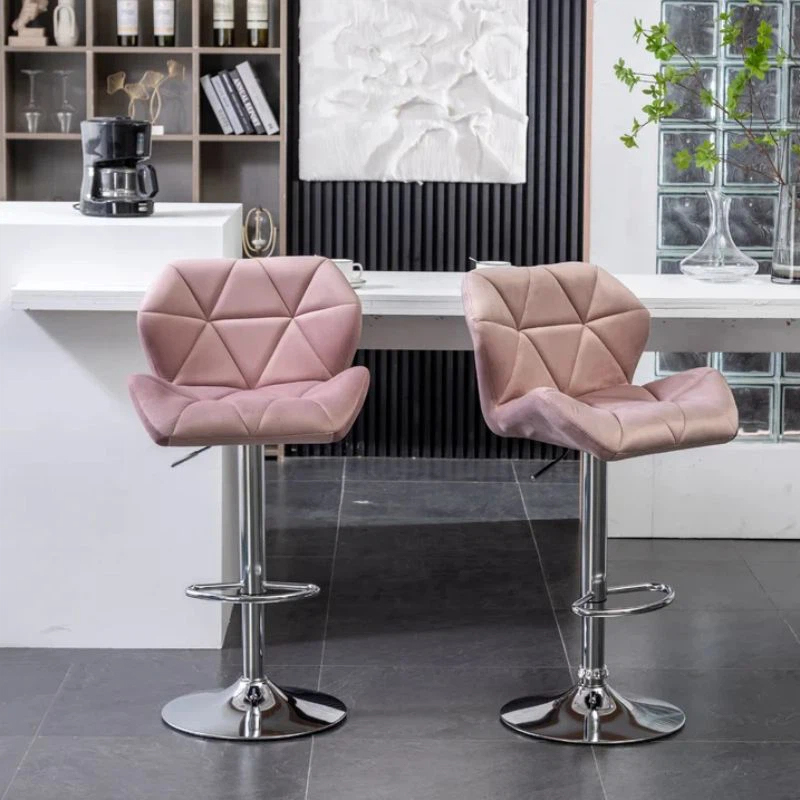 Custom Waterproof Wear-Resistant Bar Stools For Kitchen Suppliers, ManufacturersAnji Duomei Intelligent Furniture Technology Co., Ltd is China Custom OEM/ODM Waterproof Wear-Resistant Bar Stools For Kitchen Suppliers ...View Product →
Home and light-commercial spaces
Home kitchens, breakfast bars, and lower-turnover cafés can carry more textural options. Bouclé, chenille, and velvet add warmth and a designer feel that most commercial-grade surfaces do not, but the trade-off is maintenance: these fabrics collect dust, show water marks if wet-cleaned carelessly, and need regular vacuuming. If a soft-texture look is essential, choose a synthetic blend with a protective finish and confirm that the fabric has passed a pilling resistance test.
| Criterion | Home kitchen or breakfast bar | Restaurant, bar, hotel, or salon |
|---|---|---|
| Suggested Martindale abrasion | 15,000 rubs minimum | 30,000-40,000 rubs minimum |
| Expected cleaning routine | Vacuuming and occasional damp wipe | Daily wipe-down with disinfectant |
| Water and stain exposure | Moderate | High |
| Recommended materials | Bouclé, microfiber, synthetic velvet, PU leather | PU leather, vinyl, coated performance polyester |
The Performance Numbers That Separate Good Fabrics from Problem Fabrics
Three measurable properties cause most bar chair fabric failures: abrasion, stain retention, and pilling.
Martindale abrasion resistance
The Martindale test rubs a wool abradant over the fabric until threads break or a visible surface change appears. Residential upholstery typically starts around 15,000 rubs, contract seating is usually specified at 30,000 rubs or higher, and heavy-duty public seating goes beyond 50,000 rubs. For bar chairs, the seat edge and footrest areas take the most friction, so a higher grade means a longer visual life. When you compare suppliers for a commercial project, our guide to Martindale ratings for fabric-covered bar stools explains how to interpret these numbers before you commit to a specification.
Stain resistance and cleaning compatibility
How a fabric reacts to the first spill is usually what you notice first. PU leather and vinyl repel liquids immediately and tolerate standard disinfectants. Uncoated woven textiles absorb liquids quickly; without a protective finish, coffee or red wine can leave a permanent mark within seconds. If the end user plans to clean with chemicals, ask whether the fabric tolerates alcohol-based or bleach-free disinfectants without discolouration.
Pilling resistance
Pilling forms when short fibres tangle into small balls on the surface, usually where the seat rubs against jeans or other coarse clothing. Bar chair seats face that friction all day. A low pilling grade makes a chair look aged long before the fabric wears through. Look for a pilling rating of at least 4 on the 1-to-5 scale for any fabric used in commercial seating.
Bar Chair Fabric Options Compared
Across the bar chairs we manufacture, six fabric families cover most orders. The table below summarises how they behave in daily use.
| Fabric type | Durability | Cleaning | Best suited for |
|---|---|---|---|
| Performance polyester / bouclé | Good; 20,000-40,000 rubs in typical contract grades | Loose dirt brushes off; spot-clean with mild detergent | Home kitchens, cafés, boutique bars |
| Velvet (synthetic) | Moderate; dense pile and backing improve lifespan | Vacuum regularly; dry-cleaning recommended | Low-traffic home bars and residential islands |
| PU leather / faux leather | Excellent; 40,000+ rubs common | Wipe clean; compatible with most disinfectants | Restaurants, pubs, salons, hotel lounges |
| Vinyl / PVC upholstery | Excellent; resists abrasion and moisture | Wipe clean; low absorbency | Heavy commercial seating and counter areas |
| Microfiber | Good; tight weave resists pilling | Repels light spills; spot-clean with gentle detergent | Family breakfast bars |
| Linen / cotton blend | Lower; prone to wear and staining | Absorbs liquids; needs a protective finish | Decorative or low-traffic seating |
Performance polyester and bouclé
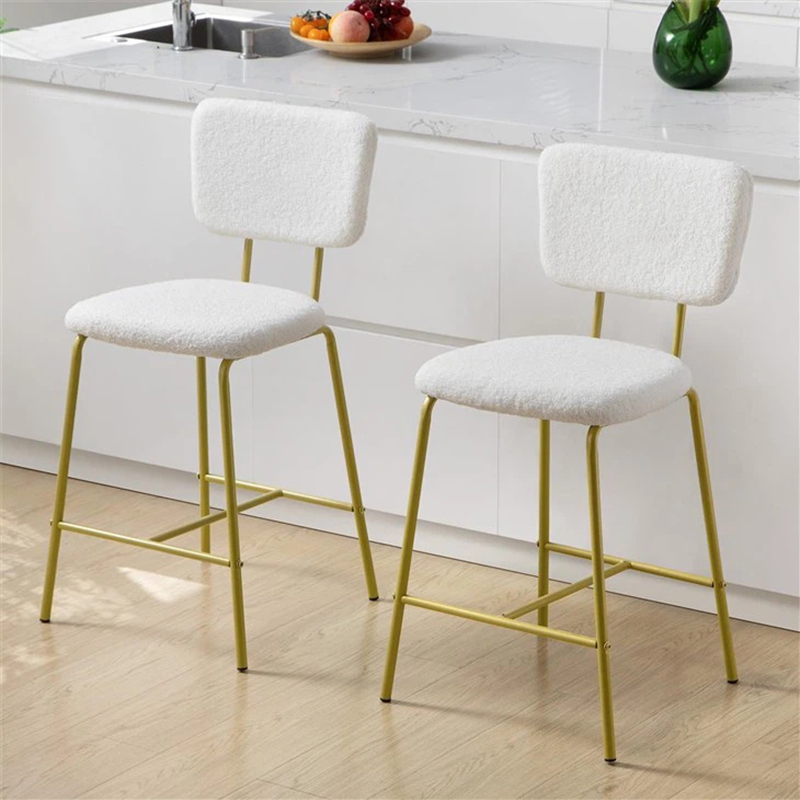
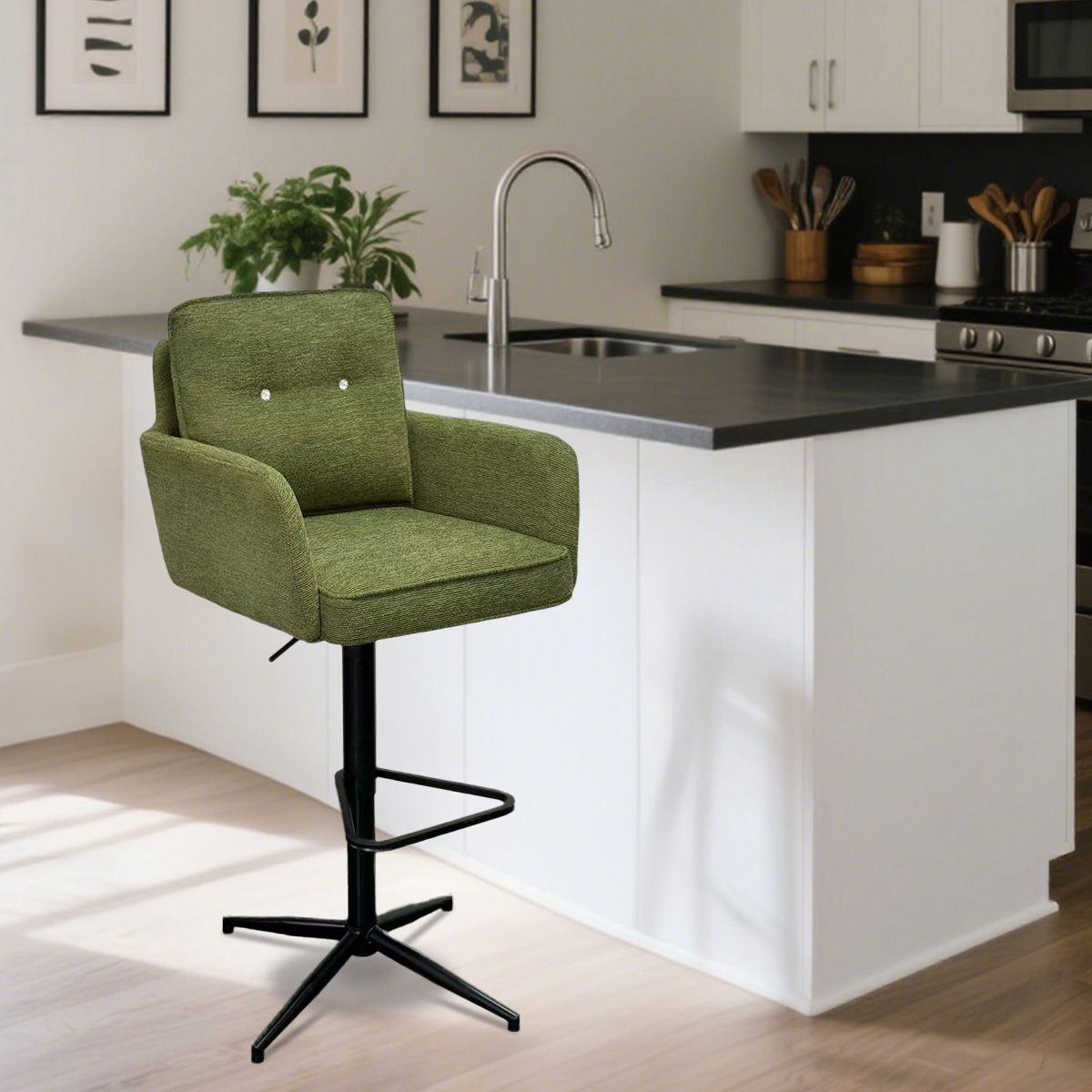
Performance polyester and bouclé are the most balanced choices for mixed-use environments. They offer more warmth than leather-look materials, handle moderate spill exposure, and come in a wide range of textures and colours. If you are sourcing for a café, a restaurant lounge, or a home kitchen island, start here. Our fabric bar chair collection shows how these textiles behave on finished seating with different frame heights and backrest styles.
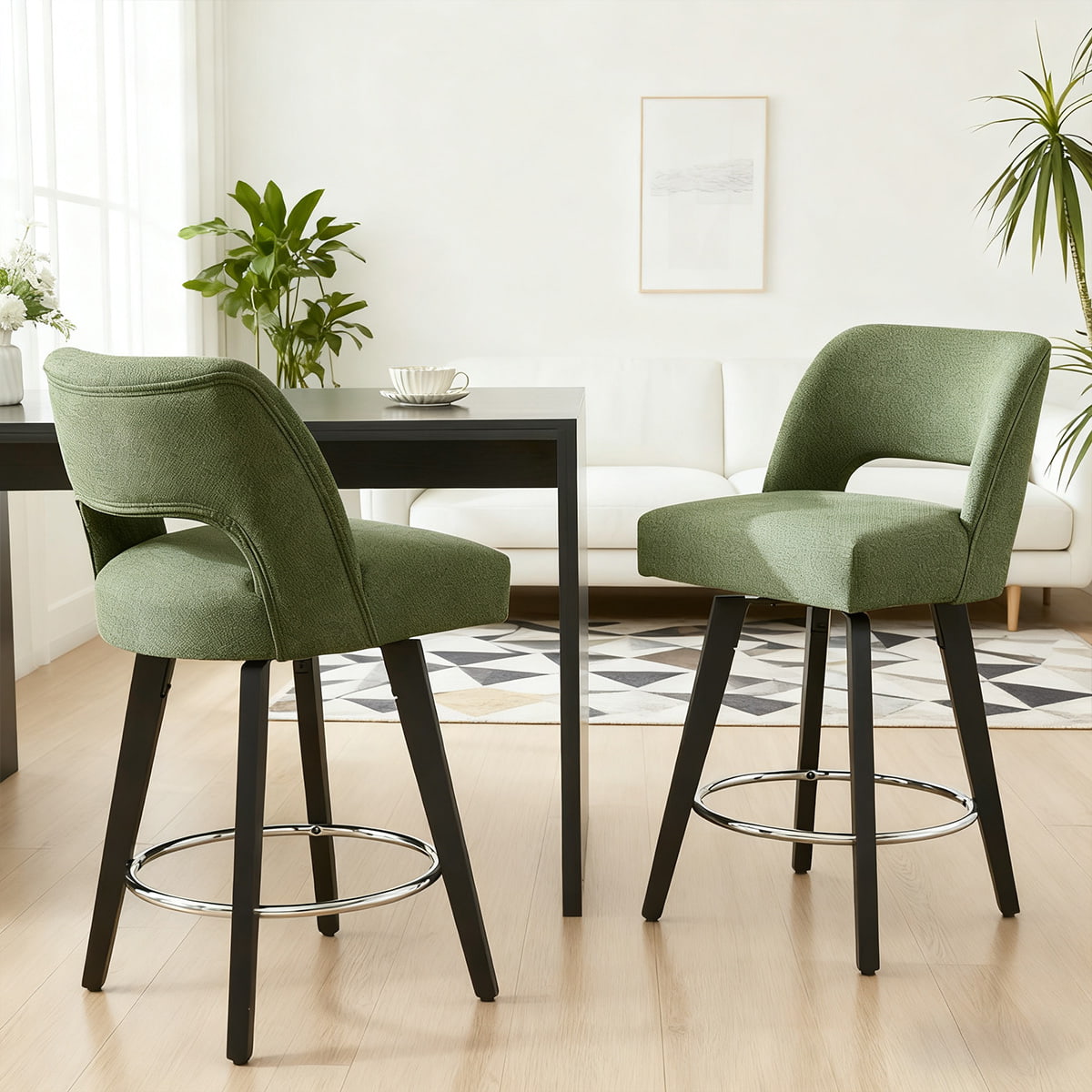 Custom Fabric Bar Chairs With Back Manufacturers, FactoryAs China Custom Fabric Bar Chairs With Back Manufacturers and Factory, Anji Duomei Intelligent Furniture Technology Co., Ltd Offer OEM/OD...View Product →
PU leather and vinyl for commercial traffic
For restaurants, pubs, salons, and hotel counters, PU leather and vinyl remain the most practical options. They are easy to sanitize, resist the constant friction of people sliding in and out, and hold their colour under daily cleaning. The leather bar chair range we produce covers both PU and synthetic leather surfaces across fixed and adjustable-height frames, so the material decision does not limit the function you need.
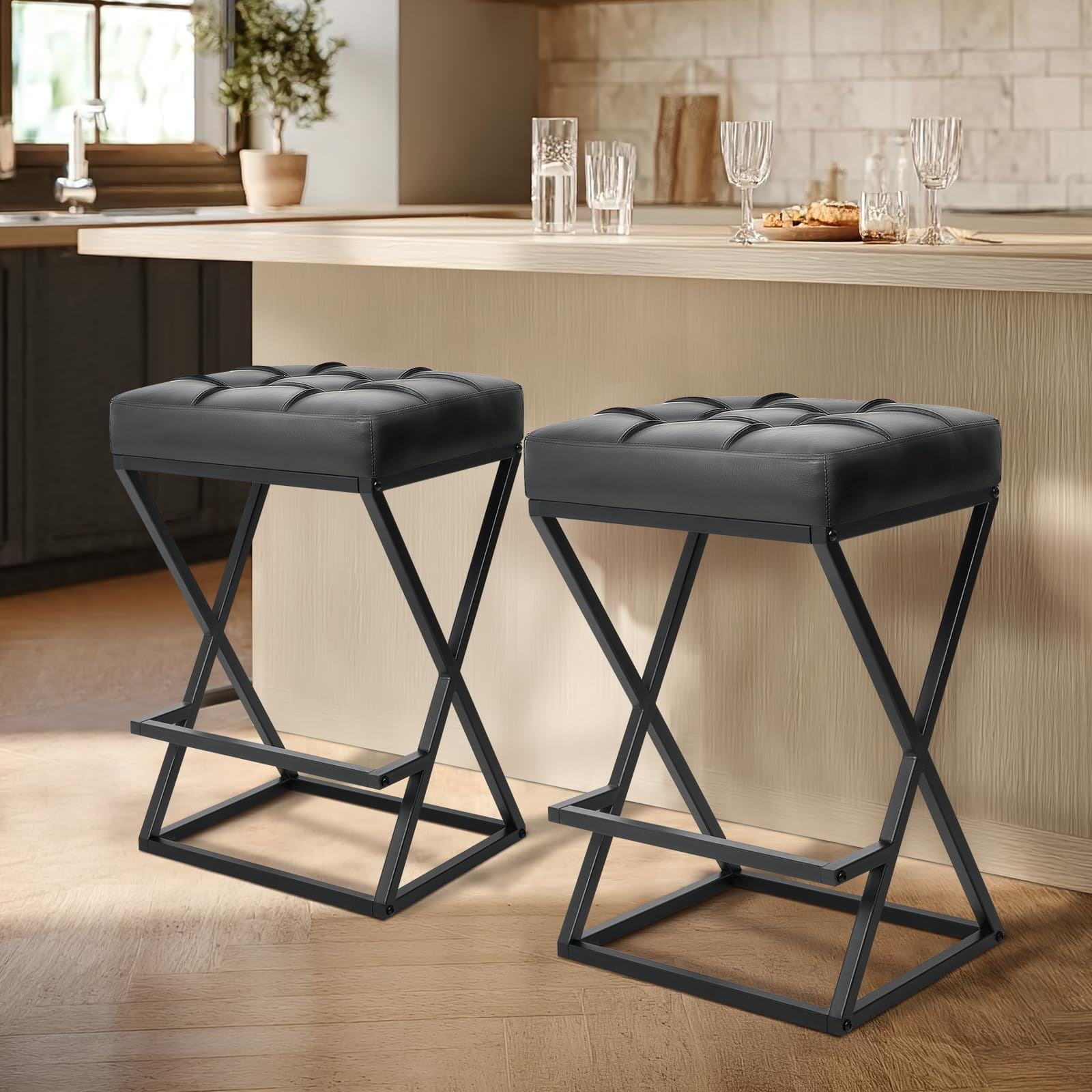 Custom Adjustable Leather Bar Chairs Manufacturers, FactoryAs China Custom Adjustable Leather Bar Chairs Manufacturers and Factory, Anji Duomei Intelligent Furniture Technology Co., Ltd Offer OEM/...View Product →
Velvet and microfiber for style-led spaces
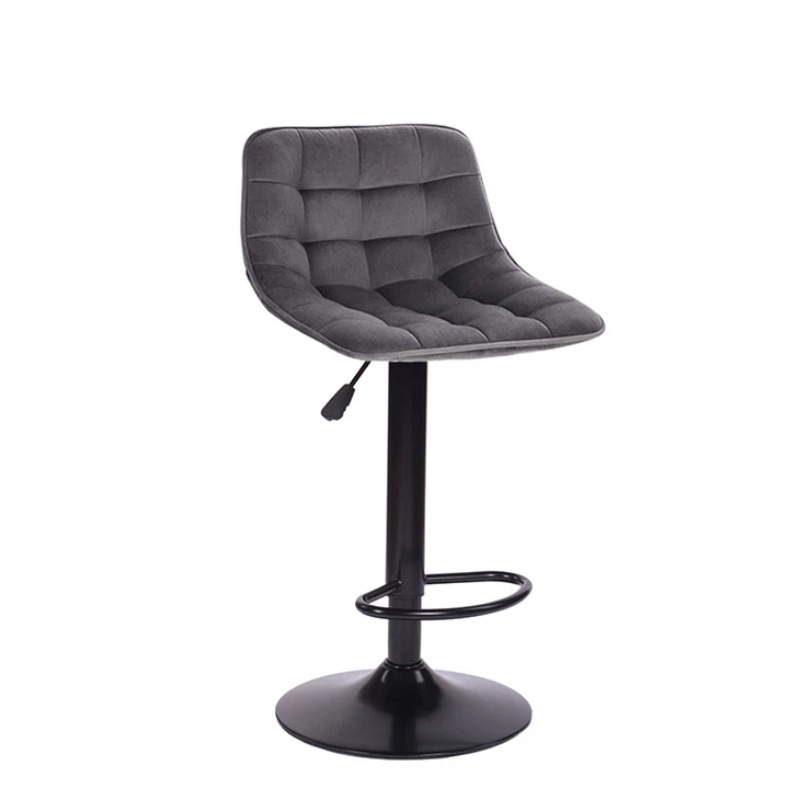
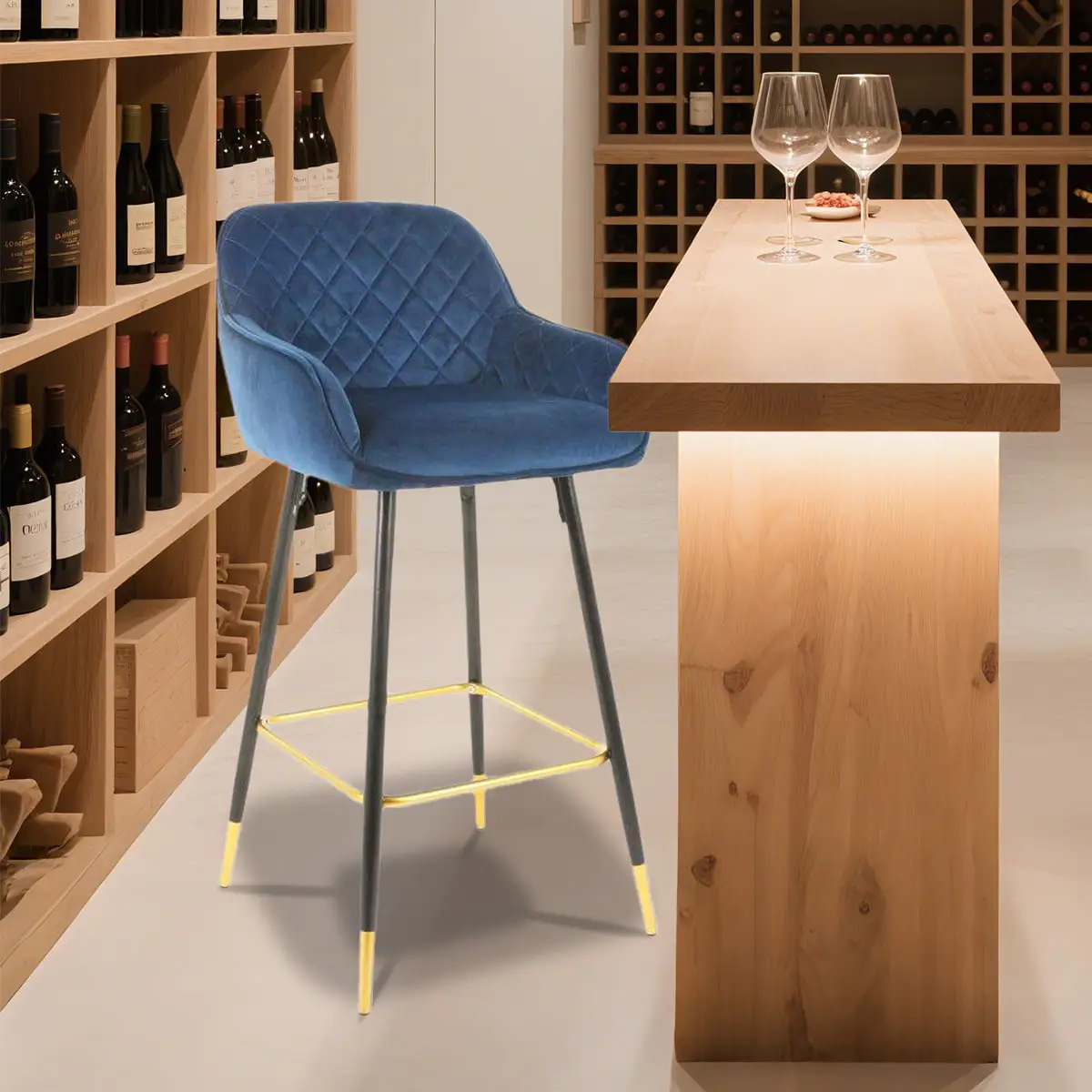
Velvet delivers a strong visual statement but belongs in lower-traffic settings. High-density synthetic velvet lasts longer than cotton-based velvet, yet it will still compress and show water marks under heavy use. Microfiber is the better family compromise: it resists pilling, feels soft, and tolerates frequent spot cleaning. Use velvet for a residential bar corner and specify microfiber where children are part of the daily picture.
What the Fabric Choice Alone Will Not Tell You
Choosing the right textile matters, but upholstery fails early if the structure underneath is wrong. Three details deserve the same attention as the fabric itself.
First, seat cushion density. Low-density foam loses its shape within months, and once the cushion flattens, the fabric starts to wrinkle and wear at the seams. For contract seating, specify high-resilience foam, around 30 kg/m3 or above, so the cover stays taut.
Second, seam construction. Bar chairs flex more than side chairs because of the raised seat height and the leverage created by swivel and height-adjustment mechanisms. Double-stitched seams and reinforced stress points prevent the fabric from tearing where the load is highest.
Third, the frame and base. A wobbly frame transfers movement into the upholstery and shortens the useful life of the fabric. Ask how the seat is attached to the frame and whether the footrest is integrated into the frame structure or simply bolted on.
What to Ask Before You Place the Order
A short list of questions prevents most fabric-related problems after delivery:
- What is the exact Martindale rub count of the fabric, and can the supplier confirm it in writing?
- Can you provide a physical sample to test with the cleaning products the end user actually uses?
- Does the fabric have a stain-resistant or water-repellent finish, and how many cleaning cycles does the finish tolerate?
- What are the pilling rating and colourfastness grade for the selected material?
- Does the fabric meet local fire-retardancy requirements for commercial seating in the destination market?
These questions separate a supplier that understands contract use from one that only sells by appearance. Our guide to durable textiles for fabric-covered bar stools walks through the same checks in more detail, including how to inspect samples and compare quotes on a like-for-like basis.
Make the Decision in the Right Order
The reliable sequence is: define the use pattern first, set minimum performance thresholds second, and let style and budget narrow the field last. For high-turnover commercial seating, start with PU leather or vinyl and check the abrasion and cleaning specifications. For home and café seating, start with performance polyester or bouclé, and reserve velvet for decorative, low-traffic corners.
If you find it hard to picture a fabric on a finished chair, review the fabric-covered bar stool style trends we have published recently; they show how these materials are interpreted across different interiors, from minimalist kitchens to classic pub counters. The right chair fabric should survive the way your space actually works, and still look good enough that nobody notices it until it has been used for years.
Related Products
-
 Yangguang Industrial Park 2, Anji County, Huzhou City, Zhejiang Province, China
-
 [email protected]
[email protected]
[email protected]
[email protected]
[email protected]
[email protected]
-
 +86-18357268872
QR CODE

