


 En
En English
 Français
 Español
What Martindale Rating Should You Look for in Fabric Covered Bar Stools for Commercial Restaurant Use?
Posted by Admin | 12 Feb
Content
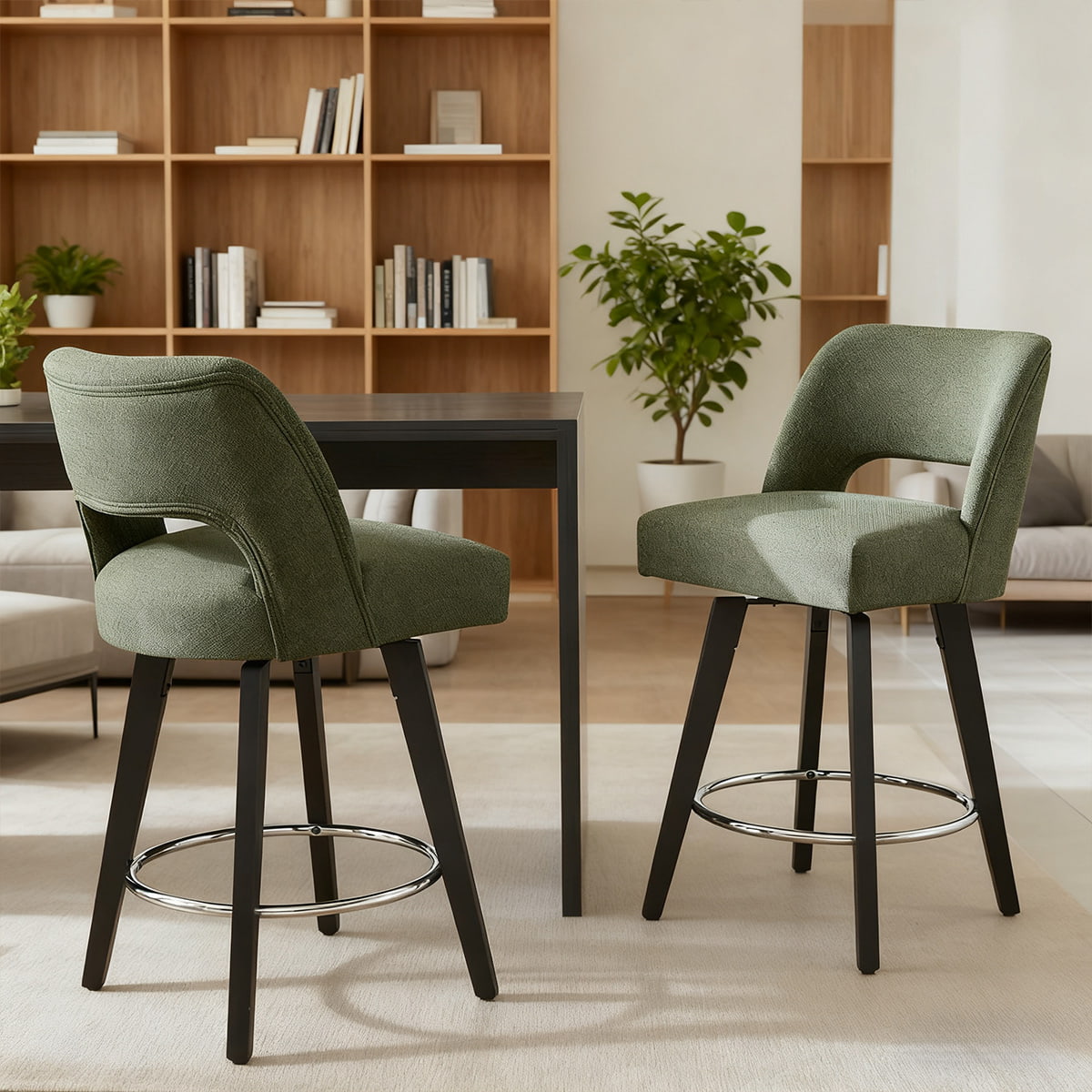
In the high-traffic ecosystem of the hospitality industry, the durability of upholstery is not merely a matter of aesthetics but a critical engineering specification. For owners and designers selecting fabric covered bar stools, understanding the mechanical resistance of the textile is paramount to ensuring a return on investment. Anji Duomei Intelligent Furniture Technology Co., Ltd., located in the "Chinese metropolis of swivel chairs," has been a specialist in contract furniture since 2014. With our 4,000 m² modern plant and rigorous quality control, we prioritize the "Quality is the life of the enterprise" philosophy, ensuring that our leisure and bar chairs meet the stringent demands of global commercial environments.
1. Understanding the Martindale Rub Test for Upholstery
The primary benchmark for fabric durability is the Martindale test. But what is a good Martindale rating for bar stools? This test involves a specialized machine that rubs a piece of wool or abrasive paper against the fabric in a figure-eight motion under a specific pressure. For fabric covered bar stools used in residential settings, a low rating may suffice, but commercial applications require a significantly higher threshold to prevent premature thread bareness and pilling. At Anji Duomei, we assist customers in seeking engineering assistance to match the right textile to their specific traffic levels.
While residential fabrics often range between 10,000 to 15,000 rubs, commercial-grade hospitality fabrics must exceed 30,000 rubs to withstand the constant friction of restaurant patrons.
| Usage Category | Martindale Rub Count | Recommended Application |
| Light Domestic | 6,000 - 15,000 | Occasional use furniture/Residential |
| General Commercial | 20,000 - 30,000 | Office chairs, low-traffic cafes |
| Heavy Duty Commercial | 40,000+ | High-traffic restaurants, bars, and lounges |
2. Analyzing Fabric Composition: Durability vs. Comfort
When sourcing fabric covered bar stools, the fiber content directly influences both the rub rating and the user experience. A common technical question is how to choose durable fabric for restaurant bar stools. Synthetic fibers like polyester and nylon generally offer higher abrasion resistance and are easier to treat for stain resistance compared to natural fibers. However, in luxury contract furniture, high-performance blends are often used to maintain a premium feel while achieving "Heavy Duty" Martindale status.
Natural fibers like cotton provide excellent breathability but often fail to meet the rub requirements of a busy bar, whereas commercial grade bar stool fabric made from high-denier polyester ensures longevity.
| Fabric Type | Typical Rub Rating | Stain Resistance |
| 100% Polyester (Contract Grade) | 50,000+ | High (Naturally hydrophobic) |
| Wool Blends | 30,000 - 45,000 | Moderate (Naturally flame retardant) |
| Cotton/Linen Mix | 12,000 - 20,000 | Low (Requires heavy chemical treatment) |
3. Beyond Rubs: Pilling and Color Fastness in Bar Seating
A high Martindale rating does not tell the whole story. Professionals also ask: is a high Martindale rating enough for bar stools? In a restaurant, fabric covered bar stools are exposed to friction from denim and rough clothing, which can cause pilling—the formation of small balls of fiber on the surface. Engineers evaluate pilling on a scale of 1 to 5. Furthermore, color fastness to light and rubbing (crocking) is essential to ensure that the vibrant aesthetic of your fabric covered bar stools doesn't fade or transfer to customers' clothing.
- Pilling Resistance: Look for a Grade 4 or 5 for high-use commercial areas.
- Crocking: Essential for dark fabrics to prevent dye transfer onto light-colored clothing.
- Fire Retardancy: In the contract furniture sector, fabrics must also meet local fire codes (such as CAL117 or BS5852).
4. The Benefit of Swivel and Salon Chair Engineering
Because Anji Duomei specializes in swivel chairs and salon chairs, our engineering team understands the unique stresses placed on upholstered seats that rotate. A swivel bar stool with fabric seat undergoes multi-directional friction as users turn to talk or exit the seat. This "torsional friction" requires a fabric with a high tensile strength and a secure backing material to prevent the fabric from stretching or "puddling" over time.
Integrating comfortable fabric bar stools for kitchen island designs into a commercial bar requires a balance of foam density and fabric elasticity. We utilize high-resilience foam that supports the fabric, ensuring that the rub rating is not compromised by the collapse of the internal structure.
Frequently Asked Questions (FAQ)
1. Why is 30,000 rubs the minimum for restaurants?
In a commercial setting, a stool may be used 10-20 times a day. A 30,000 Martindale rating ensures the fabric covered bar stools can last several years before showing signs of structural wear.
2. Can I use residential fabric for a commercial bar?
It is not recommended. Residential fabrics will wear out quickly, leading to higher replacement costs and a poor brand image for the restaurant.
3. How do I clean commercial grade bar stool fabric?
Most fabric covered bar stools used in contract furniture are "Code S" or "Code W," meaning they can be cleaned with mild solvents or water-based cleaners. Always check the specific manufacturer's instructions.
4. Does Anji Duomei provide custom fabric options?
Yes. As a factory supporting both OEM and ODM, we can source fabrics with specific Martindale ratings or certifications to meet your project's engineering assistance requirements.
5. Are fabric bar stools more durable than leather?
High-performance fabrics can rival leather in rub tests, and they offer a wider variety of textures and colors. However, for stain resistant fabric for bar stools, modern synthetics are often preferred in spill-prone areas.
Industry References
- ISO 12947-2: Textiles — Determination of the abrasion resistance of fabrics by the Martindale method.
- ASTM D4966: Standard Test Method for Abrasion Resistance of Textile Fabrics (Martindale Abrasion Tester Method).
- BS EN 14465: Textiles - Upholstery fabrics - Specification and methods of test.
- Technical Production Manual: Anji Duomei Intelligent Furniture Technology Co., Ltd. (2024 Edition).
Related Products
-
 Yangguang Industrial Park 2, Anji County, Huzhou City, Zhejiang Province, China
-
 [email protected]
[email protected]
[email protected]
[email protected]
[email protected]
[email protected]
-
 +86-18357268872
QR CODE

