


 En
En English
 Français
 Español
Fabric vs Wooden Bar Chairs: Key Differences in Comfort, Durability & Style
Posted by Admin | 09 Sep
Content
The Short Answer
If you are deciding between fabric bar chairs and wooden bar chairs, the direct answer is this: choose fabric for long sitting comfort, colour variety, and height adjustability; choose wood for a naturally hard-wearing surface, a classic look, and minimal upkeep. Consider a busy breakfast bar that seats four people for 45 minutes each morning: a padded fabric stool keeps everyone comfortable, while an unpadded wooden stool starts to feel hard by the third cup of coffee. On the other hand, a rustic pub counter where people spill drinks and drag stools across the floor is often better served by sealed wood.
Contract buyers and homeowners ask the same question because the two categories look similar from a distance. In practice, they behave very differently over a year of use. The sections below break down the key differences.
Understanding the Two Categories
What a Fabric Bar Chair Usually Includes
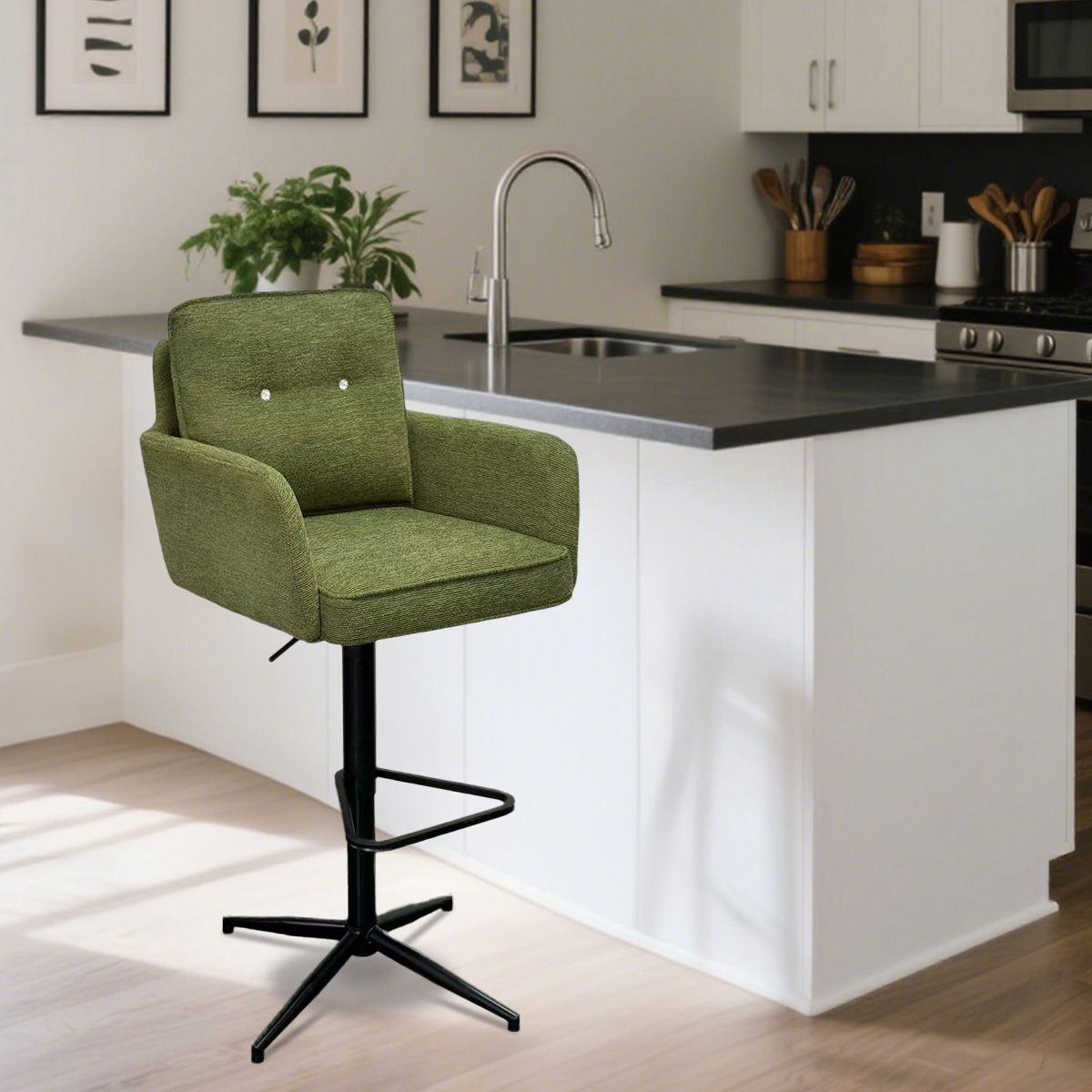
A fabric-covered bar chair has a fully upholstered seat and usually a padded back, wrapped in textiles such as velvet, bouclé, chenille, linen, or performance synthetics. The base is typically a metal frame, a central pedestal, or a four-leg design with a footrest. Because the upholstery hides the frame, manufacturers can add swivel mechanisms and gas-lift height adjustment without compromising the look. This is one reason fabric models dominate modern kitchen islands and lounge counters.
What a Wooden Bar Chair Usually Includes
A wooden bar chair is built with exposed timber on the legs, the seat, the backrest, or all three. It might have a solid wood seat, a bentwood back, or a full timber frame. Wooden stools tend to be stationary, with no height adjustment, and rely on seat shaping rather than padding for comfort. They deliver a natural, warm, often rustic or mid-century look that fabric cannot easily imitate.
Of course, the line is not absolute. Many commercial-grade stools combine a wood frame with a fabric or leatherette seat cushion. If you want both wood's visual warmth and upholstery's comfort, that hybrid is worth considering — and it is becoming easier to source from contract manufacturers.
Comfort and Ergonomics: Where Fabric Pulls Ahead
Seat Cushioning and Temperature
The most obvious difference is cushioning. Fabric bar chairs are padded with high-density foam, which absorbs pressure and lets people sit for an entire meal or a long evening without discomfort. Wooden seats, by contrast, are hard. A contoured wooden seat can be acceptable for a 20-minute breakfast, but it becomes punishing after an hour. Fabric also feels warmer to the touch in winter, while a lacquered wooden seat can feel cold and slippery.
Back Support, Height Adjustment and Movement
Because fabric chairs are usually built over a metal or pedestal base, they are far more likely to have adjustable height, 360-degree swivel, and a footrest ring. Wooden bar chairs are normally fixed-height, which means a mismatch of even 2–3 cm between the seat and the counter will make the chair feel wrong for short or tall users. For reference, counter-height bars typically need seat heights around 61–69 cm, while bar-height counters need 74–81 cm. A fixed wooden stool leaves no margin for error; an adjustable fabric stool with a gas-lift mechanism covers roughly 10–15 cm of this range. If you are seating a range of customers — or family members of different heights — an adjustable fabric bar chair solves a problem that a wooden stool cannot.
This is not to say wooden stools are uncomfortable by design. Some have slight backrest angles and carved seats that follow the body. But their comfort ceiling is lower than a well-padded fabric stool with a proper footrest. For the key differences in comfort, the material matters less than the presence or absence of padding, height adjustment, and back support.
Durability, Cleaning and Longevity
Fabric: Manageable Wear, but Be Careful with Staining
Fabric bar chairs look inviting, but they stain faster than wood. Spilled coffee, wine, or oil can leave marks if you do not act quickly. The good news is that not all fabrics are equal. Solution-dyed, performance-grade, and stain-blocking textiles are designed exactly for this problem. For commercial buyers, Martindale abrasion ratings for commercial fabric bar stools are the simplest way to separate residential-only fabrics from contract-grade ones. A rating of 30,000–50,000 rubs or more is a practical benchmark for bar and restaurant use.
Cleaning a fabric stool usually means vacuuming weekly, spot-cleaning with a mild detergent, and checking the fabric's code before using solvent. Some covers are removable and washable, which simplifies maintenance. If you expect heavy spill traffic, you can also choose durable upholstery textiles for fabric-covered bar stools that resist moisture and pilling.
Wood: Naturally Strong but Not Indestructible
Wooden bar chairs resist stains better than most fabrics, and a quick wipe with a damp cloth removes most everyday messes. But wood has its own vulnerabilities. Unprotected timber can absorb water, warp, or crack in very dry or humid conditions. Solid oak and walnut are hard, but they still scratch; a chair dragged across a floor can leave marks on both the floor and the wood. Lacquered and sealed finishes make wooden stools much more forgiving, and they are easier to refresh by sanding and re-oiling. In a home setting, wooden chairs often age gracefully. In a busy commercial venue, scratched and wet bars can damage them faster than a damage-resistant fabric.
Style and Design Flexibility
Fabric: Colour, Texture and Changing Trends
Fabric gives you the widest design range. You can order the same frame with velvet, bouclé, chenille, or linen in dozens of colours, from neutral greys to emerald and burnt orange. This flexibility is why recent fabric bar stool style trends keep moving toward plush textures and soft, rounded shapes. If you are styling a kitchen island, a hotel lounge, or a café, fabric lets you match the seating to the mood without redesigning the room. To see how this translates into actual pieces, browse the fabric bar chairs collection used in many home and hospitality projects.
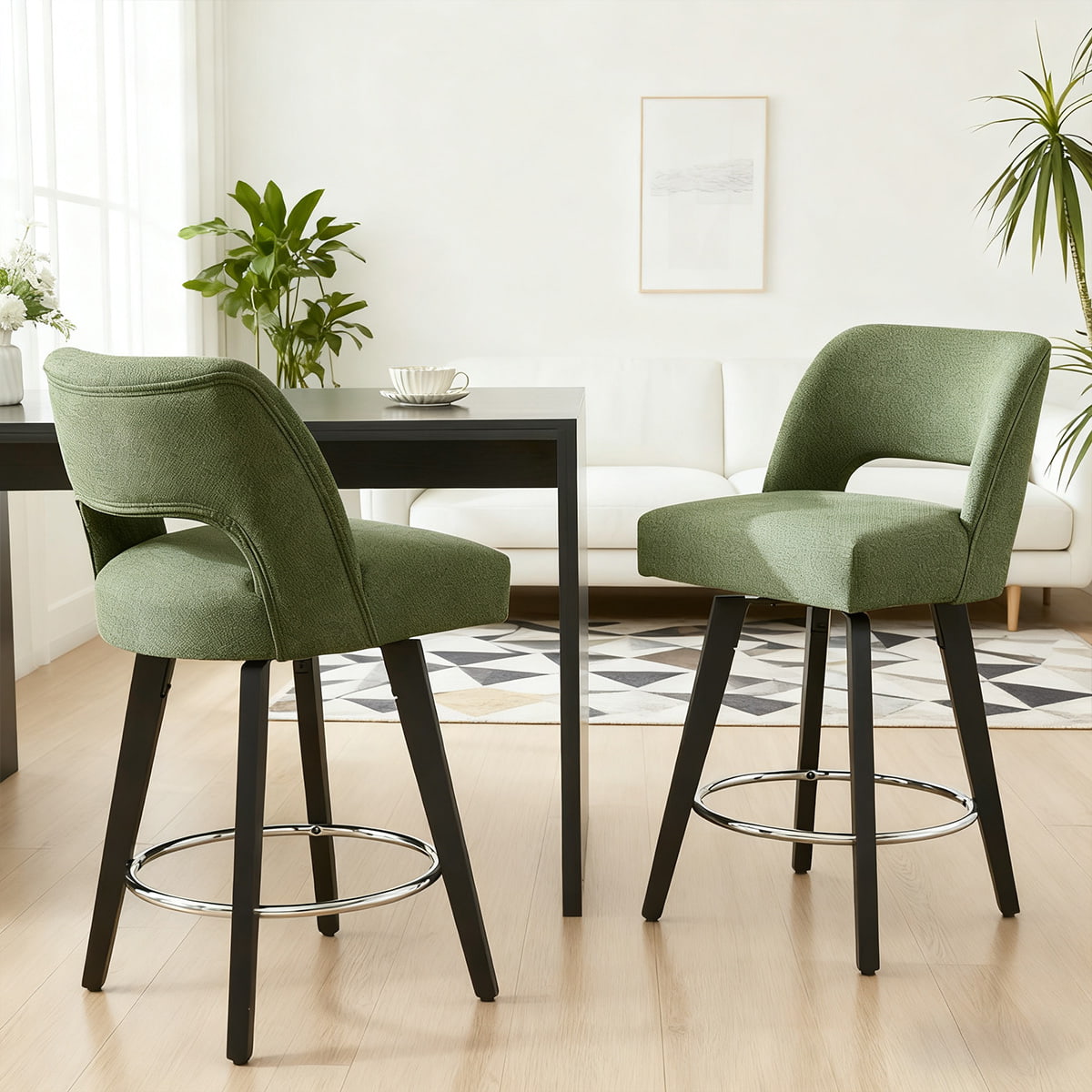 Custom Fabric Bar Chairs With Back Manufacturers, FactoryAs China Custom Fabric Bar Chairs With Back Manufacturers and Factory, Anji Duomei Intelligent Furniture Technology Co., Ltd Offer OEM/OD...View Product →
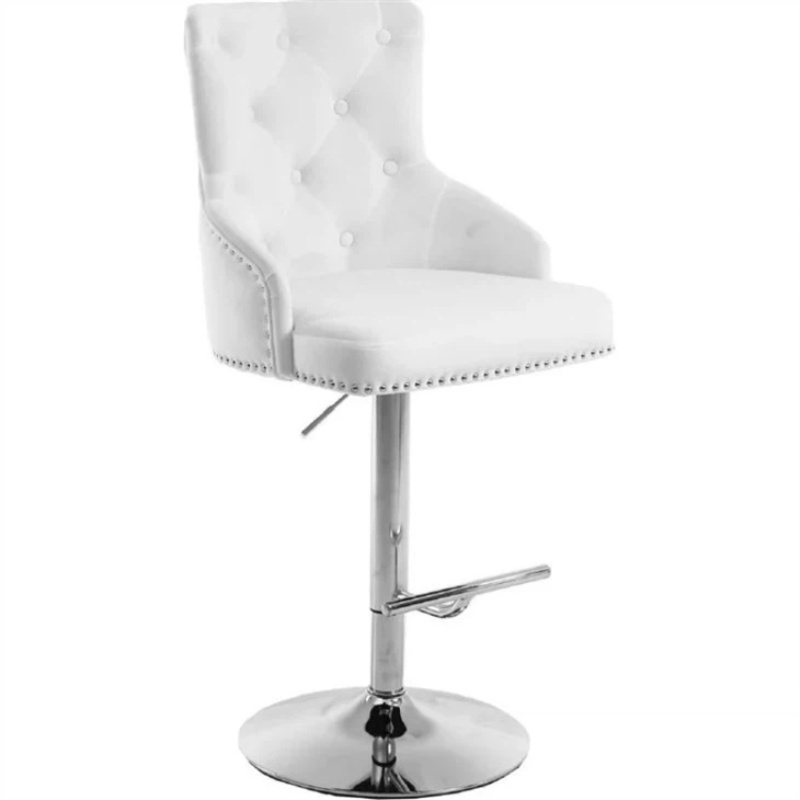
A white bouclé fabric bar stool, for example, introduces a sculptural, tactile accent that would be nearly impossible to achieve in solid wood. It shows how far fabric can go beyond a simple covered cushion.
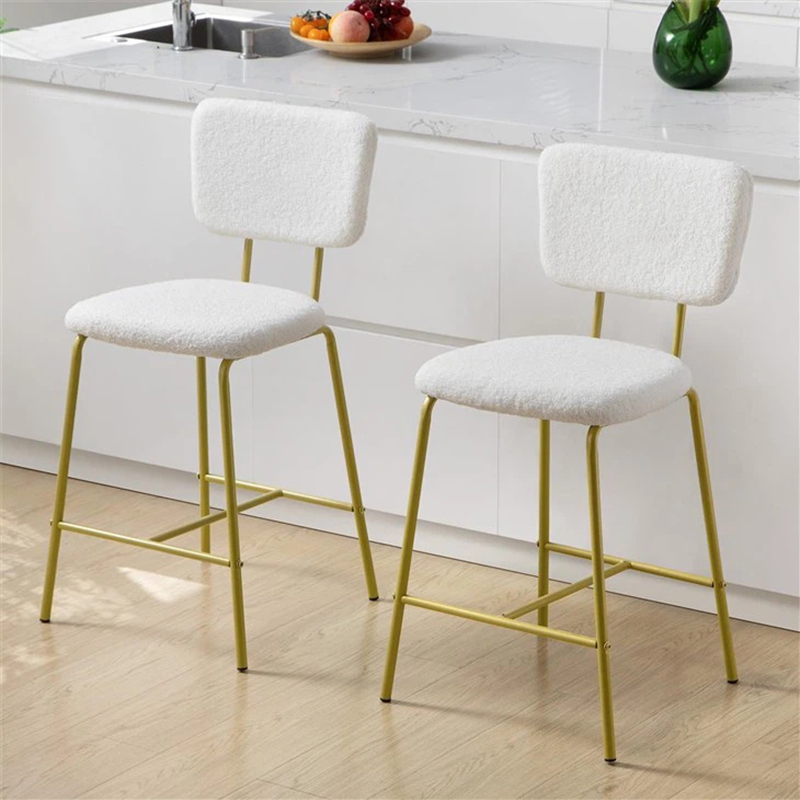 Custom Modern White Upholstered Boucle Fabric Bar Stool Suppliers, ManufacturersAnji Duomei Intelligent Furniture Technology Co., Ltd is China Custom OEM/ODM Modern White Upholstered Boucle Fabric Bar Stool Suppliers ...View Product →
Wood: Natural Grain and Timeless Warmth
Wooden bar chairs offer honesty and permanence. The grain, colour and finish change with the light and age, and they suit farmhouse, Scandinavian, industrial, and traditional interiors without trying hard. Wooden stools also mix well with stone, concrete and metal surfaces, providing a natural counterpoint to modern kitchen materials. The downside is fewer options: you are limited by the species and the finish. If your design requires a pink counter stool or a curved bouclé back, wood alone will not deliver it.
This is exactly why many buyers choose a hybrid: a wooden leg combined with an upholstered seat. It gives the warmth of exposed timber where you see it, plus the comfort of padding where you sit.
Choosing by Use Case: Home Bar vs Commercial Venue
Residential Use
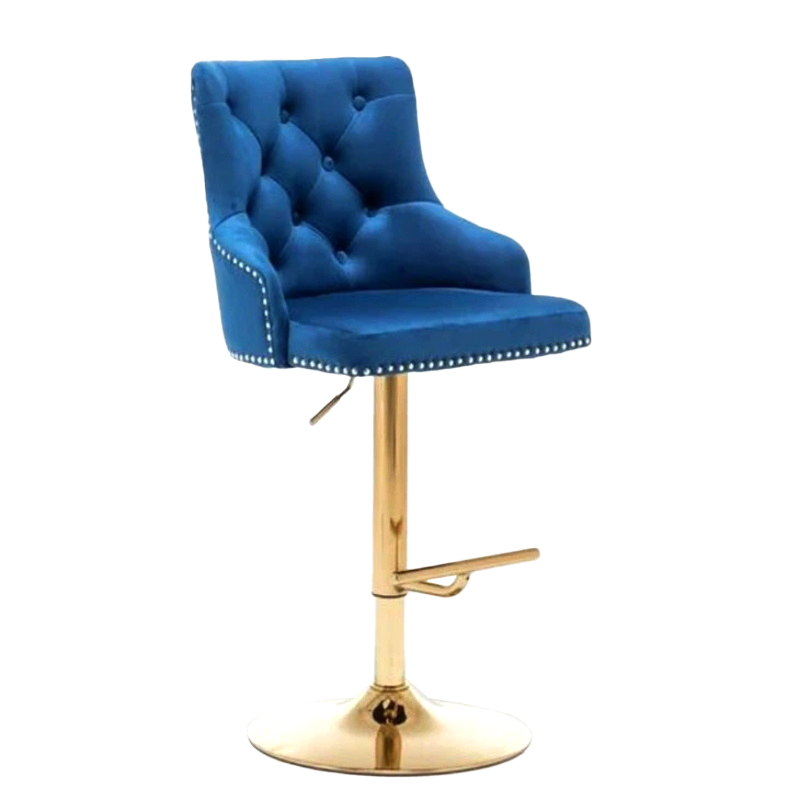
At home, comfort and aesthetics usually win over heavy-duty wear. A fabric bar chair with adjustable height is a sensible choice for a kitchen island used by children and adults, because the seat can be set to the right height for each person. If the space has a more classic or rustic design, a wooden stool will look wonderful — just accept that it needs a cushion for long sitting. A practical middle ground is a velvet fabric bar chair with wooden legs, which fits both a breakfast bar and a small café.
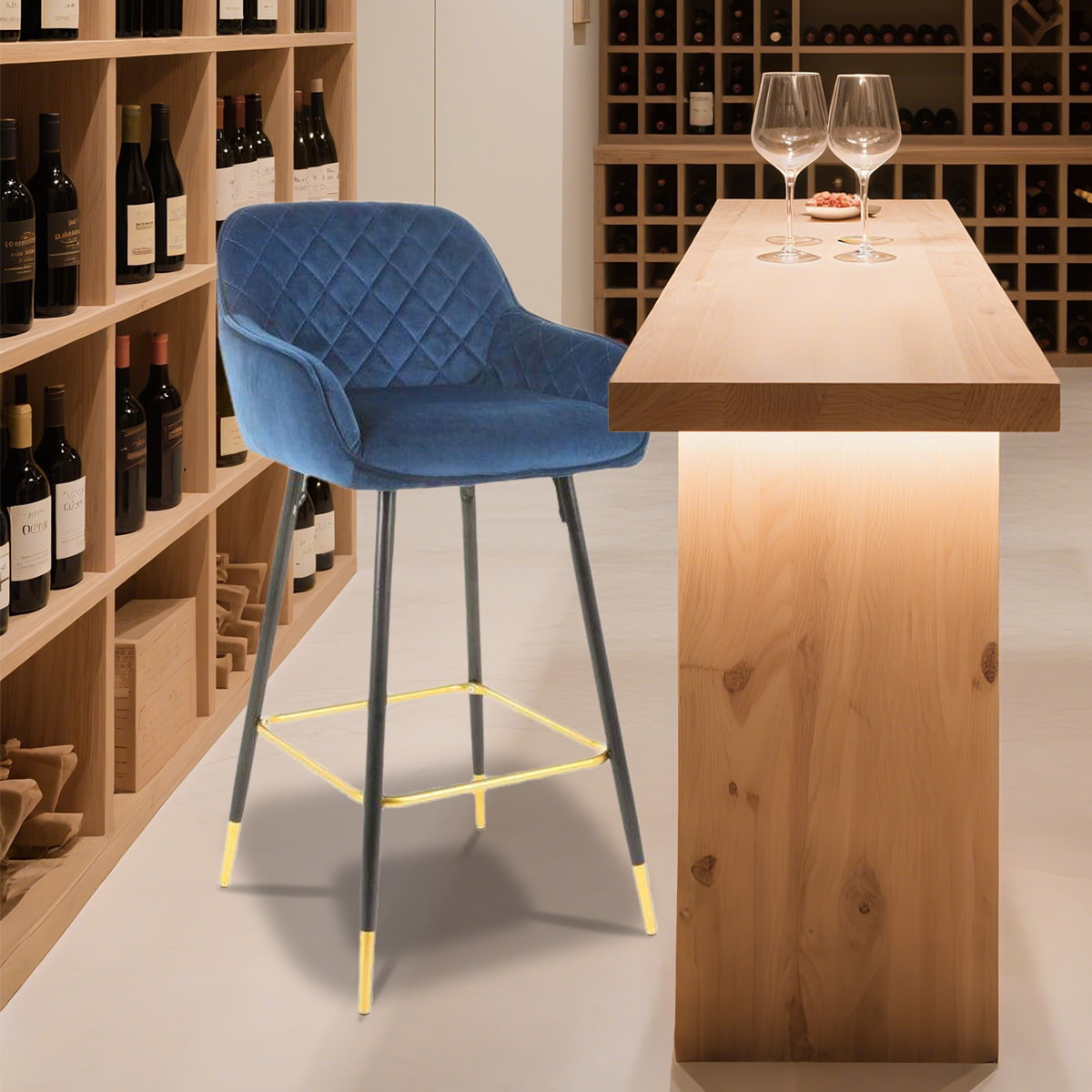 Custom Wood Legs Modern Velvet Fabric Bar Chairs For Home/Shop Suppliers, ManufaAnji Duomei Intelligent Furniture Technology Co., Ltd is China Custom OEM/ODM Wood Legs Modern Velvet Fabric Bar Chairs For Home/Shop Sup...View Product →
Commercial Use
For restaurants, bars, and cafés, your real costs include cleaning time, replacement frequency, and seating turnover. Fabric-covered stools with performance textiles can handle a reasonable number of daily users if you maintain a cleaning routine. Wooden stools are attractive to operators who want a low-maintenance look, but they must be sealed against moisture and regularly inspected for scratches. Many commercial projects choose fabric for the seating area where guests linger, and wooden or metal stools for quick-service counters where people stay only 15–20 minutes.
| Criterion | Fabric-covered | Wooden |
|---|---|---|
| Comfort | Padded, warmer, better for long sitting | Hard; can be shaped but limited |
| Maintenance | Vacuum and spot-clean; stain risk | Wipe down; needs sealing |
| Durability | Dependent on fabric grade | Strong but scratches and moisture-sensitive |
| Height adjustment | Common with gas lift and swivel | Usually fixed |
| Style range | Broad colours and textures | Natural wood tones |
| Best for | Kitchen islands, lounges, cafés | Rustic, traditional, mid-century spaces |
Cost, Lead Time and Sourcing
Price is not simply "fabric is cheaper than wood." A fabric stool with a gas-lift mechanism, a steel base, and a commercial-grade fabric costs more than a basic wooden stool with a plywood seat. Meanwhile, a solid-oak stool with a hand-finished backrest can cost more than a mid-range fabric chair. The real question is total cost of ownership: cleaning materials, replacement parts, and how quickly the surface ages.
For buyers sourcing in volume, the decision also affects lead times and customisation. As a contract furniture manufacturer, we produce fabric bar chairs in a wide range of covers and frames, and we can adjust seat height, backrest angle, base type, and upholstery fabric for projects. Wooden frames, when selected, can also be combined with fabric seats to give you the best of both. If you are sourcing for a project, ask for a fabric spec that includes abrasion, pilling, and lightfastness data, and compare it with the timber's finish and warranty.
The Bottom Line
When someone asks us to compare fabric and wooden bar chairs, we usually narrow the decision down to three questions. How long will people sit? How much cleaning can you tolerate? And what visual atmosphere do you want?
Long sitting and a bright, contemporary look favour fabric. Easy daily maintenance and a natural, durable material favour wood. If you cannot decide, choose a hybrid design with a wooden frame and a fabric seat — it gives you the warmth of wood where it shows and the comfort of upholstery where you sit. Each option has a place in a well-designed contract project; the best choice is the one that matches your users and your maintenance plan.
Related Products

-
 Yangguang Industrial Park 2, Anji County, Huzhou City, Zhejiang Province, China
-
 [email protected]
[email protected]
[email protected]
[email protected]
[email protected]
[email protected]
-
 +86-18357268872
QR CODE

