


 En
En English
 Français
 Español
Fabric Bar Chairs for Restaurants and Hotels: Contract Buyer's Guide 2026
Posted by Admin | 07 Oct
Content
- 1 Fabric Bar Chairs Can Be the Strongest Choice for Hospitality
- 2 Start With the Correct Dimensions
- 3 Fabric Durability: The Specs That Predict Service Life
- 4 Construction and Compliance Decide Whether the Chair Lasts
- 5 Cleaning Routines That Protect the Upholstery
- 6 Sourcing Fabric Bar Chairs From a Contract Manufacturer
Fabric Bar Chairs Can Be the Strongest Choice for Hospitality
For most restaurant and hotel seating programs, fabric bar chairs earn their place ahead of leather-look alternatives. A well-chosen upholstery textile with a high abrasion rating absorbs sound, adds color depth, and keeps its appearance longer than synthetic leather in daily service, provided the frame and foam underneath are built for commercial use. Define the operating conditions first, then choose the chair around them.
A hotel lobby bar open until midnight and a restaurant counter serving breakfast and lunch place very different demands on seating. Fabric bar chairs fail when they are specified like domestic furniture; they last when the operator starts from occupancy, cleaning routines, and expected life cycle. The commercial fabric bar chair collection we produce is built around that logic, with commercial-grade fabrics, welded steel and solid wood frames, adjustable heights, and repeatable designs that work across an entire project.
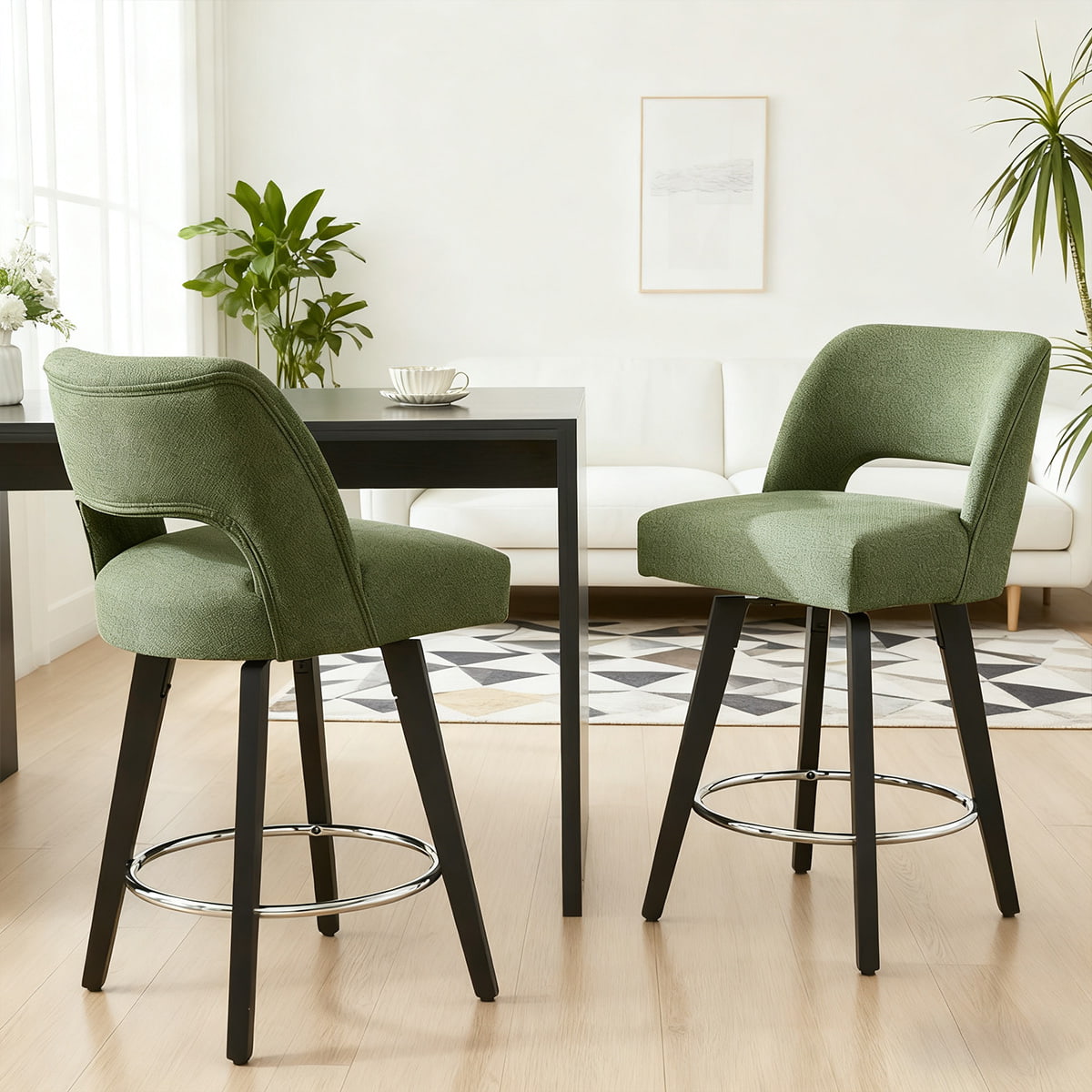 Custom Fabric Bar Chairs With Back Manufacturers, FactoryAs China Custom Fabric Bar Chairs With Back Manufacturers and Factory, Anji Duomei Intelligent Furniture Technology Co., Ltd Offer OEM/OD...View Product →
There is also an acoustic argument. Hard floors, exposed ceilings, and glass fronts make modern hospitality spaces noisy, and upholstered seats absorb more sound than rigid plastic or leather-look surfaces. A bar counter lined with fabric seats lowers the general noise level, which is one of the strongest contributors to guest satisfaction scores.
Start With the Correct Dimensions
The most frequent specification error in hospitality projects is a stool that is too low or too high for its counter. A 42-inch high bar counter needs a seat height of 28 to 30 inches; a 36-inch breakfast or prep counter needs 24 to 26 inches; a casual low bar at 30 to 32 inches needs a seat around 20 to 23 inches. When one model must serve several areas, an adjustable gas-lift version gives the safest margin for error.
Seat Height and Counter Match
Measure the surface height at the design stage and keep a record for every serving area. The same counter can vary by an inch or two across a long run, so check the finished floor and the actual countertop. If the floor has an irregular slope, a swivel stool with height adjustment is a practical solution.
Backrest, Footrest, and Seat Depth
Guests stay longer when the backrest gives lumbar contact and the footrest is where the legs naturally land. Restaurant counters usually favor a high back because diners lean back between courses; cocktail bars often prefer a low back or backless profile for a more open look. Seat depth around 16 to 17 inches suits most adults, and the footrest should sit low enough that the knee stays at a relaxed angle. A footrest that is too high lifts the knees and becomes uncomfortable within 20 minutes.
| Surface height | Typical use | Recommended seat height | Recommended model type |
|---|---|---|---|
| 40-42 in / 102-107 cm | Bar counter, cocktail lounge | 28-30 in / 71-76 cm | Swivel with gas lift or fixed-height stool |
| 36 in / 91 cm | Breakfast bar, prep counter | 24-26 in / 61-66 cm | Counter-height stool |
| 30-32 in / 76-81 cm | Low bar, lounge seating edge | 20-23 in / 51-58 cm | Low bar stool |
Fabric Durability: The Specs That Predict Service Life
Rub Counts and Testing Standards
For daily hospitality service, specify a fabric with a Martindale rating of at least 30,000 rubs and consider 50,000 or more for high-traffic venues. This number predicts whether the upholstery will develop wear at the front edge of the seat, where guests slide on and off several hundred times per week. Our guide to Martindale ratings for commercial bar stools explains how the test is performed and what figures to request from your supplier. Velvet is not automatically delicate; selected velvet weaves with high rub counts are used in busy hotel bars for their depth of color.
Choosing a Fabric That Works in Your Venue
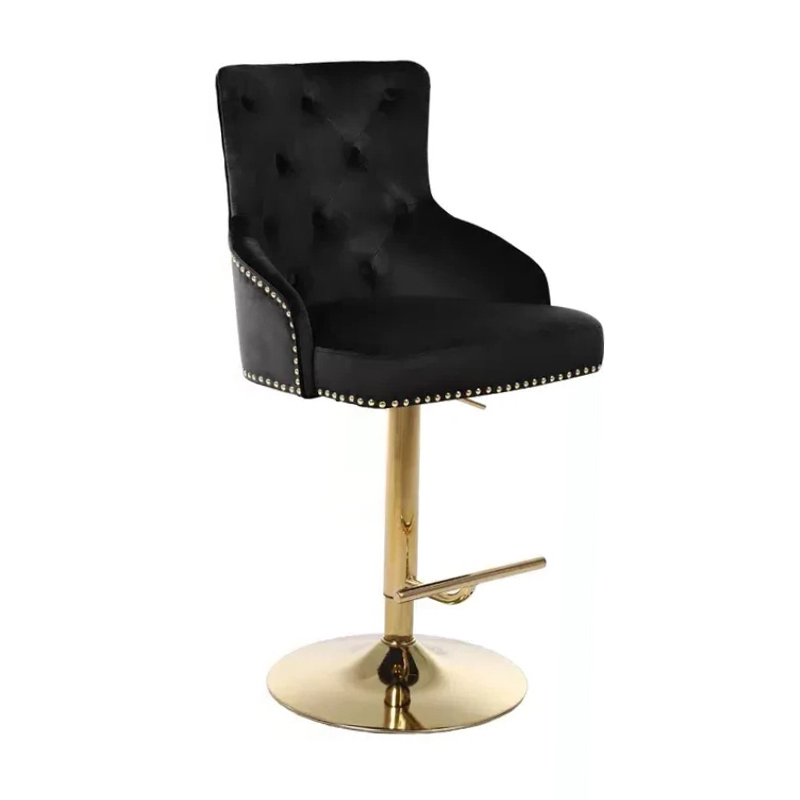
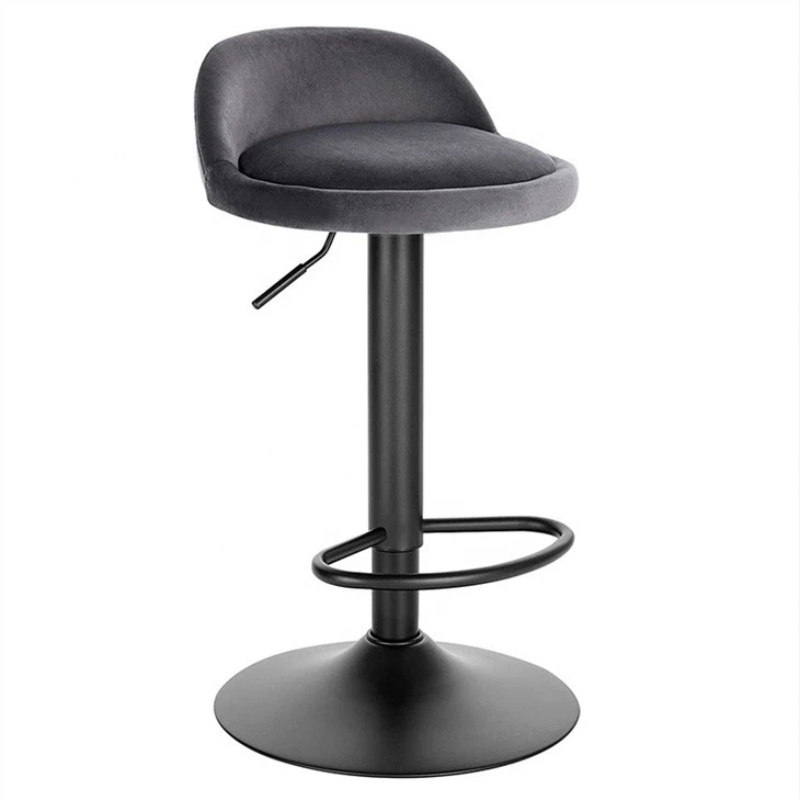
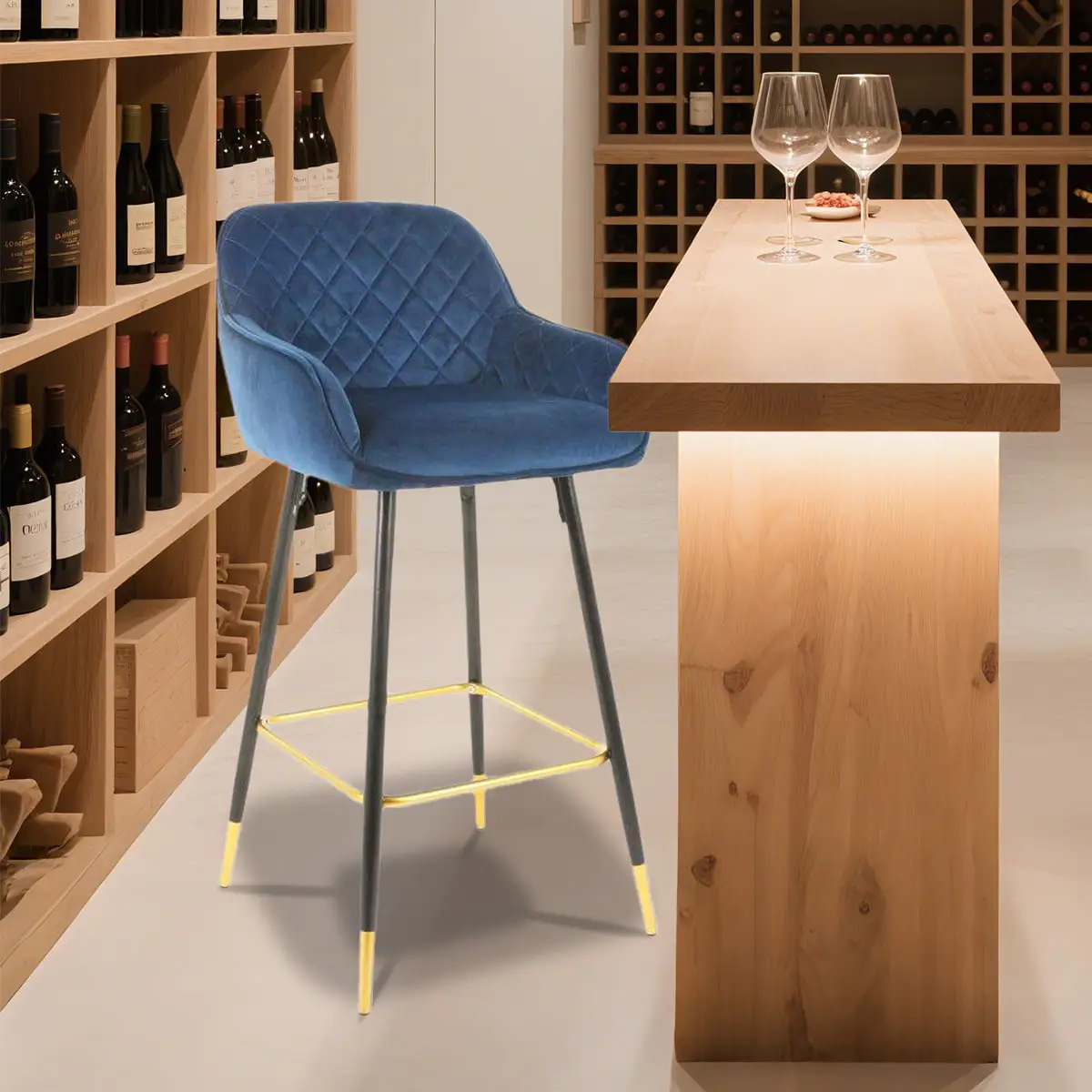
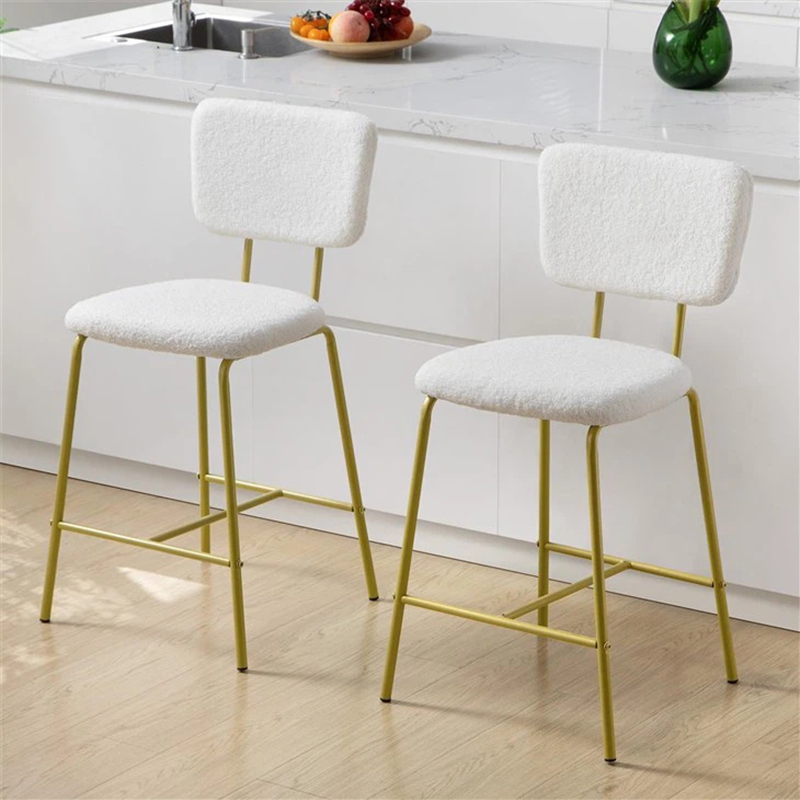
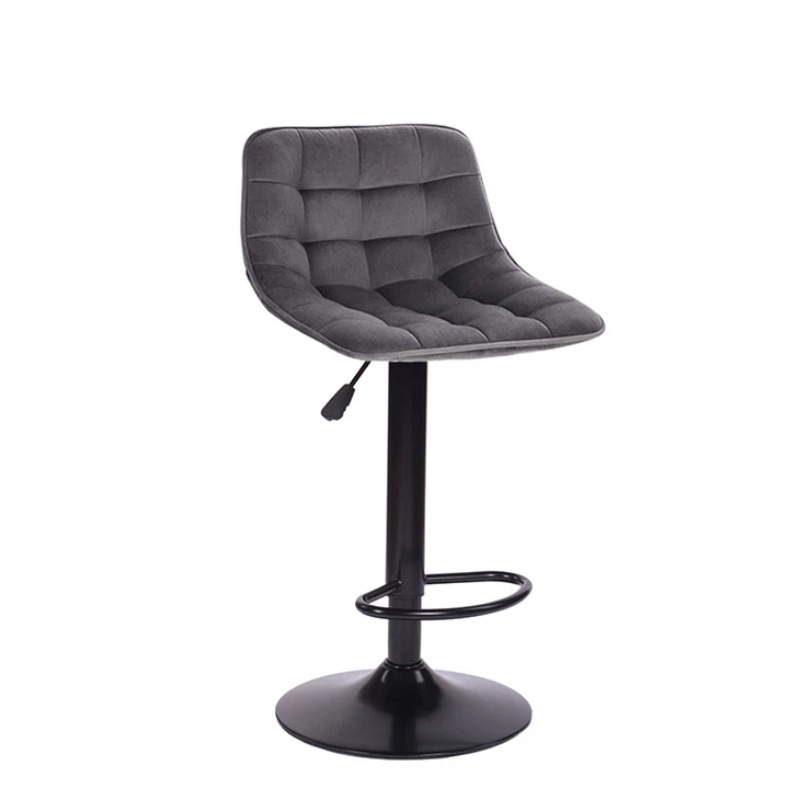
Four fabric families cover most contract bar chair programs. Velvet delivers saturated color and a soft hand, which suits hotel lounges and specialty restaurants; the classic velvet bar stool in our range is a typical example of this direction. Bouclé adds texture and hides light soiling, which makes it practical as well as fashionable; the modern bouclé upholstered bar stool shows how the material behaves on a slim metal frame. Chenille is valued for softness and moderate cost, while linen blends and clean plain weaves offer a calm, easy-to-match look for larger programs.
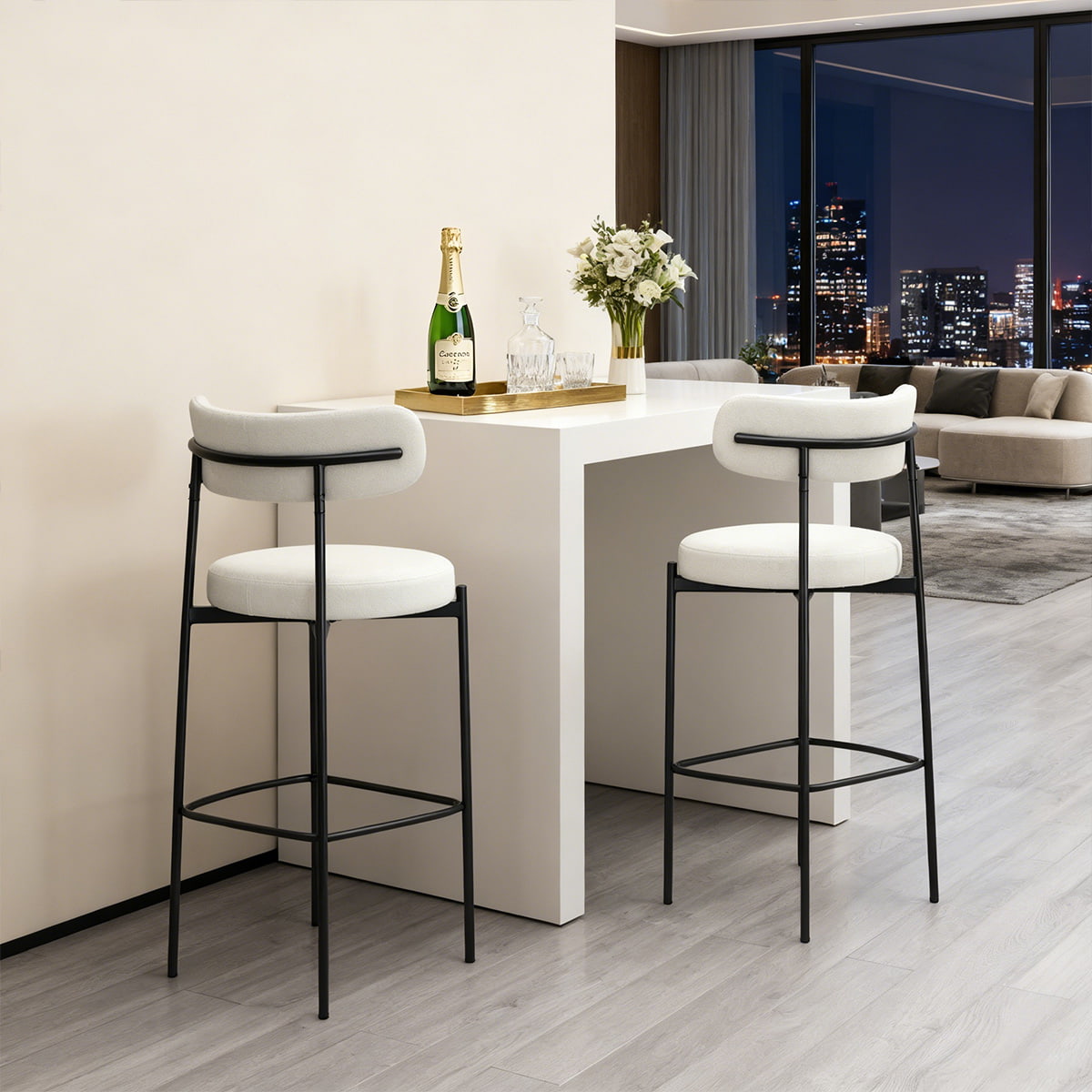 Custom Modern White Bouclé Bar Stool with Black Metal Legs — Upholstered CounterAnji Duomei Intelligent Furniture Technology Co., Ltd is China Custom OEM/ODM Modern White Bouclé Bar Stool with Black Metal Legs — Uphol...View Product →
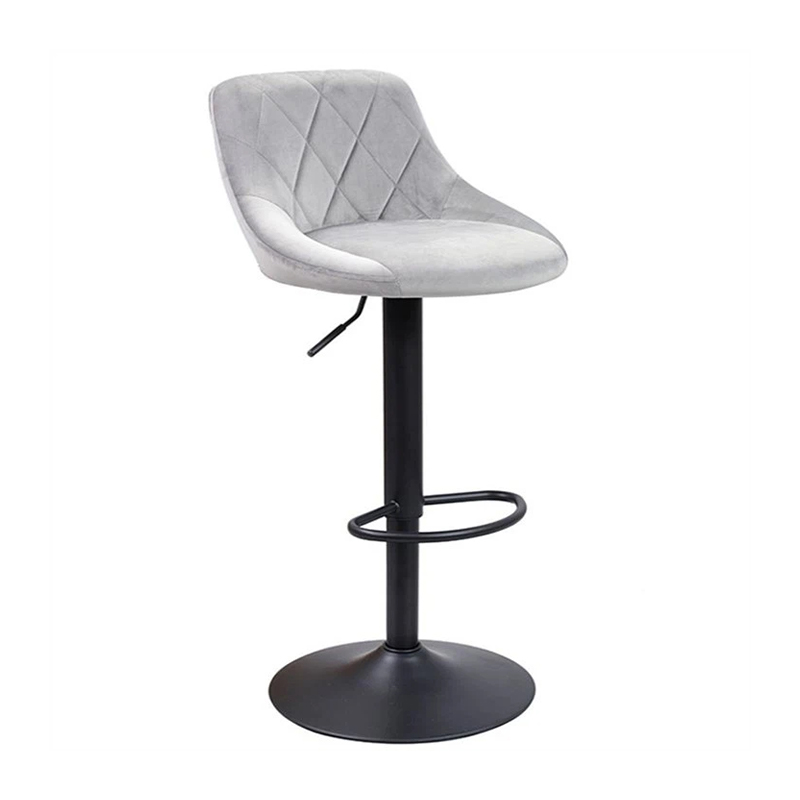 Custom Classic Modern Velvet Bar Stools For Kitchen Island Or Home Bar SuppliersAnji Duomei Intelligent Furniture Technology Co., Ltd is China Custom OEM/ODM Classic Modern Velvet Bar Stools For Kitchen Island Or Home...View Product →
| Fabric | Appearance | Durability notes | Best suited for |
|---|---|---|---|
| Velvet | Deep color, soft sheen, low pile | Strong when rub count is high; vacuum regularly | Hotel bars, restaurant counters |
| Bouclé | Textured loops, matte, relaxed | Hides marking; needs professional cleaning | Lobbies, modern bistros |
| Chenille | Soft, dense, slightly lustrous | Durable and comfortable; avoid abrasive brushes | Family restaurants, cafés |
| Linen blend | Matte, crisp, breathable | Easy to match; treat stains quickly | Resort dining, clubs |
Beyond the face fabric, ask about the cushion. A high-resilience foam with a density of at least 25 kg/m³ keeps its shape over years of service, while softer foams feel comfortable for a week and then develop a permanent hollow. Many commercial models use a thick molded cushion with a wrapped liner so the seat keeps its profile under continuous use.
Construction and Compliance Decide Whether the Chair Lasts
Frame, Base, and Mechanisms
Fabric is what guests touch, but the frame is what survives the fifth year. Commercial fabric bar chairs should use a welded steel frame with a powder-coated finish rather than a bolted assembly, and the base footprint must be wide enough to keep the stool stable when a guest leans sideways. Swivel and gas-lift models need a mechanism with a tested cycle life; a domestic-grade lift starts sagging after a few months of continuous service.
Fire Safety and Stability Requirements
Confirm the flammability requirements before ordering. European projects commonly expect foam and fabric to meet BS 5852 or the relevant local schedule, while North American projects often reference CAL TB 117 or the current federal standard. Also check the stability test the chair will face under real loads and ask whether the seat cover can be replaced without scrapping the whole stool; a bolted footring or a removable seat cover makes repair economical, while a fully glued construction does not. In hospitality, where furniture is written off faster than in domestic use, this distinction shows up directly in the budget.
Cleaning Routines That Protect the Upholstery
The maintenance plan is part of the specification. Fabric bar chairs in a restaurant or hotel should be vacuumed weekly to remove the abrasive dust that cuts upholstery fibers, spot-cleaned immediately after spills with a mild upholstery shampoo, and professionally deep cleaned every 6 to 12 months depending on traffic. Metal legs and footrests only need a damp wipe. Some operators add an invisible stain-resistant treatment at the factory stage rather than relying on aftermarket sprays, which can slightly change the fabric texture. The key is to train the floor team to treat stains before they set; an hour-old coffee spill is a different problem from a fresh one regardless of fabric quality.
Sourcing Fabric Bar Chairs From a Contract Manufacturer
When a project needs consistent quality across dozens or hundreds of units, sourcing from a manufacturer that understands contract programs beats assembling chairs from different retail suppliers. Anji Duomei, a contract furniture maker in Anji, Zhejiang, China, has produced and exported fabric bar chairs, dining chairs, and lounge seating since 2014. The factory employs more than 70 people and covers about 4,000 square meters, with tube bending, stamping, welding, sewing, and assembly under one roof. That matters because the frame, foam, and fabric are matched inside the same quality system rather than across three suppliers.
A contract manufacturer also changes the way you specify. You can request OEM or ODM development, choose fabrics from the in-house program or your own material, test samples before committing to a volume order, and have every unit inspected before shipment. Our full bar chair catalog gives an overview of the models available, from adjustable swivel stools to fixed-height counter chairs. A short conversation with the engineering team early in the project saves more time and budget than a month of internal specification work.
Before production, settle four points in writing:
- the accepted sample and the tolerance for color and texture across batches;
- the inspection point, including whether third-party inspection is allowed;
- the packaging standard for export and any assembly requirements;
- the replacement policy for defective units during the first year of service.
Related Products
-
 Yangguang Industrial Park 2, Anji County, Huzhou City, Zhejiang Province, China
-
 [email protected]
[email protected]
[email protected]
[email protected]
[email protected]
[email protected]
-
 +86-18357268872
QR CODE

