


 En
En English
 Français
 Español
What Materials Are Used in Fabric Bar Chairs? Our Practical Buying Guide
Posted by Admin | 19 Aug
Content
- 1 Start With the Upholstery, Not the Shape
- 2 What a Bar Chair Fabric Has to Handle
- 3 The Five Main Fabric Families in Fabric Bar Chairs
- 4 What Sits Under the Fabric: Foam, Fiber, and Frame
- 5 Frame and Base Materials: Metal, Wood, and Cantilever
- 6 Comparing the Materials at a Glance
- 7 Choosing the Right Material for Your Use Case
- 8 Cleaning and Maintenance by Material
- 9 Final Thoughts
Start With the Upholstery, Not the Shape
If you're comparing fabric bar chairs for a kitchen island, a breakfast bar, or a commercial lounge, the first thing to understand is that "fabric" is not one material. It is a category that includes velvet, chenille, bouclé, linen blends, and engineered performance textiles — and each behaves differently under daily use. The rule of thumb: for most home settings, velvet or chenille gives the best combination of comfort, appearance, and service life. For commercial projects and busy family kitchens, a high-abrasion performance fabric or dense polyester velvet is the safer choice.
Beyond the upholstery, the cushion core and the frame shape how a fabric bar chair feels and how long it actually lasts. This guide breaks down the materials that go into fabric bar chairs, what each one means in practice, and how to match them to your space.
What a Bar Chair Fabric Has to Handle
A bar chair fabric does more than look good. It covers the cushion, carries the design, and absorbs more friction than a dining chair fabric, because people slide onto the seat, push off it when standing, and often spin on swivel models. That is why abrasion resistance, stain resistance, and cleanability matter more for bar chairs than for almost any other upholstered seat.
The Five Main Fabric Families in Fabric Bar Chairs
Across residential and contract production, fabric bar chairs are made with five principal textile families. Each one solves a different problem.
Velvet
Velvet is the most common upholstery material in the fabric bar chair category. Its short, dense pile gives the seat a rich depth of color that works across mid-century modern, classic European, and contemporary designs. Most production bar chairs use polyester velvet, which is noticeably more durable and easier to clean than cotton velvet. The main caveat is pile direction: velvet shows shading and brush marks when the pile is rubbed against the grain, so it benefits from occasional vacuuming and steaming to keep a uniform finish.
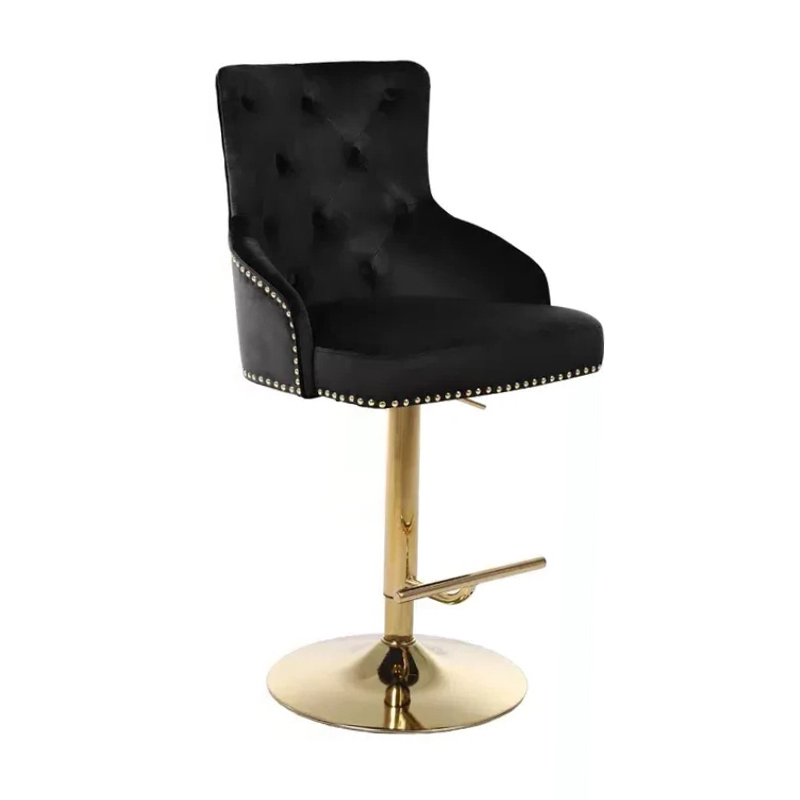
When you choose a velvet bar chair, check the foam beneath the fabric as closely as the pile above it. A set of high-density spongy velvet bar stools with gold legs combines dense foam with a hard-wearing velvet cover, which is the configuration we recommend for kitchen counters and mid-traffic commercial areas.
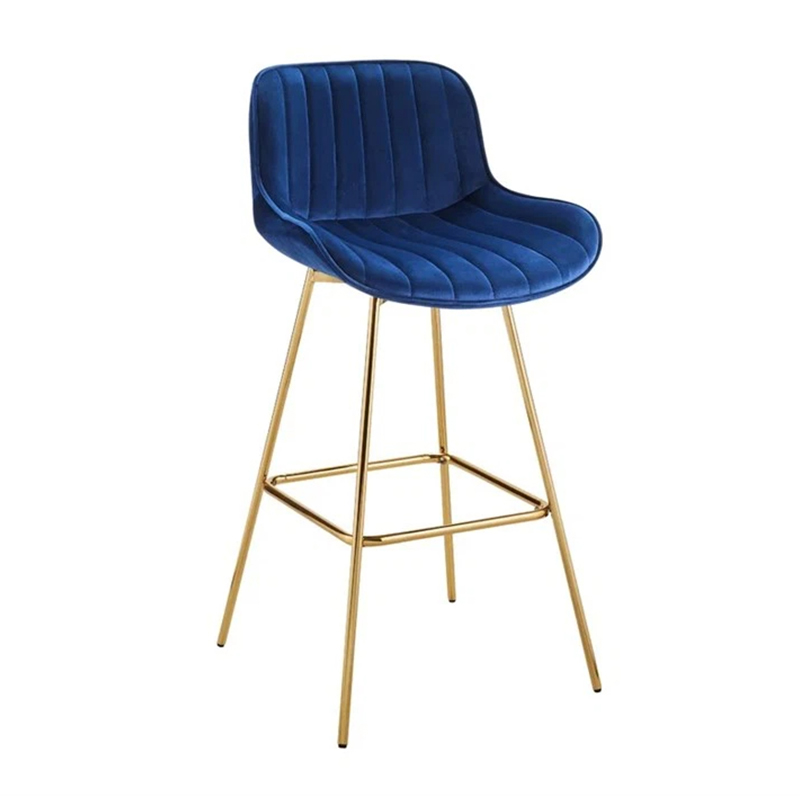 Custom High Density Spongy Velvet Bar Stools With Gold Legs Suppliers, ManufactuAnji Duomei Intelligent Furniture Technology Co., Ltd is China Custom OEM/ODM High Density Spongy Velvet Bar Stools With Gold Legs Suppli...View Product →
Chenille
Chenille is essentially a velvet cousin made from twisted yarns, which gives it a heavier, corded texture. It is a favourite in Scandinavian and farmhouse styles because it reads warmer and more tactile than standard velvet. Chenille hides wear well, since the twisted structure distributes abrasion across multiple fibers, but it can snag on sharp objects and pet claws.
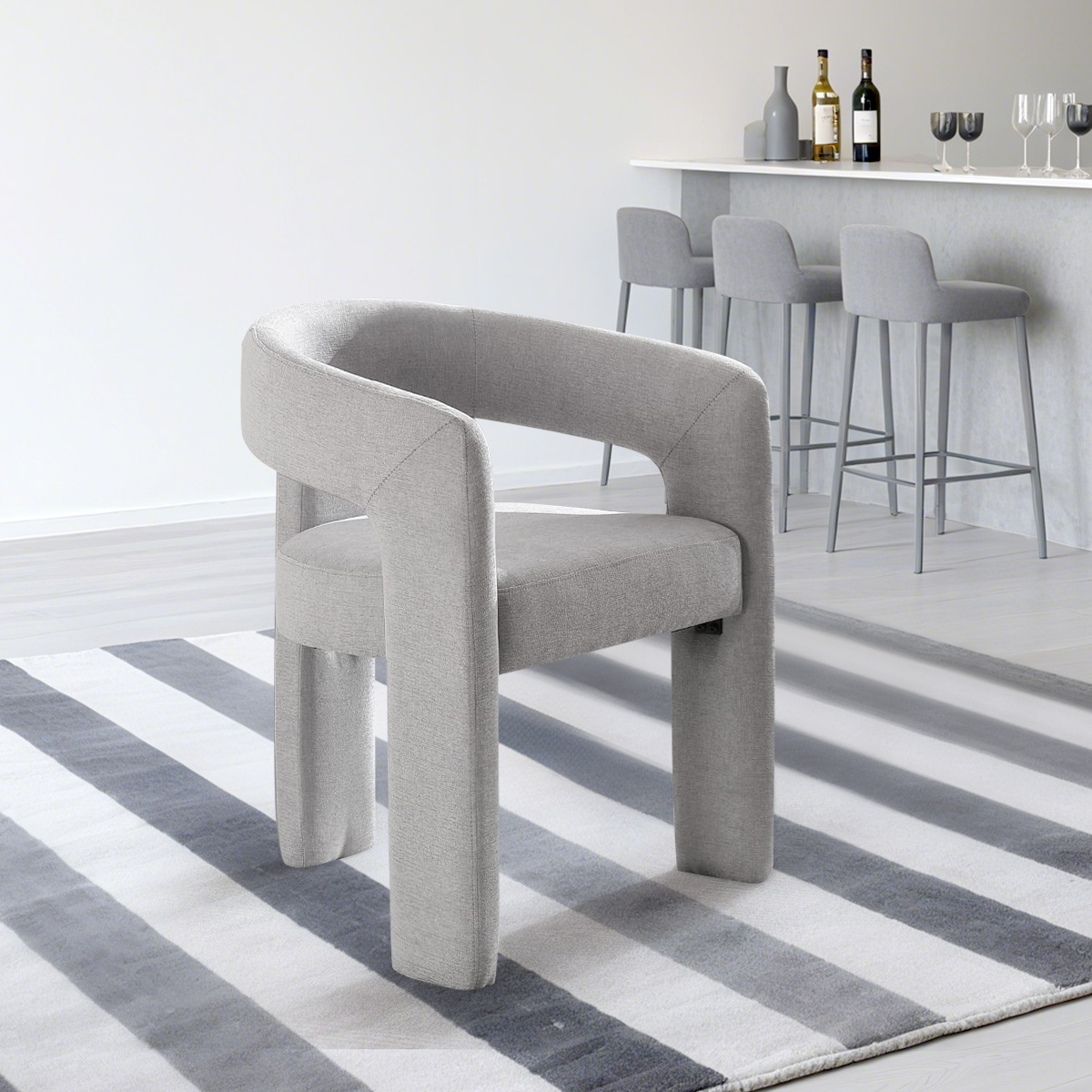
If you like the look, choose a model with reinforced seams and a well-stitched cover. A modern beige chenille counter-height bar stool with a curved back is a good example of the style and works well in breakfast nooks and residential kitchen islands.
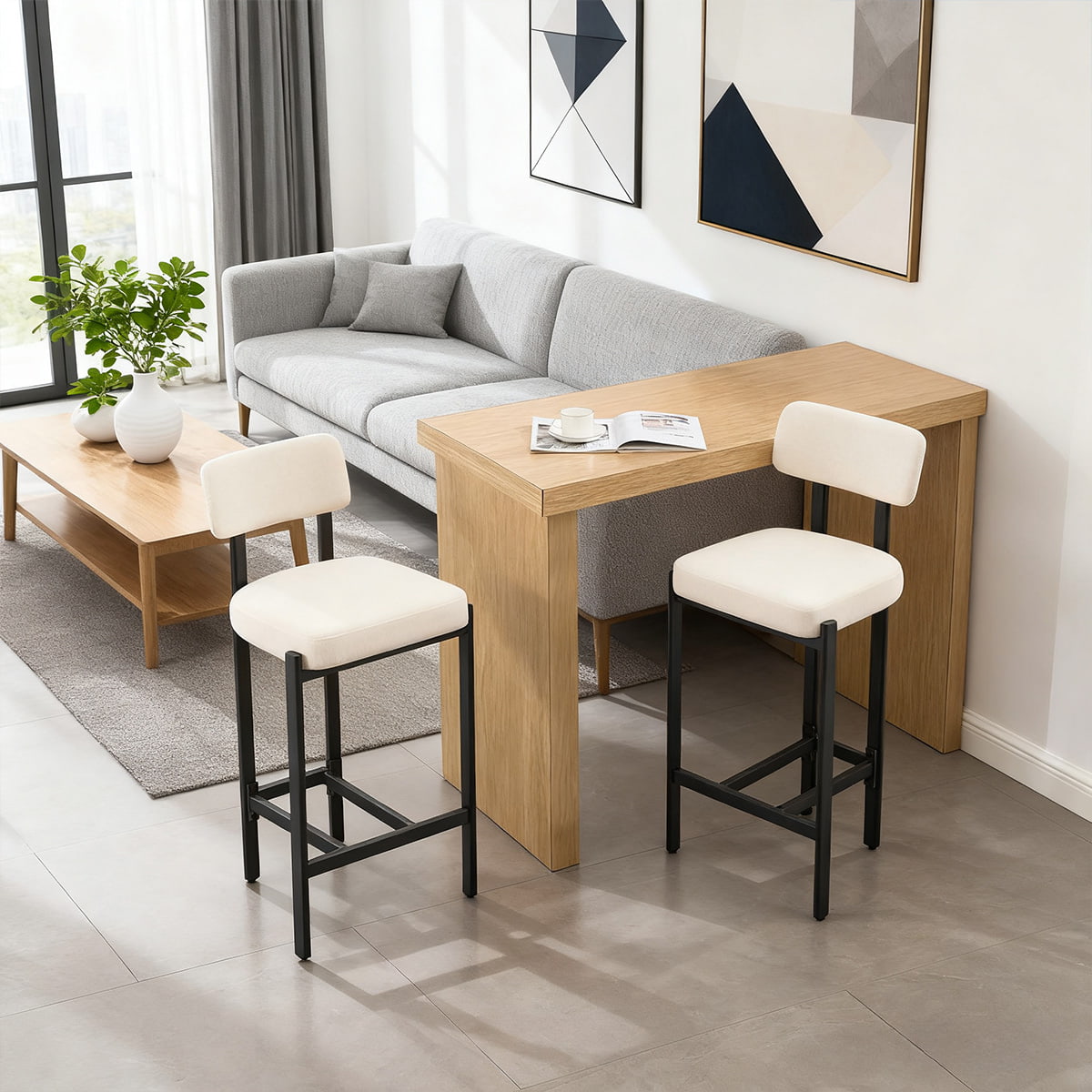 Custom Modern BeigeChenille Counter Height Bar Stools — Upholstered Curved Back Anji Duomei Intelligent Furniture Technology Co., Ltd is China Custom OEM/ODM Modern BeigeChenille Counter Height Bar Stools — Upholstere...View Product →
Bouclé
Bouclé is the looped, nubby fabric that has become one of the defining bar chair materials of recent years. The looped yarns create a thick, casual texture that hides small spills effectively, because liquid does not spread easily across the uneven surface. The trade-off is moderate durability: heavy rubbing can cause loops to fray or pill, so bouclé is best suited to homes, boutique cafés, and low-traffic lounge corners.
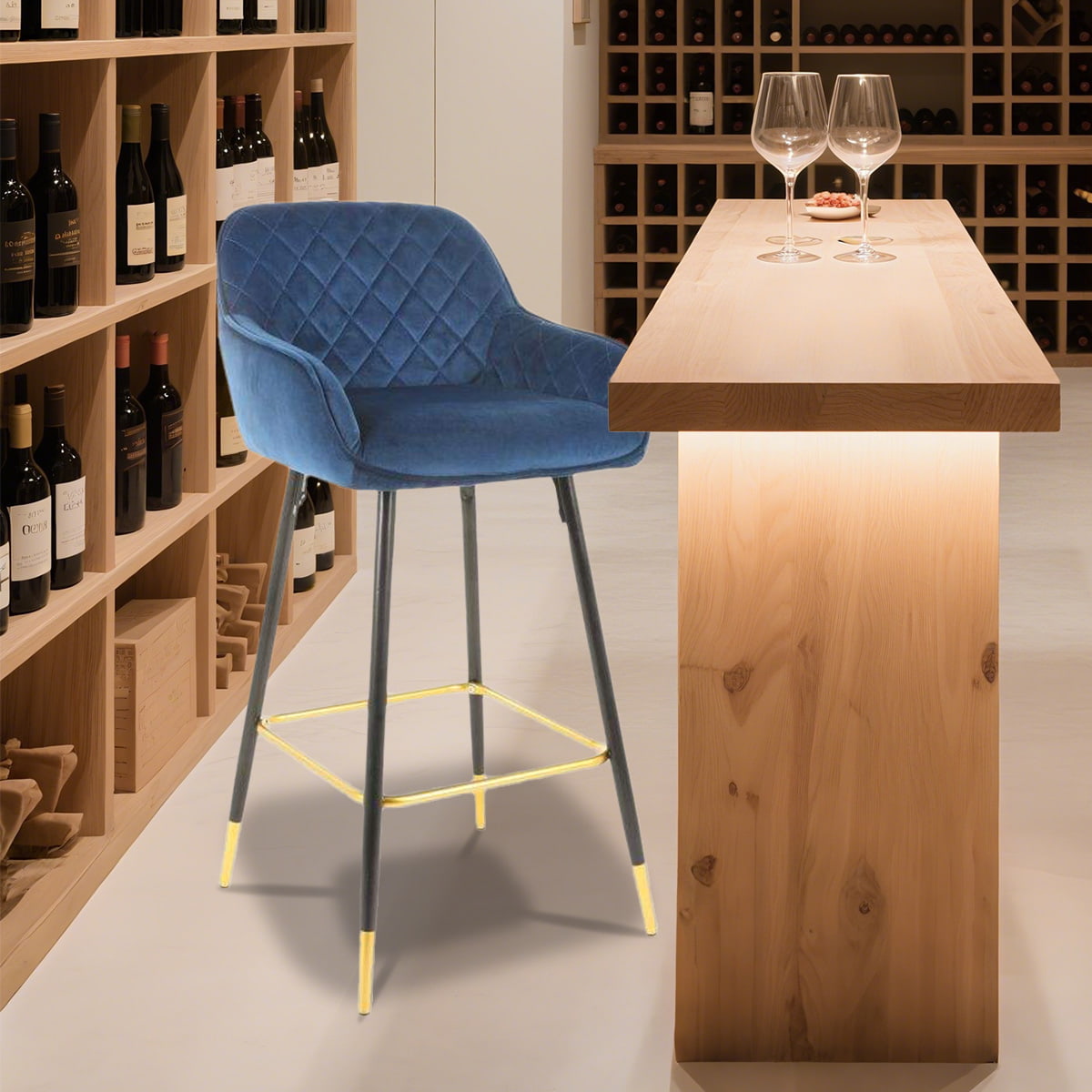
A modern white bouclé bar stool with black metal legs captures the contemporary look while keeping the structure simple, which makes it easier to clean than heavily tufted designs.
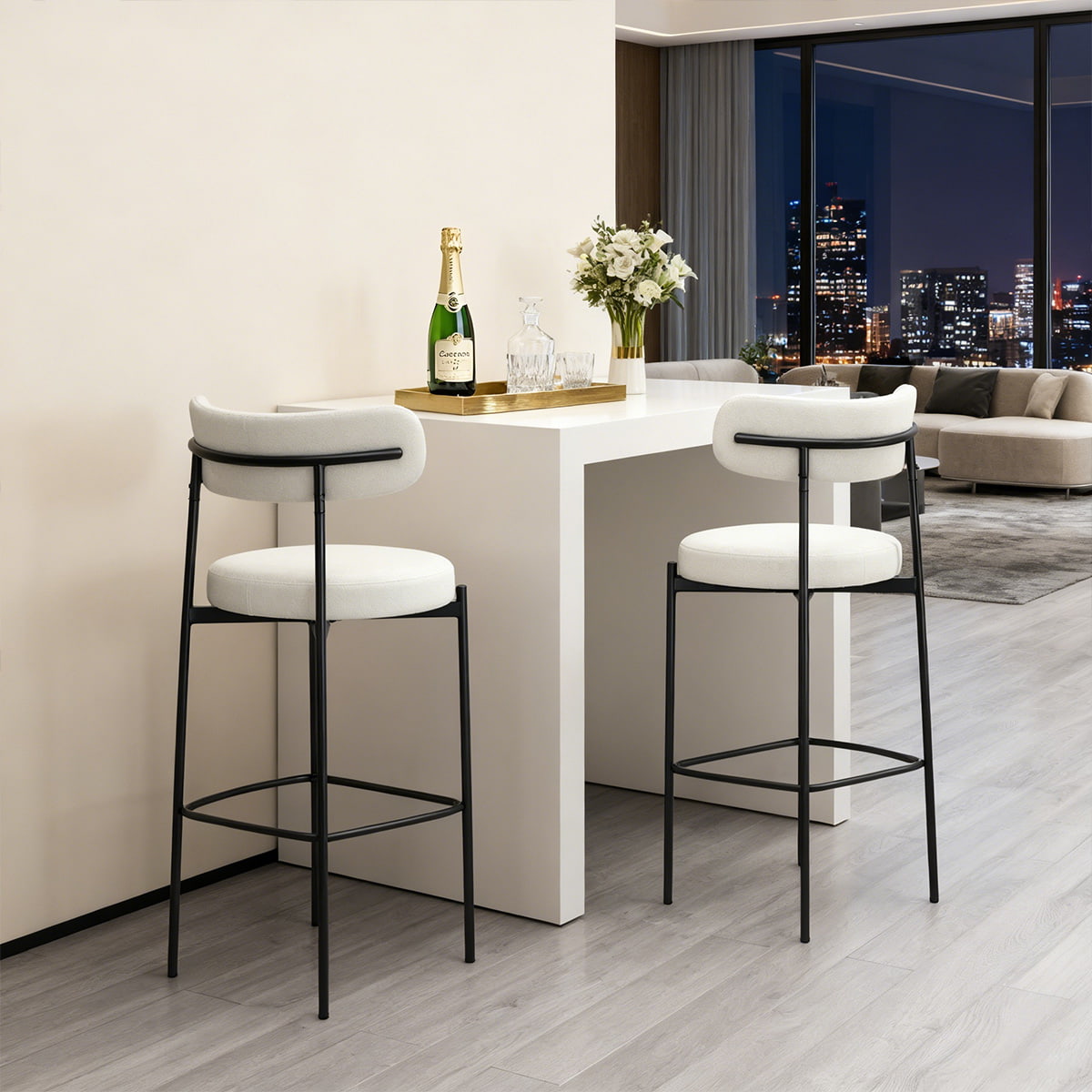 Custom Modern White Bouclé Bar Stool with Black Metal Legs — Upholstered CounterAnji Duomei Intelligent Furniture Technology Co., Ltd is China Custom OEM/ODM Modern White Bouclé Bar Stool with Black Metal Legs — Uphol...View Product →
Linen and Linen Blends
Linen brings a natural, matte finish that feels airy and light, especially in white and beige tones. Pure linen wrinkles quickly and wears too fast for a bar chair, so manufacturers use a linen-polyester blend that keeps the look of linen while adding strength. Linen blends are breathable and comfortable in warm climates, but they are not the best choice for spaces with frequent spills.
Performance Fabrics and Microfiber
Performance textiles are synthetic upholstery materials engineered for high abrasion resistance, stain resistance, and easy cleaning. Microfiber — a very fine polyester yarn — is the most common in this family. It feels soft and slightly suede-like, yet its tight weave prevents liquids from soaking in quickly. Many performance fabrics also carry a protective finish that makes spilled coffee or juice bead up on the surface, where you can simply blot it away.
This is the material family to consider first if the fabric bar chair will sit in a family kitchen or a commercial restaurant.
What Sits Under the Fabric: Foam, Fiber, and Frame
The upholstery is only the outer layer. Beneath it, the seat and backrest are built around a cushion core and a structural frame, and both determine how long the chair stays comfortable.
Cushion Core
High-density polyurethane foam is the standard for fabric bar chairs that are meant to last. Look for foam with a density of at least 30 kg/m³ — it keeps its shape and support for years. Cheaper low-density foam develops a permanent depression within months, and once that happens, no fabric in the world will save the seat. Some chairs add a thin layer of polyester fiber over the foam to soften the edges and create a rounder silhouette, which is fine as long as the foam underneath is dense.
Frame Construction
The frame carries the load of every person who sits down. In the fabric bar chair segment, welded steel or iron frames dominate for good reason: they are consistent, strong, and suitable for commercial use. Hardwood frames — usually beech, rubberwood, or ash — appear more often in premium residential designs. If a chair uses wood, check that the joints are glued and screwed or dowelled, not simply stapled.
Frame and Base Materials: Metal, Wood, and Cantilever
The base material affects stability, style, and how practical the chair is to move. Metal bases are the most common in fabric bar chair production. Powder-coated black steel is the default for modern and industrial settings, while brushed gold and chrome finishes are used for glamour-oriented designs. Metal is strong and easy to keep clean, which makes it the sensible default for kitchens.
Wooden bases give a warmer, more traditional feel. They tend to be heavier than metal, which increases stability but makes the chair less convenient to relocate. Solid beech, rubberwood, and ash are the hardwoods you want to see specified.
Cantilever bases — the sled-shaped frame that curves under the seat — are increasingly common in mid-century modern fabric bar chairs. A cantilever base spreads the load along the floor and creates a slight springiness that many people find comfortable. It also removes the four-leg footprint, which makes a row of chairs look cleaner in a dining or bar layout.
Comparing the Materials at a Glance
The table below summarizes how the main upholstery materials compare across the factors that matter most.
| Material | Texture | Durability | Best Use |
|---|---|---|---|
| Polyester velvet | Soft, dense pile | Good | Home kitchens, moderate commercial seating |
| Chenille | Soft, corded texture | Good | Residential kitchen islands, breakfast bars |
| Bouclé | Looped, nubby | Moderate | Residential, boutique cafés, lounge corners |
| Linen blend | Crisp, matte | Moderate | Light decors, low-traffic seating |
| Microfiber / performance | Fine, suede-like | Very good | Family kitchens, restaurants, bars |
Choosing the Right Material for Your Use Case
The decision narrows down once you define the setting.
For a residential kitchen island or breakfast bar, velvet and chenille give you the most comfortable feel and the widest choice of colors and silhouettes. If style is your priority, bouclé is the fashionable pick, and it pairs beautifully with black metal legs — you can see the direction in our roundup of fabric-covered bar stool style trends for 2026. Just be ready to vacuum it regularly and keep sharp objects away.
For a commercial setting — a restaurant, café, hotel lounge, or office break area — abrasion resistance is the non-negotiable factor. Fabric durability is measured on the Martindale scale, and the threshold matters: seating that sees continuous use should be at least 30,000 rubs, while high-traffic bars should aim for 50,000 rubs or more. Our guide on Martindale ratings for fabric-covered bar stools in commercial use explains how to read these numbers in practice.
There is also a broader question of what "durable" really means in a fabric bar chair. We cover it in our practical guide to durable textiles for fabric-covered bar stools. The short version: durability is a system, not a single material. A medium-durability fabric on high-density foam and a welded steel frame will often outlast a premium fabric on cheap foam.
Cleaning and Maintenance by Material
Fabric bar chairs are easier to maintain than many buyers expect, as long as you follow the material's rules.
- Vacuum the seat and backrest weekly with a brush attachment to remove dust and grit before it works into the weave.
- Blot spills immediately with a dry, clean cloth — never rub, because rubbing pushes liquid deeper and can flatten the pile.
- For velvet, brush the pile gently with a soft dry brush if it becomes shaded or flattened, and use a handheld steamer for a deeper refresh.
- For bouclé, a stiff dry brush restores the loops and removes trapped crumbs; avoid water-based cleaners that can distort the yarns.
- For microfiber and performance fabrics, check the manufacturer's cleanability rating and test a mild soap-and-water solution on a hidden spot first.
Final Thoughts
There is no single "best" material for a fabric bar chair, but there is a right material for every situation. For most homes, velvet or chenille delivers the best mix of comfort, color, and practical durability. For family kitchens and commercial venues, choose a high-abrasion performance fabric, a dense polyester velvet, or microfiber, and pair it with a high-density foam cushion and a welded metal frame.
When you order from a contract manufacturer, ask for the foam density, the Martindale rub count of the fabric, and the frame material in writing. Those three figures tell you more about the chair's real-world lifespan than any product photo can.
Related Products
-
 Yangguang Industrial Park 2, Anji County, Huzhou City, Zhejiang Province, China
-
 [email protected]
[email protected]
[email protected]
[email protected]
[email protected]
[email protected]
-
 +86-18357268872
QR CODE

