


 En
En English
 Français
 Español
How to Select Durable Fabric Bar Chairs for High-Traffic Areas: A Buyer's Guide
Posted by Admin | 23 Sep
Content
A cafe counter that serves 100 guests a day puts roughly 30,000 sitting cycles on each bar stool over a year. At that pace, a chair with retail-grade fabric starts pilling within six months and usually needs reupholstering before the frame reaches half its design life. Selecting durable fabric bar chairs for high-traffic areas is a procurement decision, not a styling exercise, and it comes down to three measurable specifications: abrasion resistance, foam density, and frame construction.
Start with the Fabric: Rub Counts Decide Survival
A fabric's abrasion resistance is the single best predictor of how long a bar chair will keep looking presentable in continuous use. The industry quantifies it as a Martindale rating: the number of rub cycles a textile survives under a standard load before visible wear appears. Contract seating should not go below 40,000 rubs, and bar stools occupied all day, such as kitchen islands, cafe counters, and hotel bars, perform best at 60,000 rubs or more. Fabrics rated under 25,000 rubs belong in occasional residential seating. Our analysis of Martindale requirements for fabric-covered bar stools explains how commercial thresholds differ by venue type.
Two failure modes: pilling and seams
High rub counts reduce pilling on the seat surface, but they do not protect the seams. On a bar chair, the seat front and the top of the backrest absorb the most stress, so those seams should be double-stitched or reinforced. A 60,000-rub textile on a single-stitched seam will split at the seam long before the fabric wears through. For counter seats built around this specification, Anji Duomei Intelligent Furniture Technology Co., Ltd. produces durable upholstered counter-height bar stools with performance fabric options for daily contract use.
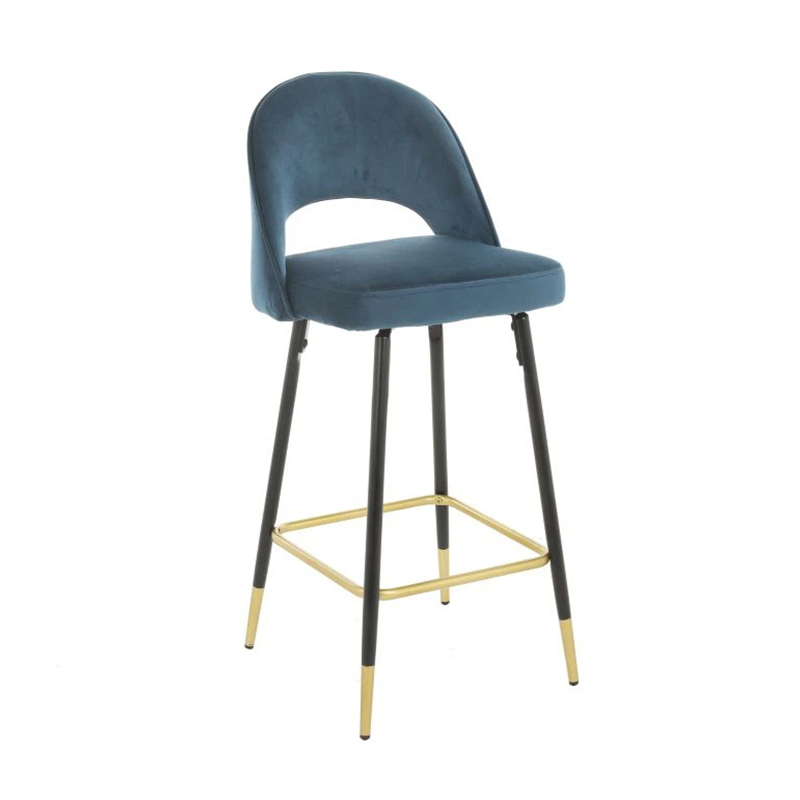 Custom Durable Upholstered Counter Height Bar Stools Suppliers, ManufacturersAnji Duomei Intelligent Furniture Technology Co., Ltd is China Custom OEM/ODM Durable Upholstered Counter Height Bar Stools Suppliers and...View Product →
| Fabric type | Typical Martindale | Pilling risk | Best suited for |
| Performance polyester | 60,000-100,000+ | Low | Daily commercial counters |
| Commercial chenille | 40,000-70,000 | Low-moderate | Bars and cafes |
| Treated velvet | 40,000-60,000 | Moderate | Styled commercial lounges |
| Boucle | 20,000-35,000 | Moderate-high | Low-traffic residential bars |
| Standard linen blend | 12,000-18,000 | High | Occasional use only |
Cushion and Foam: The Durability Layer Under the Fabric
Fabric durability is meaningless on a cushion that loses its shape within a year. Foam density, expressed in kilograms per cubic meter, tells you how long a seat will support a body without collapsing. Retail bar chairs typically use 20-25 kg/m3 foam, which compresses permanently under daily loads. Contract-grade chairs specify high-resilience foam of at least 30 kg/m3, with a barrier layer between the foam and the fabric. When the cushion collapses, the fabric is overstretched at the seam line, and even a 100,000-rub textile fails early.
Ergonomics drive wear cycles
Comfortable seating holds guests longer, and longer dwell time means more wear cycles. A backrest 45-55 cm above the seat supports the lumbar zone without blocking movement at a counter, while a seat depth of 40-45 cm keeps pressure off the backs of the knees. In commercial terms, comfort converts directly into a higher durability requirement on every component.
Frame and Base: What Keeps a Bar Chair Upright
The frame, not the cover fabric, decides whether a bar chair survives leaning, dragging, and the occasional foot on the stretcher. Steel tube frames thinner than 1.2 mm flex under lateral load; contract frames are typically 1.5 mm or thicker. Welded joints outperform bolted assemblies in continuous use because bolts loosen as people rock and shift on the seat. A welded ring footrest adds structural triangulation, spreads load across the base, and gives guests a stable place to rest their feet.
Best for continuous daily use. Resists rocking loads, needs no hardware retightening, and holds alignment for years. Less compact to ship, but the durability is predictable.
Best for flat-pack logistics and light residential use. Can loosen under heavy traffic, but parts are easier to replace. Acceptable only where use is intermittent.
Base geometry and floor protection
Four-point bases distribute weight evenly and behave well on uneven floors. Welded pedestal bases with wide foot rings are steadier for swivel models. Rubber floor glides at every contact point protect flooring and stop the chair from sliding out from under a guest, which becomes a liability issue in foodservice spaces. A broader view of covering materials appears in our guide to durable textiles for fabric-covered bar stools.
Cleaning and Spill Response in Continuous Use
In a high-traffic bar area, spills are not a possibility; they operate on a schedule. A performance fabric with a water-repellent finish gives staff a 60-90 second window to blot a spill before it penetrates the weave. In wet environments, such as bar counters, cafe service zones, and kitchen islands, stain-resistant synthetics and breathable mesh fabrics dry fastest and resist odor retention. Confirm that the fabric tolerates the cleaning products your team actually uses; daily sanitizing with bleach-based wipes degrades untreated cellulose fibers within months.
For cafe and kitchen counters that face repeated cleaning, Anji Duomei manufactures fabric home bar stools for cafe and kitchen counters with wipeable, fast-drying fabric options.
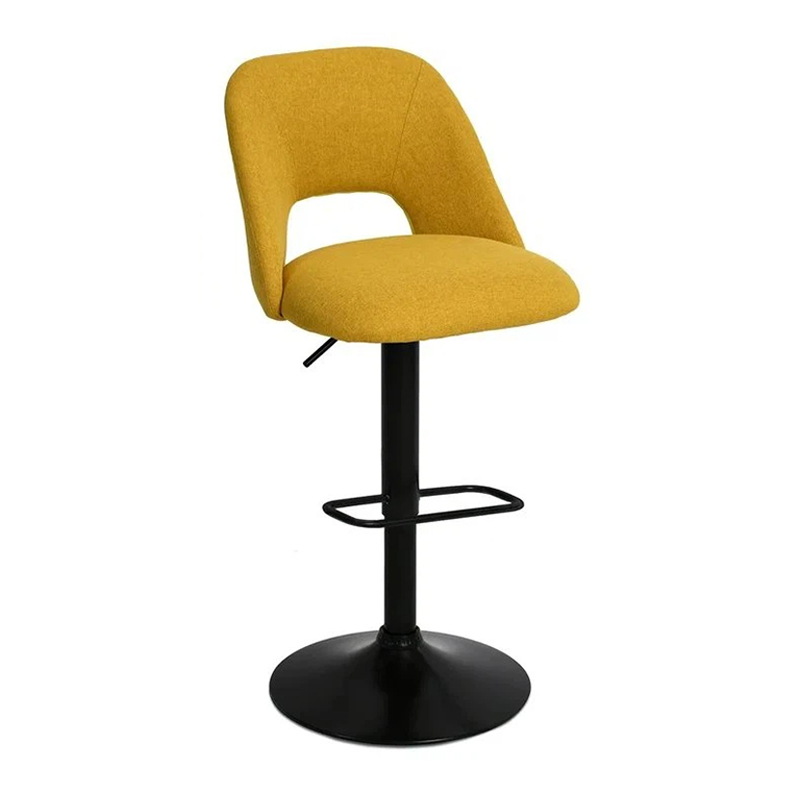 Modern Fabric Home Bar Stool for Kitchen, Cafe & Bar Use | SpecsExplore the modern fabric home bar stool designed for cafes, bars, and kitchens. Features a steel frame, fabric upholstery, and multiple ...View Product →
A Verification Checklist Before You Order
Every durability claim belongs in writing on the specification sheet before a purchase order is approved. A contract furniture supplier should state five values for every order; if the supplier cannot provide them as numbers, the chair is retail-grade regardless of the marketing language. Anji Duomei Intelligent Furniture Technology Co., Ltd., a contract seating manufacturer in Anji, Zhejiang, China, publishes these specifications for its entire bar chair program.
| Specification | Contract grade | Typical retail | Field impact |
| Rub count | 40,000+ | 15,000-25,000 | Surface wear by year 1-2 |
| Foam density | 30+ kg/m3 | 20-25 kg/m3 | Cushion collapse under load |
| Frame | Welded steel, 1.5 mm | Bolted, 1.0-1.2 mm | Loosening and wobble |
| Seams | Double-stitched | Single-stitched | Early seam failure |
| Fabric finish | Stain-repellent | Untreated | Permanent staining |
Service counters and prep areas that need airflow as well as abrasion resistance are a direct match for breathable mesh fabric bar stools for kitchen service.
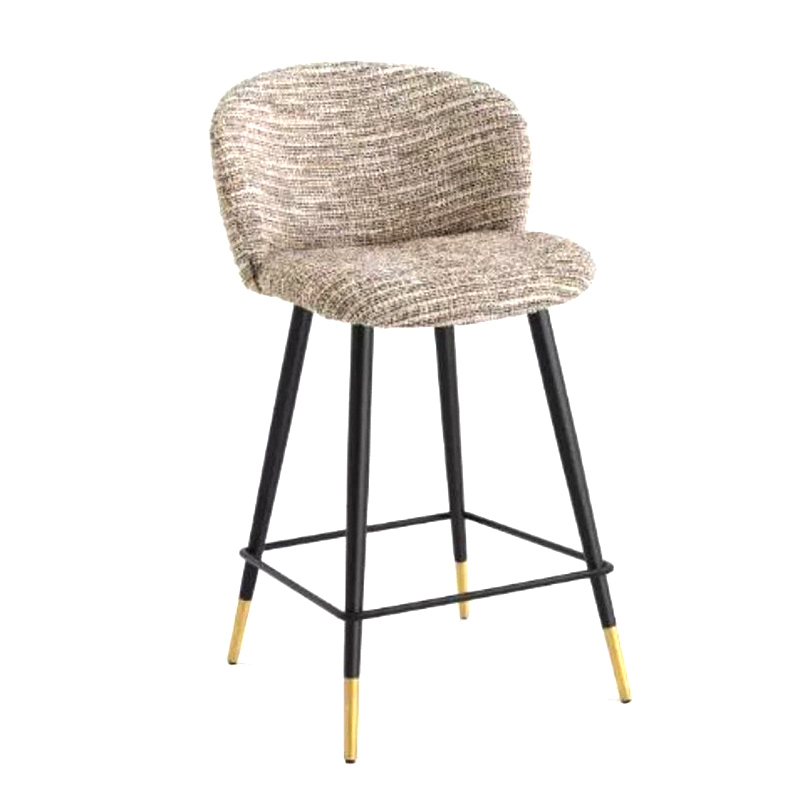 Custom Kitchen Breathable Mesh Fabric Bar Furniture Stools Suppliers, ManufacturAnji Duomei Intelligent Furniture Technology Co., Ltd is China Custom OEM/ODM Kitchen Breathable Mesh Fabric Bar Furniture Stools Supplie...View Product →
Frequently Asked Questions
What Martindale rating should fabric bar chairs have for commercial use?
At least 40,000 rubs for seating in continuous use, and 60,000 rubs or more for bar counters that are occupied throughout service hours. Fabrics below 25,000 rubs are residential-grade only.
Can boucle fabric work in a high-traffic bar area?
Only in low-traffic lounge zones, and only when the boucle is performance-treated and rated above 30,000 rubs. In continuous bar use, boucle pills at the seat edges and traps spills in its loop texture.
Is a performance fabric bar chair better than a leather one?
In high-traffic seating, performance fabric usually outlasts bonded leather, which tends to peel within two to four years. The cover material matters less than the foam density and frame behind it: a 30 kg/m3 cushion on a welded steel frame will outlive cheaper versions in either material.
How often do commercial fabric bar chairs need reupholstering?
Contract-grade chairs typically run four to six years of daily service before reupholstering. Retail-grade chairs usually need it after 12 to 18 months. Seam failure is normally the first symptom, which is why seam construction belongs in every specification.
Related Products
-
 Yangguang Industrial Park 2, Anji County, Huzhou City, Zhejiang Province, China
-
 [email protected]
[email protected]
[email protected]
[email protected]
[email protected]
[email protected]
-
 +86-18357268872
QR CODE

