


 En
 English
 Français
 Español
Home Office Chair Manufacturing: Production and Quality Control Explained
Posted by Admin | 21 Oct
Content
- 1 What Home Office Chair Manufacturing Involves
- 2 The Production Sequence: From Steel Tube to Sealed Carton
- 3 Material Decisions That Set the Lifespan
- 4 Quality Control Checkpoints: IQC, IPQC and Pre-Shipment
- 5 Standards and Certifications Buyers Should Verify
- 6 How to Evaluate a Home Office Chair Manufacturer
- 7 Frequently Asked Questions
A mid-range home office chair assembles roughly 45 to 60 separate components into one product: a welded steel or nylon base, a gas cylinder, a tilt mechanism, molded foam, stitched upholstery, casters and a few dozen fasteners. When any one of those parts is under-specified, the fault surfaces months after the container has been paid for: a cylinder that sinks, a weld that cracks, a seam that splits at the corner.
That is why experienced buyers judge a seating supplier on production depth and quality control discipline first, and on catalog photography second. This guide sets out how home office chairs are actually manufactured, which production stages carry the most risk, and the checks that keep a bulk order out of the returns pile.
What Home Office Chair Manufacturing Involves
Home office chair manufacturing is the coordinated conversion of steel tubing, foam, upholstery textile and mechanism hardware into a finished, tested seat built to the buyer's specification.
Most overseas buyers purchase this process under OEM or ODM terms. They select a model from a catalog, adjust its height range, upholstery or base, and the factory turns the agreed drawing into repeatable production. Anji Duomei Intelligent Furniture Technology Co., Ltd., founded in 2014 in Anji County, Zhejiang Province, a cluster widely described as China's chair capital, manufactures upholstered seating on exactly this basis, including fabric and leather home office chair lines, and accepts both OEM and ODM orders with engineering assistance for modified designs.
The scale of a supplier shapes what it can control. A 4,000 square meter plant with tube bending, punching, stamping, automatic welding, sewing and pressing equipment keeps every core process in-house, and in-house processes are the ones a buyer can actually audit.
Quality control in chair manufacturing is the staged verification of incoming materials, in-process components and finished chairs against agreed standards, so that defects are caught at the cheapest possible point, before shipment rather than after landing.
The Production Sequence: From Steel Tube to Sealed Carton
Production follows a fixed sequence of stages, and each stage carries its own characteristic failure modes. The sequence below reflects a fully equipped upholstered-seating plant, where forming, welding, sewing and assembly stay under one roof.
Design and prototype
Seat height range, recline angles and tolerances are locked into a signed sample before any steel is cut.
Tube cutting, bending and welding
Frames and bases take shape here, and weld penetration at this stage decides base strength for the life of the chair.
Surface treatment
Powder coating, chrome or gold plating protects the metal and sets the finish buyers actually see.
Cutting, sewing and foam work
Panels are stitched at roughly 8 to 10 stitches per inch around foam cut at 25 to 35 kg per cubic meter.
Mechanism and cylinder assembly
The Class 3 gas lift, tilt block and seat plate are fitted and torqued to specification.
Final assembly and packing
Castors and bases are fitted, functions are tested, and chairs are flat-packed into 5-ply cartons built for container stacking.
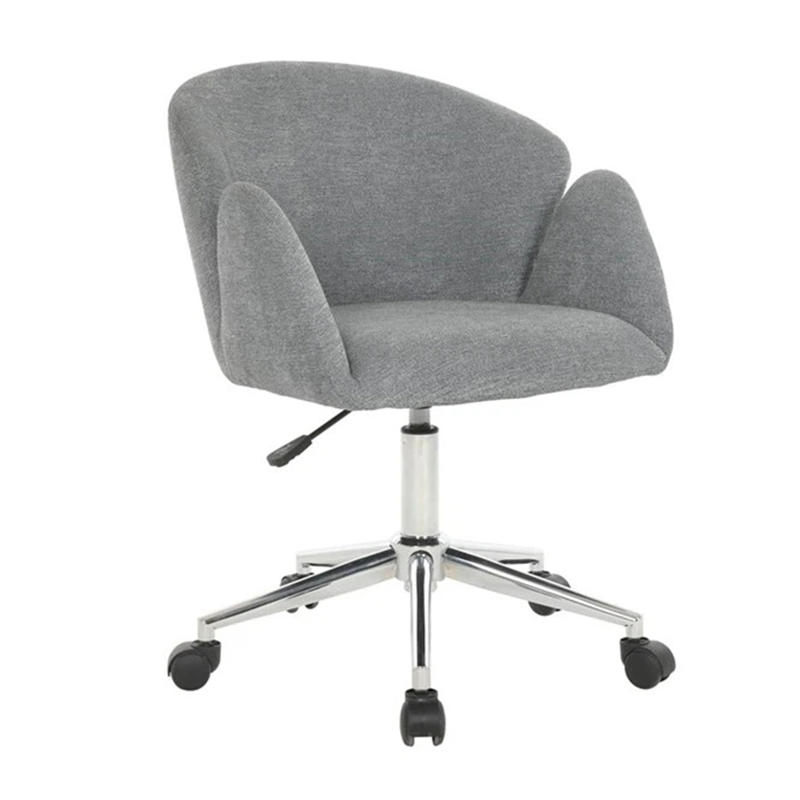 Adjustable Height Home Office Chair With ArmrestA height-adjustable task chair with armrests, lumbar support, swivel and casters, suited to long work sessions. It appears here as production wraps with assembly, testing and flat-packing into stacking-ready cartons.View Product →
Material Decisions That Set the Lifespan
Three specifications predict most of a chair's working life: steel wall thickness, foam density and upholstery abrasion rating.
Frame tubing at 1.2 to 1.5 mm wall thickness handles daily lift-and-lean loads, while anything thinner flexes at the welds. Seat foam at 25 to 30 kg per cubic meter suits home use, and 35 or above resists flattening in long-hour settings. Upholstery is judged on Martindale rub counts: 15,000 to 25,000 cycles covers domestic territory, and 30,000 or more signals fabric ready for heavier duty.
| Material | Key benchmark | Feel | Best fit |
| Velvet or chenille weave | 15,000 to 25,000 Martindale cycles | Soft, dense pile | Home offices with medium daily use |
| Boucle or teddy fleece | 15,000 to 20,000 Martindale cycles | Plush, textured | Vanity corners and lighter use |
| Linen blend | 20,000 to 25,000 Martindale cycles | Matte, breathable | Warm climates and long sitting hours |
| PU leather | 0.8 to 1.2 mm thickness | Smooth, wipeable | Executive looks and easy cleaning |
Seat cover also changes how a chair feels after a two-hour call block. Our companion guide on how breathability and durability differ across fabric home office chairs explains the weave, pile and backing details worth checking on samples.
Fabric upholstery
- Breathes in warm rooms
- Widest color and texture range
- Softer first sit
PU leather
- Wipes clean in seconds
- Shrugs off ink and spills
- Holds a structured executive line
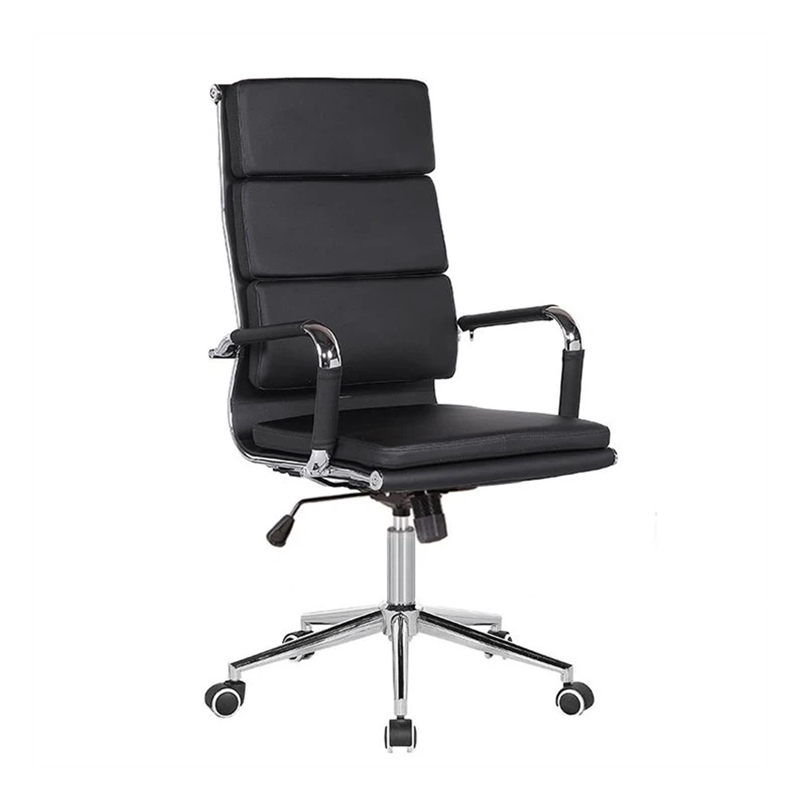 Black PU Leather Ergonomic Executive Office ChairAn executive-style chair in black PU leather with ergonomic back support and height adjustment. Seat cover choice shapes comfort over long calls, so its upholstery is relevant when weighing fabric alternatives.View Product →
Quality Control Checkpoints: IQC, IPQC and Pre-Shipment
Effective chair quality control is staged: incoming material checks, in-process checks and a final AQL-based inspection before shipment.
AQL, or Acceptable Quality Limit, is the statistical sampling standard used at final inspection. A baseline of 2.5 for major defects and 4.0 for minor defects is common in furniture, and results beyond the limit trigger sorting or rework before the balance payment moves.
Indicative figures commonly specified in cyclic test programs; final values follow the purchase order and applicable standard.
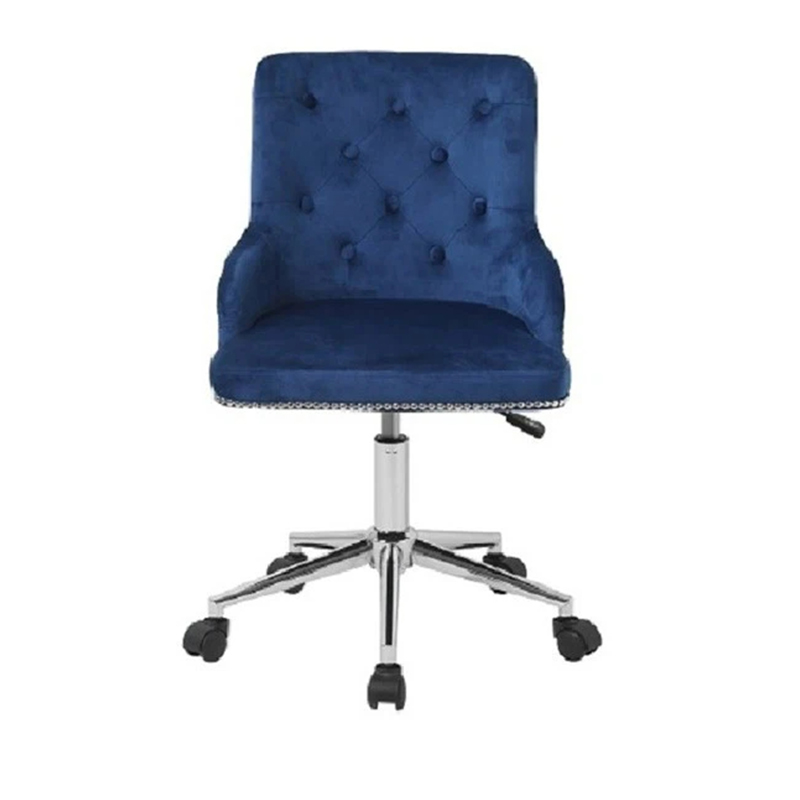 Ergonomic Swivel Home Office Computer Desk ChairA velvet and PU leather swivel desk chair with adjustable backrest, armrests and pneumatic height. Its gas lift and moving parts matter here, since cyclic test values and defect-prone components drive sampling decisions.View Product →
Sampling matters because defects cluster. One poor batch of cylinders or one mis-set welding jig affects hundreds of units, not one, which is why in-process checks cost far less than container-level failures.
Standards and Certifications Buyers Should Verify
Ask for BIFMA or EN test reports, an ISO 9001 certificate and third-party inspection records before signing anything.
- BIFMA X5.1, the reference standard for office chair structural integrity and durability in North American programs.
- EN 12520 and EN 1335, European requirements covering domestic and office seating strength and stability.
- ISO 9001, the factory quality management standard; it says little about one chair but a great deal about process discipline.
- Upholstery fire safety, such as California TB 117-2013 for US foam or BS 5852 where the market requires it.
- Third-party inspection from agencies such as SGS, Intertek or TUV, sampled against AQL before balance payment.
Suppliers such as Anji Duomei maintain a certificate page and state that every chair is inspected before leaving the factory. Even so, request the actual reports for the exact model and materials in your order. For a deeper checklist, see which structural certifications worth checking before you import seating matter most in regulated markets.
How to Evaluate a Home Office Chair Manufacturer
Judge a supplier on in-house process depth, component documentation, sample consistency and inspection transparency, in that order.
- Confirm which processes are in-house, including tube bending, welding, sewing and assembly, because outsourced stages are harder to control.
- Ask for the gas lift class, base material and castor specification sheet for the exact model you plan to order.
- Commission a golden sample and keep a signed reference unit for every production run.
- Write AQL levels, inspection timing and remedies into the purchase order, not into an email thread.
- Verify packaging: flat-pack density, corner protection and a carton drop test for stacked pallets.
- Check after-sales terms, especially replacement part availability for lifts, castors and armrests.
An equipment list is a quick tell. A plant that runs its own tube benders, punching and stamping machines, automatic welders, sewing lines and presses, as Anji Duomei does across its 4,000 square meter facility, keeps frames, upholstery and assembly under one quality system instead of splitting accountability across subcontractors.
Frequently Asked Questions
How many components does a home office chair contain?
Most designs land between 45 and 60 parts, spanning the base, gas lift, mechanism, foam, upholstery and hardware. Component count matters because every part is an inspection point, so higher-count chairs need longer checklists rather than fewer.
What does AQL 2.5 mean in a chair inspection?
AQL stands for Acceptable Quality Limit, the sampling threshold used during final inspection. At AQL 2.5 for major defects, the inspector accepts or rejects the whole batch based on defects found in a random sample, and 2.5 major with 4.0 minor is the common furniture baseline.
Which parts fail most often in low-grade chairs?
Gas lifts and weld joints lead the list. Under-rated cylinders sink within months of daily use, and thin welds crack under repeated load. Neither fault shows in product photos, which is why class certificates and weld checks matter at the sourcing stage.
How long does a production run usually take?
After a sample is approved, contract orders commonly run 30 to 45 days depending on volume and material availability. Specialty upholstery can extend fabric lead times, so confirm both figures against your launch date before committing.
Related Products
-
 Yangguang Industrial Park 2, Anji County, Huzhou City, Zhejiang Province, China
-
 [email protected]
[email protected]
[email protected]
[email protected]
[email protected]
-
 +86-18357268872
QR CODE

