Content
Two price quotes for chairs may appear nearly identical, yet the products they cover can differ significantly. For instance, one quote might feature the specific fabric you requested, while another could substitute it with a different material. Furthermore, a lower unit price might be offset by other factors, such as larger packaging dimensions, additional testing costs, or a requirement for you to handle assembly at your own warehouse.
To ensure a fair comparison between different suppliers, you can provide a standardized set of product requirements and ask each supplier to clearly outline the assumptions, exclusions, and any potential alternatives upon which their quote is based. You might begin by providing product photos, estimated purchase quantities, intended use, and destination details. The information listed below will help transform preliminary estimates into formal quotes, providing a solid foundation for you to make informed procurement decisions.
Please inform the supplier of the specific environment in which the chair will be used (for example, a home dining room, restaurant, hotel lounge, or other setting) and specify whether it is intended for indoor or outdoor use. Additionally, please indicate the target market. This information will serve as the basis for subsequent discussions regarding product structure, surface finishes, and testing requirements.
For stools, please provide the bar height and the required seat height. For dining chairs, please specify the seat width and depth, overall dimensions, and armrest height (if applicable). Furthermore, please clarify whether the chair needs to fit an existing table, whether it should be stackable, and whether it must be delivered fully assembled.
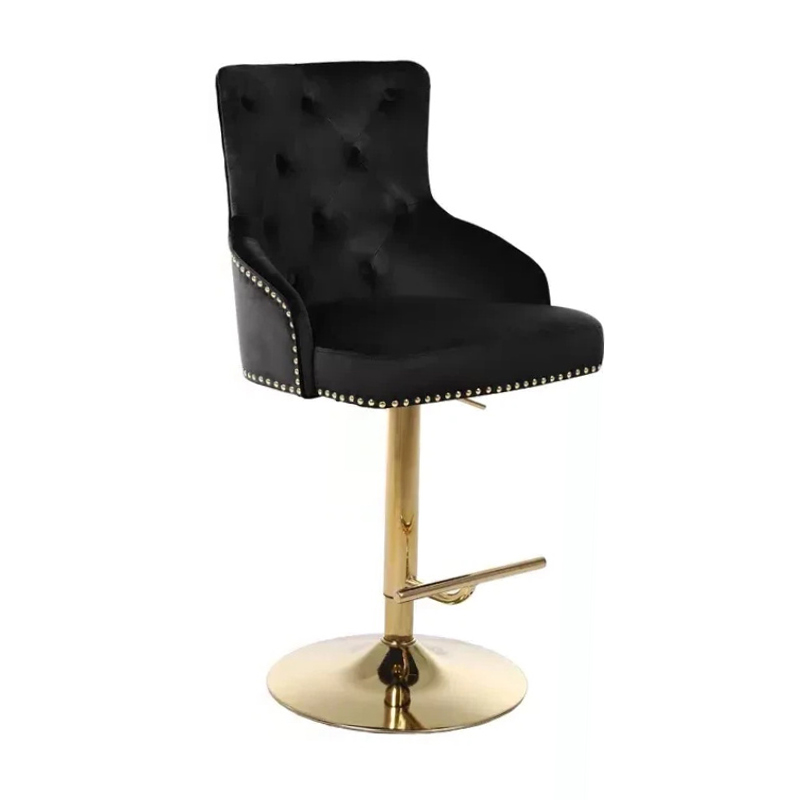
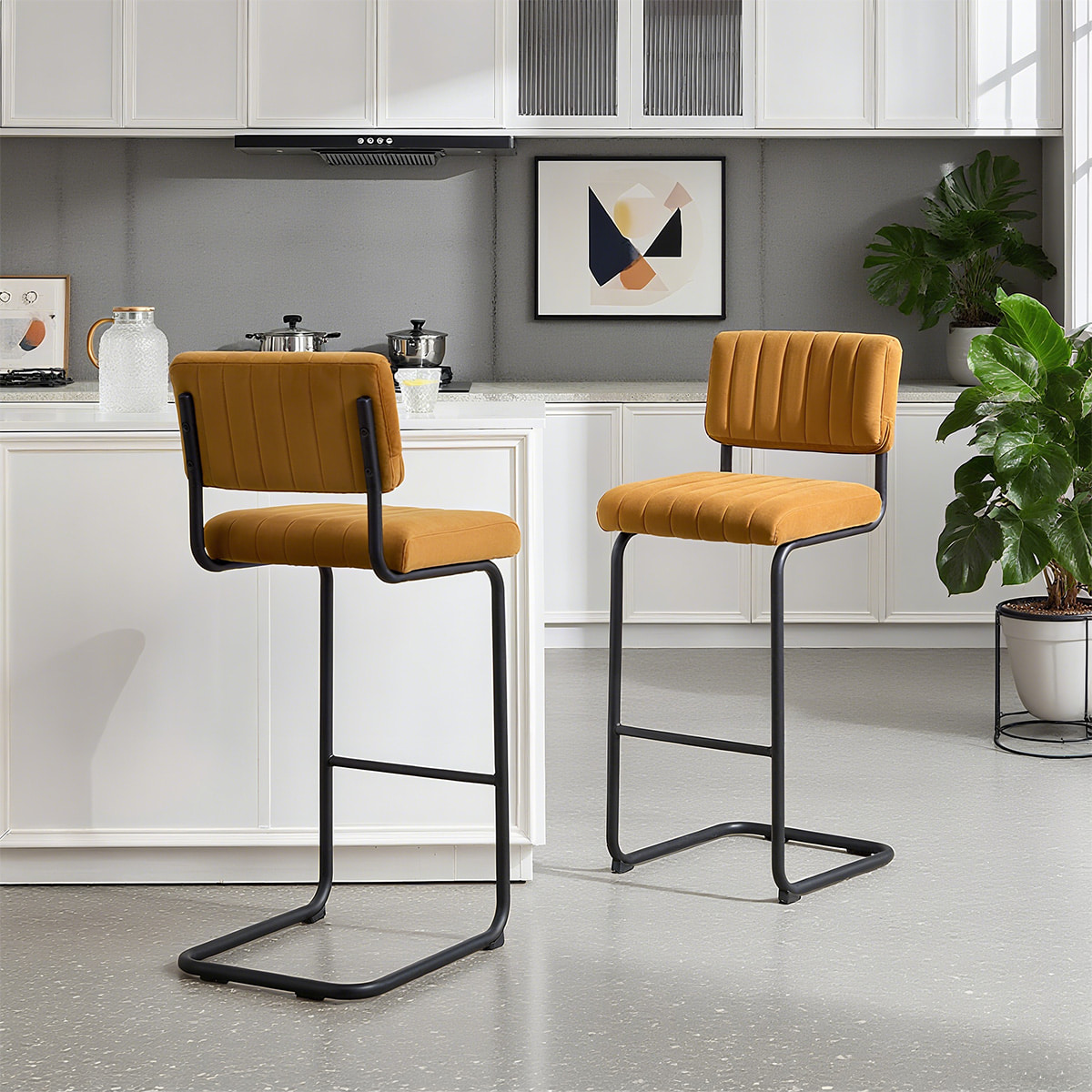
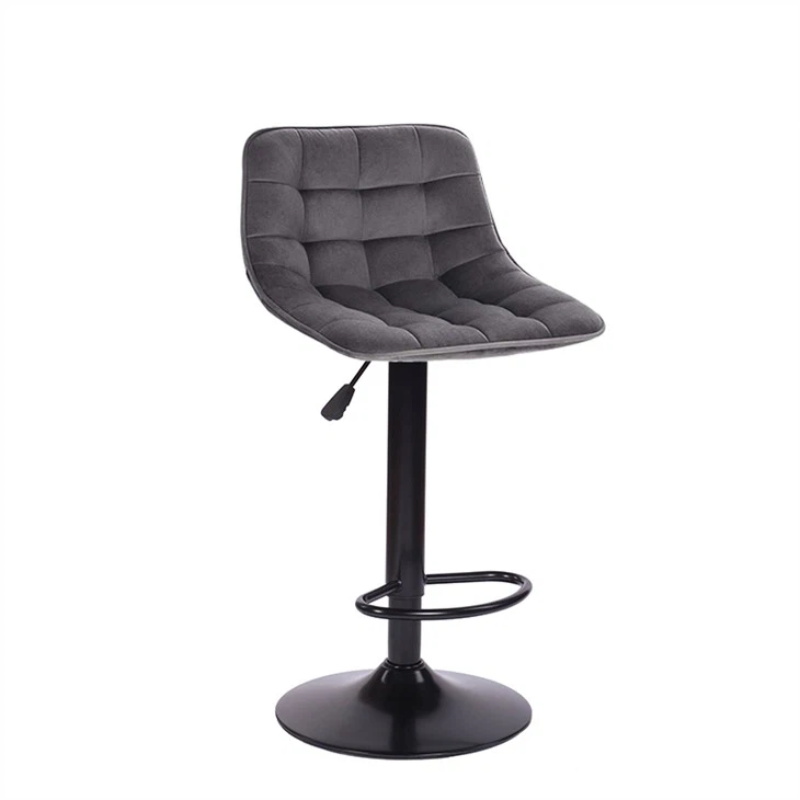
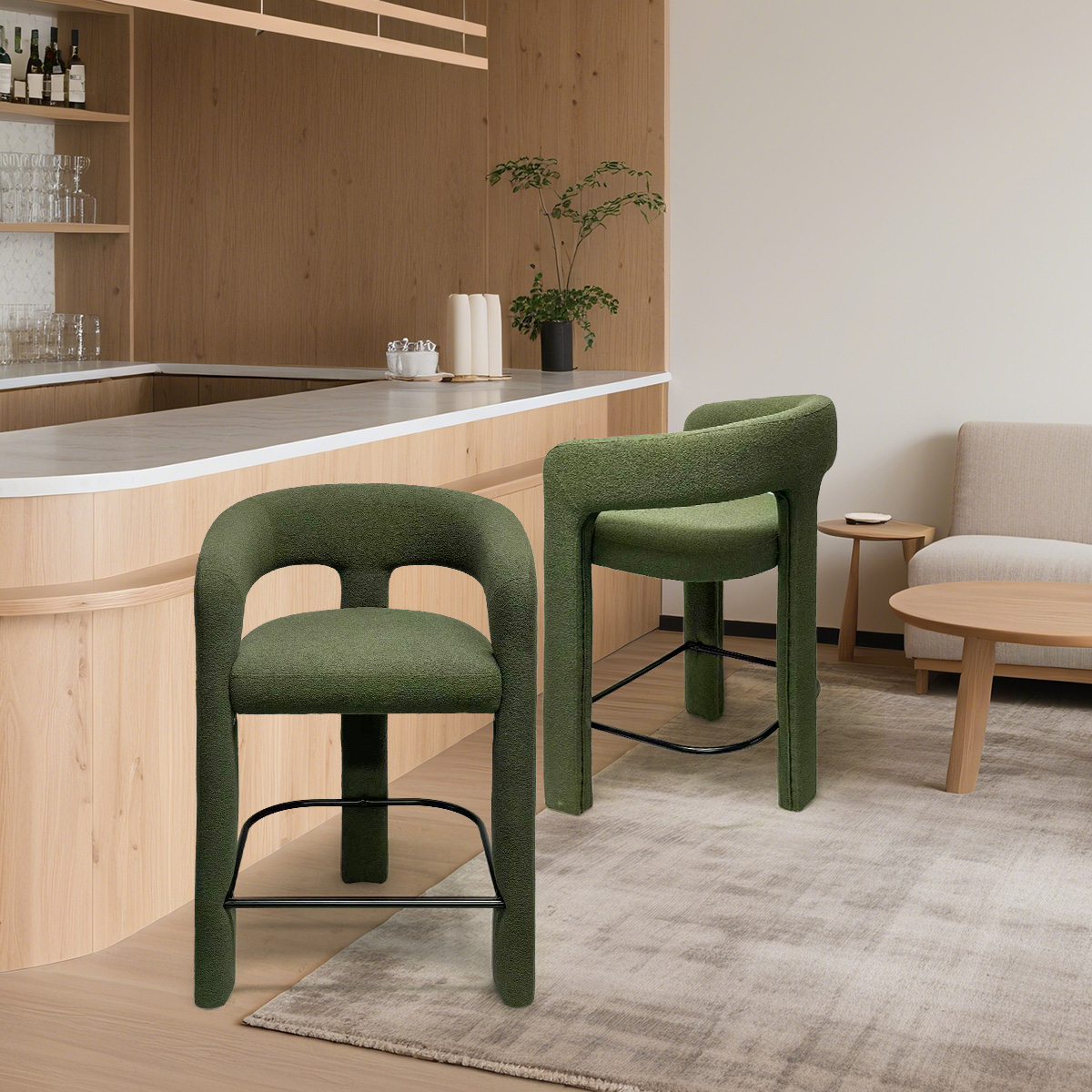
If relevant technical drawings are available, please provide them, ensuring that units of measurement and revision dates are clearly indicated. Please mark which dimensions must be strictly adhered to, and which elements are open to adjustments proposed by the supplier. While reference images can illustrate the intended aesthetic, they do not convey details such as wall thickness, internal reinforcement methods, or the specific structural design of the joints.
"Metal frame with upholstered seat" leaves too much open. Identify the frame material and finish, the upholstery reference, and the seat construction. For steel tubing, ask the supplier to state section dimensions and wall thickness. For wood, specify the species and whether visible parts must be solid wood or may use veneer.
For upholstery, provide a supplier code or swatch where available. Ask for foam density and firmness to be identified separately, because density alone does not describe comfort. If abrasion performance matters, specify the test method as well as the result required. Numbers from different test methods should not be treated as interchangeable.
If the specification is still open, request a base option and a clearly described alternative. Keep both against the same use and performance requirements so that a cheaper material does not silently change the product you are buying.
Break down your orders by model, frame finish, and fabric color. For each specification, please inquire about the minimum order quantity (MOQ), whether additional charges apply to small-batch orders, and whether different models can be consolidated into a single shipment. While providing an annual demand forecast is helpful, please ensure it is clearly distinguished from any confirmed initial orders.
Request the following information from each supplier: packaging method, number of units per carton, outer carton dimensions, gross weight, and the estimated quantity that can be loaded into the target shipping container. Additionally, clarify whether these figures are merely estimates or based on a verified loading plan.
Using a "knock-down" (disassembled) structure can reduce shipping volume, but it means the chairs will require manual assembly upon arrival. Please confirm whether the necessary tools, hardware, and assembly instructions are included in the packaging. If the products are intended for online retail, clarify whether each chair will be shipped via a courier or parcel delivery network. Packaging originally designed for Full Container Load (FCL) shipments may require additional protective measures and specific testing to ensure it can withstand the rigors of individual parcel transit.
The following figures are illustrative calculations, not current freight rates or Duomei Home quotations. Assume two approved packing options use the same container type and the allocated freight charge is USD 3,000 per container.
| Item | Packing A | Packing B |
|---|---|---|
| Chairs loaded | 400 | 600 |
| Allocated freight per chair | USD 7.50 | USD 5.00 |
| Difference per chair | USD 2.50 more | Baseline |
If packaging option A is adopted, the product price would need to be reduced by USD 2.50 per chair to offset the difference in shipping costs. Before selecting option B, one should also comprehensively evaluate factors such as packaging costs, assembly labor, and protective performance. Actual loading outcomes depend on carton dimensions, weight limits, and the specific loading configuration. This calculation does not constitute a complete landed-cost estimate.
Any claims regarding load-bearing capacity must be supported by test data. Always inquire about the specific standards, versions, and test configurations upon which these claims are based, and verify that the product models and specifications covered in the test reports match the products in question exactly. The appearance of a chair or a certificate issued for a specific fabric does not constitute proof of the final product's performance in actual use.
BIFMA (Business and Institutional Furniture Manufacturers Association) has established distinct standards for office seating versus seating intended for public or lounge areas, including dining environments. Consult with a testing laboratory to determine the applicable standards based on the product and its intended use. Simply referencing a standard during discussions does not imply that a product has been tested against or complies with that standard.
Prior to production, ensure that approved drawing versions, material specifications, finish samples, and mutually agreed-upon dimensional tolerances are documented. Additionally, retain an "approved sample" or an official record of approval. Establish clear inspection criteria for color consistency, structural stability (that is, absence of wobbling), stitch quality, and surface defects. Furthermore, define who is responsible for conducting these inspections and who will bear the costs for initial or re-testing.
Require suppliers to disclose and obtain approval for any changes to materials, structural construction, or hardware. If sampling inspections are to be used, reach an agreement beforehand regarding the sampling plan and the criteria for classifying defects. Neither sampling inspections nor visual assessment of samples can serve as a substitute for structural performance testing.
In May 2024, the U.S. Consumer Product Safety Commission (CPSC) announced a recall of approximately 4,500 "Spin" series swivel chairs from the brand "Article" (with an additional 140 units sold in Canada) due to a risk of the base breaking. According to the announcement, authorities received 190 reports of the base fracturing. Fortunately, no injuries have been reported to date. The remedy for this recall involves providing a replacement base, accompanied by installation instructions.
For buyers currently evaluating options for swivel chair procurement, this serves as a reminder to specifically inquire about the following details: the specifications of the base and its connection points, the exact product configuration that underwent testing, and the long-term availability of spare parts. The announcement did not specify the original procurement requirements, nor did it identify the precise cause of the product failure.
In January 2017, the CPSC announced a recall of approximately 33,400 IKEA "MYSINGSO" beach chairs due to a risk of collapse. The improved replacement version includes added plastic stops, designed to prevent user error during reassembly.
For products that are foldable, disassemblable, or feature removable fabric components, it is advisable to ask how one can verify correct assembly, and whether the product includes clear instructions or design features intended to minimize assembly errors. The cases mentioned above are isolated, publicly documented incidents. They are unrelated to any Duomei Home projects and are not indicative of the performance of any Duomei products.
Clearly specify the Incoterms rule being used, the designated place or port, and the specific version of the Incoterms rules that applies. For the FOB (Free on Board) term, the port of shipment must be specified. For the CIF (Cost, Insurance and Freight) term, the port of destination must be specified. If containerized cargo is delivered at a terminal prior to being loaded onto a vessel, it is advisable to discuss with your freight forwarder whether the "FCA (named place)" term should be used instead. Guidance from the ICC Academy explains why the FCA term is more appropriate for such delivery scenarios.
A CIF price should not be interpreted as a "delivered-to-warehouse" price. Be sure to verify the exact scope of the freight and insurance coverage, and clarify which destination-related costs remain your responsibility. Under both FOB and CIF terms, risk typically transfers when the goods are loaded onto the vessel at the port of shipment. Although CIF includes the costs of transport and insurance to the designated port of destination, the point at which risk transfers does not change.[5]
When preparing your budget, use the scope of the provided quote as a baseline and account only for costs not already included, such as inspection fees, transportation, insurance, destination handling and unloading charges, import duties and taxes, and the cost of final delivery to your warehouse. If the breakdown of costs is unclear, request an itemized list rather than simply accepting a lump-sum total.
Give the required warehouse arrival date, then ask for separate estimates for sampling, approval, production, and transport. Confirm what starts the production lead time, such as deposit receipt and final sample approval. Do not compare a factory-ready date with a warehouse arrival promise.
Request the currency, payment milestones, and quotation expiry date. Ask whether freight has a separate validity period and which specification changes would require a revised quotation.
A formal quotation should clearly specify the product model and version, the quantity for each variant, the unit price, and the included packaging contents. Additional costs, such as those for samples, molds, custom branding, testing, and shipping, should be itemized separately. If any of these costs are already factored into the unit price, they should be explicitly marked as "included" to prevent double-charging.
Before placing an order, it is also advisable to reach an agreement on the procedures for reporting and handling issues such as product shortages, shipping damage, or manufacturing defects. Furthermore, inquire about the availability of spare or replacement parts and confirm the applicable warranty terms. Addressing these matters before the final product specifications and pricing are locked in generally makes the process smoother.
You do not need a finished technical pack to start. Send the details below with a reference photo or drawing. Mark undecided items "please propose" and tell us which requirements cannot change.
| Field | Information to send |
|---|---|
| Product and use | Photo or model reference; intended setting; indoor or outdoor |
| Quantity | Estimated first order; breakdown by model and color if known |
| Destination | Country and port or delivery location |
| Timing | Required arrival date, or a flexible delivery window |
| Key requirements | Essential dimensions, materials, packing, and testing needs |
| Budget if available | Target price, currency, and the cost scope it should include |
Please send your seating requirements to Duomei Home to receive a quote. The quote should clearly outline the proposed specifications, packaging details, lead times, terms and conditions, and any additional costs. If you are currently comparing different options, please also indicate your target budget and the key features you wish to retain.
Related Products
Yangguang Industrial Park 2, Anji County, Huzhou City, Zhejiang Province, China
[email protected]
+86-18357268872