


 En
 English
 Français
 Español
Barber Chair Manufacturing: Key Structural and Quality Control Requirements
Posted by Admin | 23 Oct
Content
A barber chair is the most mechanically stressed seat in any commercial space. In a six-chair salon open seven days a week, each hydraulic cylinder is cycled roughly 250 times per week, and each swivel bearing carries momentary loads that can exceed 150 kg. Most purchase specifications list upholstery color and base finish, but the real procurement risk sits in the frame, the lift, and the quality control gates that verify them. This guide defines the structural systems and QC checkpoints that determine whether a barber chair survives its first year of daily service.
01. The Four Load-Bearing Systems in a Barber Chair
A barber chair is only as reliable as its base, hydraulic lift, swivel assembly, and frame-to-seat connection, and each system has a measurable acceptance threshold.
Base and floor contact
The base transfers every kilogram of client weight to the floor. Commercial barber chairs use a cast aluminum or steel base with a span of 480-560 mm. A wider base reduces tip-over risk when a client leans sideways during a haircut, and the base must be paired with non-marking glides or locking casters rated for at least 150 kg.
Hydraulic lift assembly
The lift cylinder is the most frequently serviced component in a salon. Commercial units use Class 2 or Class 3 gas lift cylinders with an 8-12 cm stroke and a dynamic rating of at least 200 kg. A cylinder that cannot hold its position after 48 hours of static load fails the seal test and should not be installed.
Swivel and pivot block
Continuous 360-degree rotation depends on a hardened steel ball race at the base of the seat plate. Acceptable play is less than 3 degrees at the armrest when the chair is fully raised, and the swivel must rotate without grinding sounds under a 100 kg load.
Frame and welded joints
Barber chair frames are typically fabricated from Q195 or Q235 steel tube with a 2-3 mm wall thickness. Weld penetration at the seat pivot and backrest bracket must reach at least 80 percent of the material thickness, and every weld faces a visual crack inspection before upholstery covers it.
| Component | Material / Specification | Critical Parameter | Primary Failure Mode |
| Base | Cast aluminum or 3 mm steel plate | Span 480-560 mm | Tip-over under off-center load |
| Lift cylinder | Class 2 / Class 3 gas lift | 200 kg rating, 8-12 cm stroke | Sudden drop or oil leakage |
| Swivel race | Hardened steel ball bearing | Less than 3 degrees of play | Wobble and grinding noise |
| Frame tube | Q195 / Q235 steel, 2-3 mm wall | Weld penetration at least 80% | Weld crack at seat pivot |
| Seat plate | 3 mm steel, four-point bolted | Bolt torque 8-12 Nm | Loosening under rotation |
Core definition
A load-bearing system is any component group that transfers a client's weight from the seat and backrest to the floor. If a single link in that chain fails, whether the gas lift, the swivel race, or the base weld, the entire chair becomes unsafe for service.
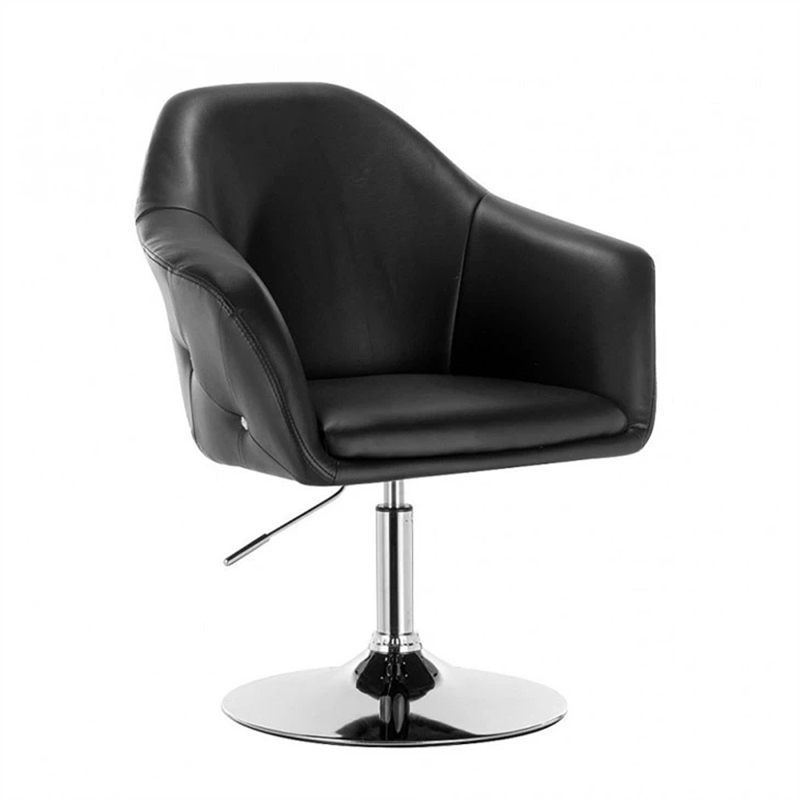 Faux Leather Hydraulic Barber Spa Salon ChairThis chair's hydraulic lift and welded base are the load-bearing components highlighted in the preceding discussion about safety. Its commercial-grade construction and wear-resistant upholstery make it a fitting example for evaluating structural reliability.View Product →
02. The Four Quality Control Gates in Manufacturing
A manufacturer's quality system can be evaluated at four separate gates, and each gate has a defined inspection procedure and an objective pass or fail outcome.
- Incoming material inspection. Steel tube wall thickness is measured with calipers, hydraulic cylinders are checked against supplier certificates, and foam density is verified at 35 kg/m3 or higher for commercial-density cushioning.
- Welding and jig alignment. Every frame is assembled on a jig, and weld integrity is checked visually and by spot hammer testing. Frame symmetry tolerance is plus or minus 2 mm.
- Upholstery and fastening control. PU leather thickness is held at 0.8 mm or above, seam strength is pulled by hand test, and staples are spaced consistently within the perimeter of the seat plate.
- Final function test and pre-shipment audit. Each chair is raised, lowered, rotated, and loaded before packing. Completed batches are sampled at AQL 1.5 for major defects and AQL 2.5 for minor defects. Any batch above that risk level is rejected.
AQL 1.5 / 2.5
Accepted quality level for major and minor defects in commercial barber chair batches
03. Cycle and Load Testing Every Moving Component Must Pass
Moving components in a barber chair are validated by cycle testing, not by a single static inspection, and the test counts are the objective evidence of expected service life.
Minimum endurance cycles for commercial barber chair components
Cycle counts are minimums for commercial service; lower values indicate residential-grade components.
- Hydraulic lift cycle test: 50,000 full extension and compression cycles with a 100 kg load, followed by a 48-hour leak check.
- Static load test: 200 kg applied to the seat for 30 minutes; permanent deformation must stay below 3 mm.
- Swivel endurance: 30,000 full rotations with a 100 kg load and no visible wear particles on the race.
- Upholstery abrasion: commercial fabrics should survive at least 30,000 Martindale rubs; the same benchmark applies when you select covering for fabric-covered salon seating.
A chair that survives 50,000 hydraulic cycles, a 200 kg static load, and 30,000 swivel rotations is built for daily commercial use. Anything tested to a lower threshold is a residential product wearing a commercial price tag.
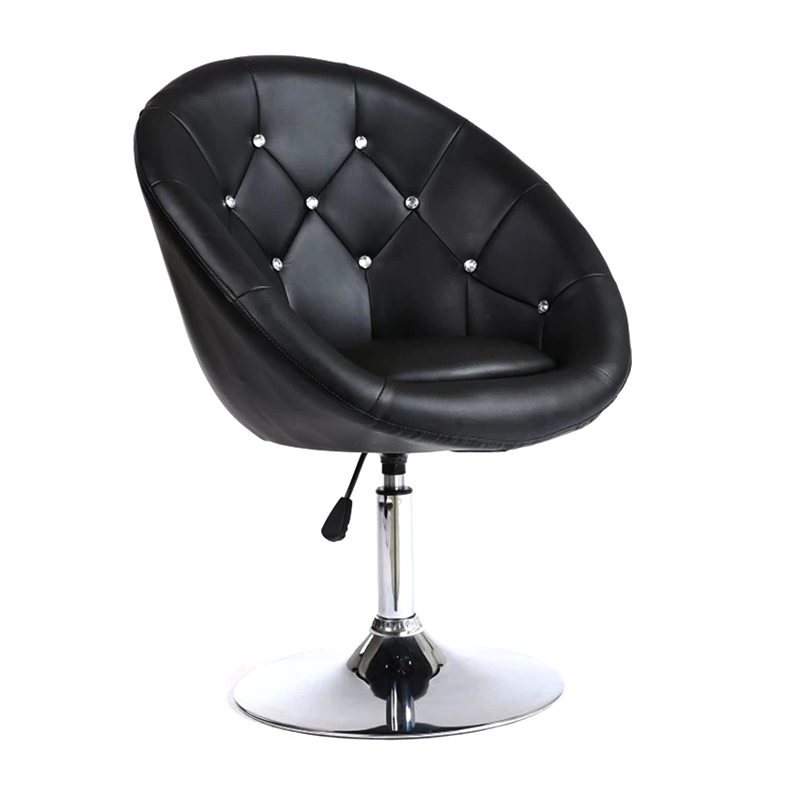 Ergonomic PU Leather Barber Chair with WheelsFollowing the note on cycle counts, this chair offers a hydraulic lift with 360-degree swivel and heavy-duty casters. It demonstrates features that support commercial service, and its adjustable positioning aligns with the focus on testing and durability.View Product →
04. How to Evaluate a Barber Chair Manufacturer Before You Order
Evaluating a barber chair manufacturer comes down to four audit questions: which machines are on the production floor, what test data is kept on file, whether customization is handled in-house, and what happens after shipment.
In-house factory
- Owns welding, bending, cutting, sewing, and assembly equipment
- Keeps inspection records per batch
- Accepts OEM and ODM engineering requests
- Can modify tooling for sit height and load requirements
Trading or assembling supplier
- Subcontracts frames, upholstery, and finishing to separate workshops
- Limited visibility into actual test results
- Standard models only, long change cycles
- Warranty depends on a third-party factory
Anji Duomei Intelligent Furniture Technology Co., Ltd., a contract furniture manufacturer based in Anji, Zhejiang, operates a 4,000 sq m factory with pipe bending, stamping, automatic welding, sewing, and assembly lines. The company has supplied barber chairs, salon seating, and contract chairs to international buyers since 2014, and it publishes a complete seating catalog that buyers can cross-check against the structural requirements in this guide. When bending, welding, and upholstery happen under one roof, the quality control gates described above can be enforced instead of assumed.
Minimum supplier warranty expectations
Insist on a minimum one-year structural warranty that covers the hydraulic pump and lift cylinder, with documented replacement terms. Suppliers who place all moving-part liability on the buyer are not executing the quality system described in this guide.
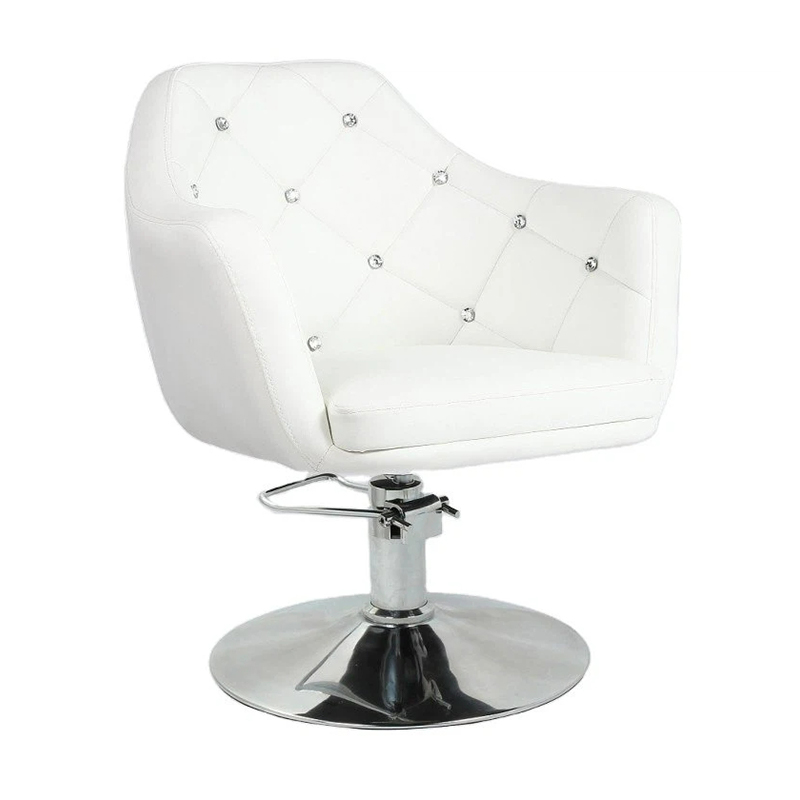 Multipurpose Hydraulic Beauty Nail Barber ChairThe text emphasizes hydraulic lift testing under load and warranty terms. This multipurpose chair includes a hydraulic lift with 360-degree swivel and a five-point base, making it relevant when considering components subject to cycle tests and structural coverage.View Product →
05. FAQ
What is the most important quality control test for a barber chair?
The hydraulic lift cycle test is the most important because the lift is the component that fails first and is the most expensive to repair in service. A 50,000-cycle extension and compression test under a 100 kg load, followed by a 48-hour leak check, is the minimum threshold for commercial acceptance.
How many lift cycles should a hydraulic barber chair survive?
A commercial-grade hydraulic barber chair should survive at least 50,000 full lift cycles. At 40-60 cycles per day in a busy salon, 50,000 cycles represents roughly three to four years of continuous operation, which aligns with a one-year warranty plus a service-life buffer.
What materials should a commercial barber chair frame use?
The frame should be fabricated from Q195 or Q235 steel tube with a 2-3 mm wall thickness, welded with at least 80 percent penetration at load-bearing joints. The base should be cast aluminum or 3 mm steel plate, and the seat plate should be 3 mm steel bolted at four points.
Can a manufacturer customize barber chair height and upholstery?
Yes. A factory that operates in-house welding, bending, and upholstery lines can adjust sit height, base span, backrest angle, and fabric grade without introducing a third-party dependency. Verify that the factory accepts OEM and ODM orders and that customization does not bypass the same cycle-test gates used for standard models.
Factory audit rule: if a supplier refuses to share cycle-test records for the hydraulic lift, treat that as a failed gate regardless of sample appearance.
Final takeaway
Structural integrity is engineered in the factory; quality control tells you whether it actually happened. Audit the base span, the gas lift class, the tube wall thickness, and the weld penetration. Then require the cycle-test data. If a supplier cannot show passing records for 50,000 lift cycles and a 200 kg static load, the chair is not commercial-grade.
Related Products
-
 Yangguang Industrial Park 2, Anji County, Huzhou City, Zhejiang Province, China
-
 [email protected]
[email protected]
[email protected]
[email protected]
[email protected]
-
 +86-18357268872
QR CODE

