


 En
En English
 Français
 Español
Optimal Ergonomics and Cushion Filling for the Ideal Leisure Chair Indoor
Posted by Admin | 12 Dec
Content
- 1 I. The Science of Seating in Contract Furniture
- 2 II. Ergonomic Parameters: Backrest Angle and Support
- 3 III. Dimensions and Postural Fit: Seat Depth and Height
- 4 IV. Cushion Science: Filling Materials and Density
- 5 V. Quality Assurance and Custom Manufacturing
- 6 VI. The Synergy of Design and Material
- 7 VII. Frequently Asked Questions (FAQs)
- 7.1 Q1: How does a high-back design impact the longevity of a leisure chair indoor?
- 7.2 Q2: What density foam is recommended for a high-use leather side chairs dining application?
- 7.3 Q3: Why is the optimal backrest angle for indoor leisure chair typically reclined?
- 7.4 Q4: What is the risk of using too deep a seat depth, even for a leisure chair indoor?
- 7.5 Q5: Does a high cushion filling materials comparison for contract furniture score necessarily mean the softest material?
I. The Science of Seating in Contract Furniture
In the contract furniture sector—encompassing hospitality, corporate lounges, and premium dining areas—the leisure chair indoor is not merely a decorative piece but a key component of customer experience and brand perception. Comfort and durability stem from a scientific approach to two fundamental elements: precision ergonomic design and the selection of advanced cushioning materials. For B2B buyers and wholesalers, understanding the optimal choices for these factors is essential for guaranteeing product longevity and user satisfaction. Anji Duomei Intelligent Furniture Technology Co., Ltd., situated in Anji County, the "Chinese metropolis of swivel chair," is a professional contract furniture company that has specialized in producing and exporting leisure chairs, bar chairs, swivel chairs, and salon chairs since 2014. With a modern plant, warehouse, and offices employing over 70 people, our well-equipped facilities and rigorous quality control ensure a strong reputation. We insist on the concept that "quality is the life of the enterprise" and welcome OEM and ODM partnerships, ensuring our clients receive products tailored to their high sourcing requirements.
II. Ergonomic Parameters: Backrest Angle and Support
Ergonomics in seating aims to maintain the body's natural S-curve, minimizing the load on the spinal discs and reducing muscle fatigue. The backrest angle is the primary factor influencing the overall comfort and the duration for which a user can comfortably remain seated.
A. Optimal Backrest Angle for Indoor Leisure Chair
The optimal backrest angle for indoor leisure chair applications generally deviates from the upright 90-degree seating position found in task chairs. An angle that reclines slightly (between 100 and 110 degrees relative to the seat pan) significantly reduces the pressure on the lower lumbar discs, which is ideal for relaxation and extended stays. However, this angle must be balanced against the chair's purpose. A chair used for dining must be more upright than a true lounge chair. The contrast in angle requirements for different applications is significant:
| Chair Type | Recommended Backrest Angle (Relative to Seat Pan) | Primary Function |
|---|---|---|
| Standard Dining Chair (e.g., leather side chairs dining) | 90° - 95° | Active sitting, forward leaning (eating) |
| Indoor Leisure Chair (Lounge) | 100° - 110° | Passive sitting, deep relaxation, reading |
| Task Chair | 95° - 100° (with recline mechanism) | Upright posture, desk work |
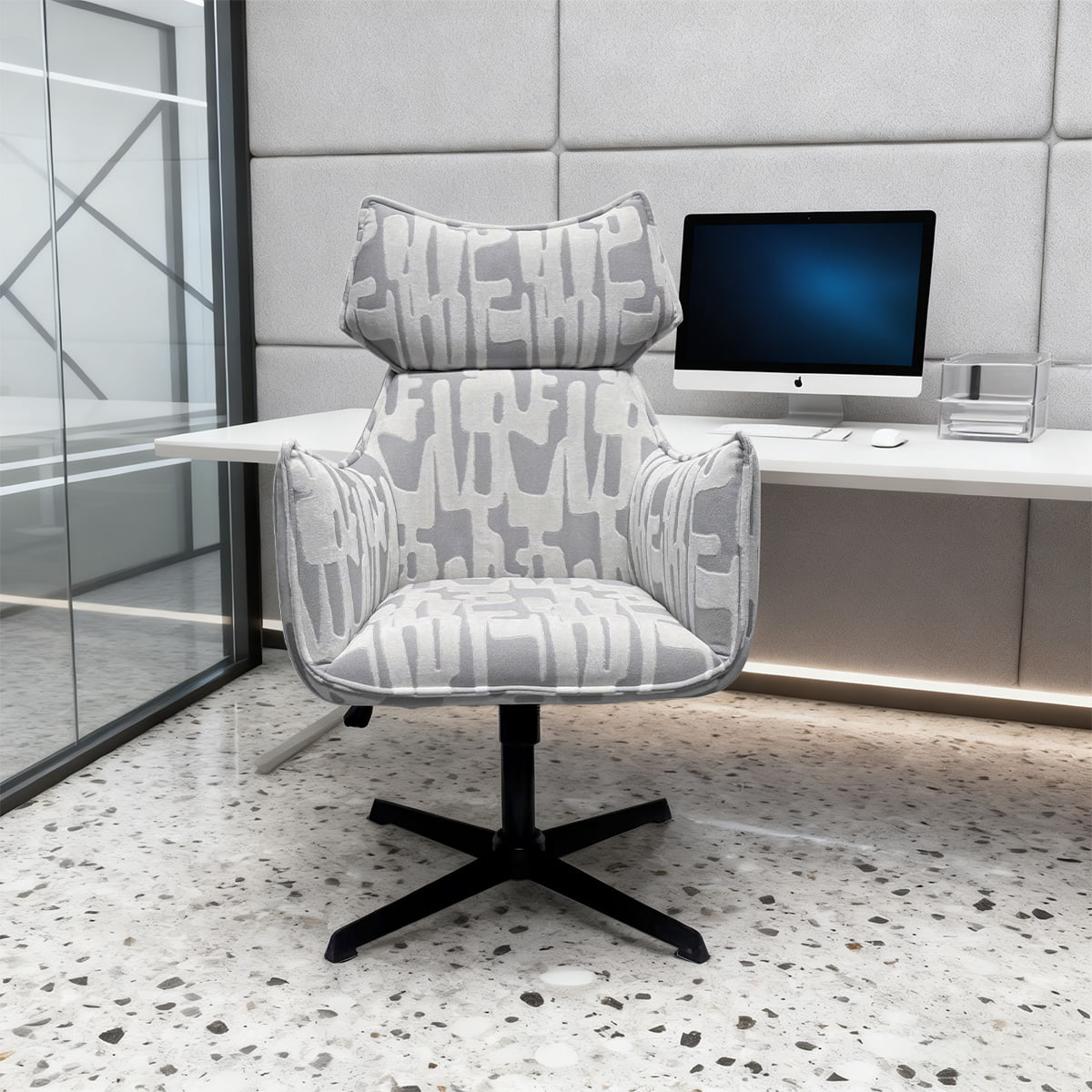
B. Ergonomics of High Back Leisure Chair
The ergonomics of high back leisure chair designs specifically address the need for comprehensive support, extending the contact surface up to the user's head and neck (cervical spine). For true relaxation, the backrest must be high enough (typically 85 cm or more above the seat) and designed with a gentle curvature to cradle the shoulders and head, preventing muscle strain in the upper trapezius region. This is a crucial feature for maximizing comfort in high-end lounge and lobby furniture.
III. Dimensions and Postural Fit: Seat Depth and Height
Correct dimensional planning ensures proper weight distribution and circulation. Seat height must allow the user's feet to rest flat on the floor, and seat depth must prevent excessive pressure behind the knee joint.
A. Leather Side Chairs Dining Seat Depth Standard
The leather side chairs dining seat depth standard typically ranges from 43 cm to 50 cm. The ideal depth allows approximately 5 cm of clearance between the front edge of the seat and the back of the user's knees. If the depth is too great (as often seen in deep lounge seating), the user is forced to slouch or lose lumbar support. Conversely, a leisure chair (lounge type) prioritizes deep-seated comfort, often featuring depths exceeding 55 cm, which intentionally encourages a more relaxed, reclined posture, contrasting sharply with the active sitting required of dining chairs.
IV. Cushion Science: Filling Materials and Density
The ultimate comfort and durability of a leisure chair indoor depend on the internal structure of its cushion. Density, firmness, and resilience are the three technical specifications that govern performance.
A. Best Foam Density for Contract Dining Seating
Foam density, measured in kilograms per cubic meter (kg/m³), dictates how well the foam will resist compression over time—a critical factor for contract furniture subject to heavy, consistent use. High density translates directly to high durability and a longer lifespan, reducing the need for costly replacements. The difference between standard and contract-grade foam density is stark:
| Foam Type | Density (kg/m³) | Primary Characteristic | Recommended Application |
|---|---|---|---|
| Standard Polyurethane (PU) Foam | 18 - 25 kg/m³ | Softness, Short lifespan | Light residential use |
| High-Resilience (HR) Foam | 35 - 45 kg/m³ | Long-term support, High durability | Contract, Leather side chairs dining |
| Ultra-High Density/Contract Grade | > 50 kg/m³ | Maximum lifespan, Firm support | Heavy commercial use, Public seating |
For the best foam density for contract dining seating, HR foam with a density between 35 and 45 kg/m³ is usually the optimal choice, providing the necessary balance of comfort and structural recovery after compression.
B. Cushion Filling Materials Comparison for Contract Furniture
While foam provides structure, other materials are used to enhance the comfort layer. High-end leisure chair indoor options often utilize a foam core wrapped in Dacron or synthetic fiberfill for a softer initial feel, or a down/feather blend for premium luxury. However, for contract environments, simplified maintenance and compliance (e.g., California Technical Bulletin 117 fire standards) must be prioritized over luxurious material complexity. Fiberfill and high-density HR foam cores offer the cushion filling materials comparison for contract furniture that best meets longevity, safety, and maintenance criteria.
V. Quality Assurance and Custom Manufacturing
Anji Duomei's insistence on "quality is the life of the enterprise" ensures that every product, from the simple leather side chairs dining to complex swivel chairs, meets stringent quality control standards across all stages of production. Our capacity for OEM and ODM projects means we can implement specific engineering requirements—whether it is specifying the optimal backrest angle for indoor leisure chair for a hotel chain or ensuring the highest best foam density for contract dining seating for high-traffic environments. We invite customers to talk to our customer service center about their sourcing requirements to leverage our specialized manufacturing capabilities.
VI. The Synergy of Design and Material
The ideal leisure chair indoor is achieved through the synergy of precise ergonomic planning (correct back angle and seat depth) and durable, high-resilience cushioning. By applying technical data—such as the leather side chairs dining seat depth standard and high-density foam metrics—B2B buyers can confidently specify contract furniture that delivers superior comfort, robust longevity, and a strong return on investment.
VII. Frequently Asked Questions (FAQs)
Q1: How does a high-back design impact the longevity of a leisure chair indoor?
- A: The structural frame must support the increased leverage of a high back. While it enhances comfort by offering support up to the head, the frame integrity must be superior to prevent rocking or instability over time, particularly in contract environments where abuse is common.
Q2: What density foam is recommended for a high-use leather side chairs dining application?
- A: High-Resilience (HR) foam with a density between 35 kg/m³ and 45 kg/m³ is recommended. This density range provides optimal comfort for the duration of a meal while ensuring the cushion resists compression set and maintains its shape over thousands of seating cycles.
Q3: Why is the optimal backrest angle for indoor leisure chair typically reclined?
- A: A reclined angle (100° to 110°) minimizes the pressure exerted on the lumbar spine and reduces muscular effort required to maintain posture. This is essential for a chair designated for "leisure" or relaxation, where the goal is to reduce physical strain and promote comfort.
Q4: What is the risk of using too deep a seat depth, even for a leisure chair indoor?
- A: If the seat depth is too great for the average user, it restricts blood circulation behind the knees, and more importantly, forces the user to sit forward, detaching their back from the lumbar support provided by the backrest. This negates the chair's ergonomic benefits and causes lower back strain.
Q5: Does a high cushion filling materials comparison for contract furniture score necessarily mean the softest material?
- A: No. In contract furniture, a high score prioritizes durability, fire safety compliance, and structural longevity (resistance to compression set). While comfort is a factor, the softest materials (like pure down) are often excluded due to their high maintenance needs and poor long-term structural recovery.
Related Products
-
 Yangguang Industrial Park 2, Anji County, Huzhou City, Zhejiang Province, China
-
 [email protected]
[email protected]
[email protected]
[email protected]
[email protected]
[email protected]
-
 +86-18357268872
QR CODE

