


 En
En English
 Français
 Español
How Fabric Bar Chairs Are Made: Manufacturing Process Behind Upholstered Stools
Posted by Admin | 20 Aug
Content
- 1 1. Metal Frame and Base — Where the Chair's Life Is Decided
- 2 2. Seat Shell and Cushion Construction — Comfort Is Built from the Inside
- 3 3. Fabric Cutting and Sewing — the Face of the Product
- 4 4. Upholstery — Hand Skill Decides the Finished Look
- 5 5. Mechanism Fitting and Final Assembly
- 6 6. Quality Control — What Should Be Tested Before Shipping
- 7 7. What This Production Route Means for Buyers
A fabric bar chair rarely surprises anyone at first glance. But behind the fabric cover lie five controlled production stages: steel tube forming and welding, cushion construction, fabric cutting and sewing, upholstery, and final assembly with mechanism fitting. Understanding this route matters for anyone sourcing bar chairs for a bar, café, hotel, or kitchen-island project.
Two chairs that look identical can differ dramatically in price and lifespan. The differences hide in tube wall thickness, weld quality, foam density, seam tension, and how carefully the fabric is wrapped and fastened. This article explains how fabric bar chairs are made in a real export-oriented factory in Anji, China — a city that has grown into one of the world's largest production bases for upholstered and swivel seating — and what each production stage means for your purchase decision.
1. Metal Frame and Base — Where the Chair's Life Is Decided
Fabric bar chairs almost always start as steel tubing, not wood. The choice of tube diameter and wall thickness is the first quality decision a factory makes. Typical round steel tubes for bar chair legs range from 16 mm to 25 mm in diameter, with wall thicknesses between 1.0 mm and 1.5 mm. Thicker tubing resists the twisting forces of daily use at a high counter; thinner tubing cuts cost but can flex or fatigue after months of heavy traffic.
The frame production route is consistent across serious manufacturers:
- Tube bending: CNC benders shape the tube into straight legs, an angled sled base, or a central pedestal. Inaccurate bends make a chair wobble once assembled, no matter how good the upholstery looks.
- Punching: holes are punched into the tube for seat mounting bolts and for the gas lift cylinder on height-adjustable models.
- Welding: automatic welding machines join the components. In well-equipped factories, welds are ground smooth so the seam disappears under paint or plating.
- Surface finishing: frames are polished and then chrome-plated, powder-coated, or painted in black, gold, silver, or white. Powder coating is common on commercial bar chairs because it resists scratches better than liquid paint.
- Footrest ring: most bar stools carry a footrest ring welded into the frame. The weld must be continuous; a rough joint is usually the first thing a user notices.
When you inspect a frame sample, look at the weld joints, the level of the legs on a flat floor, and the finish of the footrest ring. These details reveal production discipline more than any catalog page does.
2. Seat Shell and Cushion Construction — Comfort Is Built from the Inside
The structural core of a fabric bar chair seat is usually a molded plywood or composite board shell. It carries the user's weight and gives the upholsterer a solid surface for stapling.
Polyurethane foam is bonded to the shell with adhesive or, in higher-end processes, molded directly into shape. For contract seating, foam density generally ranges from 25 kg/m³ to 40 kg/m³. Denser foam resists sagging in a busy restaurant or bar for years; lower-density foam feels comfortable in the showroom but flattens after a few months of hard use.
A thin layer of polyester wadding sits between the foam and the fabric. It hides small irregularities in the foam surface and reduces abrasion between fabric and foam during use.
The cushion stage is also where ergonomics are set. Seat depth, backrest angle, and cushion firmness can all be adjusted here. A factory that cuts its own foam can offer different comfort profiles without changing the frame design — a practical option when the same shell must serve both residential and commercial orders.
3. Fabric Cutting and Sewing — the Face of the Product
Choosing the right fabric family
Fabric is where a bar chair becomes a product instead of a structure. Export-oriented factories stock a wide range of upholstery textiles: velvet, chenille, bouclé, teddy fleece, jacquard, linen-look blends, and performance fabrics. The choice affects feel, appearance, abrasion resistance, and cleaning behavior.
Not every fabric suits every setting. The table below compares common choices for fabric bar chairs.
| Fabric | Hand feel | Typical durability | Common applications |
|---|---|---|---|
| Velvet | Smooth, soft sheen | Medium to high | Home bars, dining areas, boutique cafés |
| Chenille | Warm, soft, slightly napped | Medium | Living spaces, lounge areas |
| Bouclé | Textured, modern, looped | Medium to high | Hotel lobbies, restaurants |
| Teddy fleece | Plush, cozy | Medium | Residential, casual settings |
| Jacquard | Structured, patterned | High | Restaurants, function venues |
| Linen-look | Crisp, breathable, casual | Medium | Kitchens, breakfast nooks |
A textured fabric can completely change the perceived style of the same frame. A modern white bouclé bar stool with black metal legs, for instance, reads as a design piece, while the same silhouette in plain linen-look fabric reads as a workhorse kitchen seat.
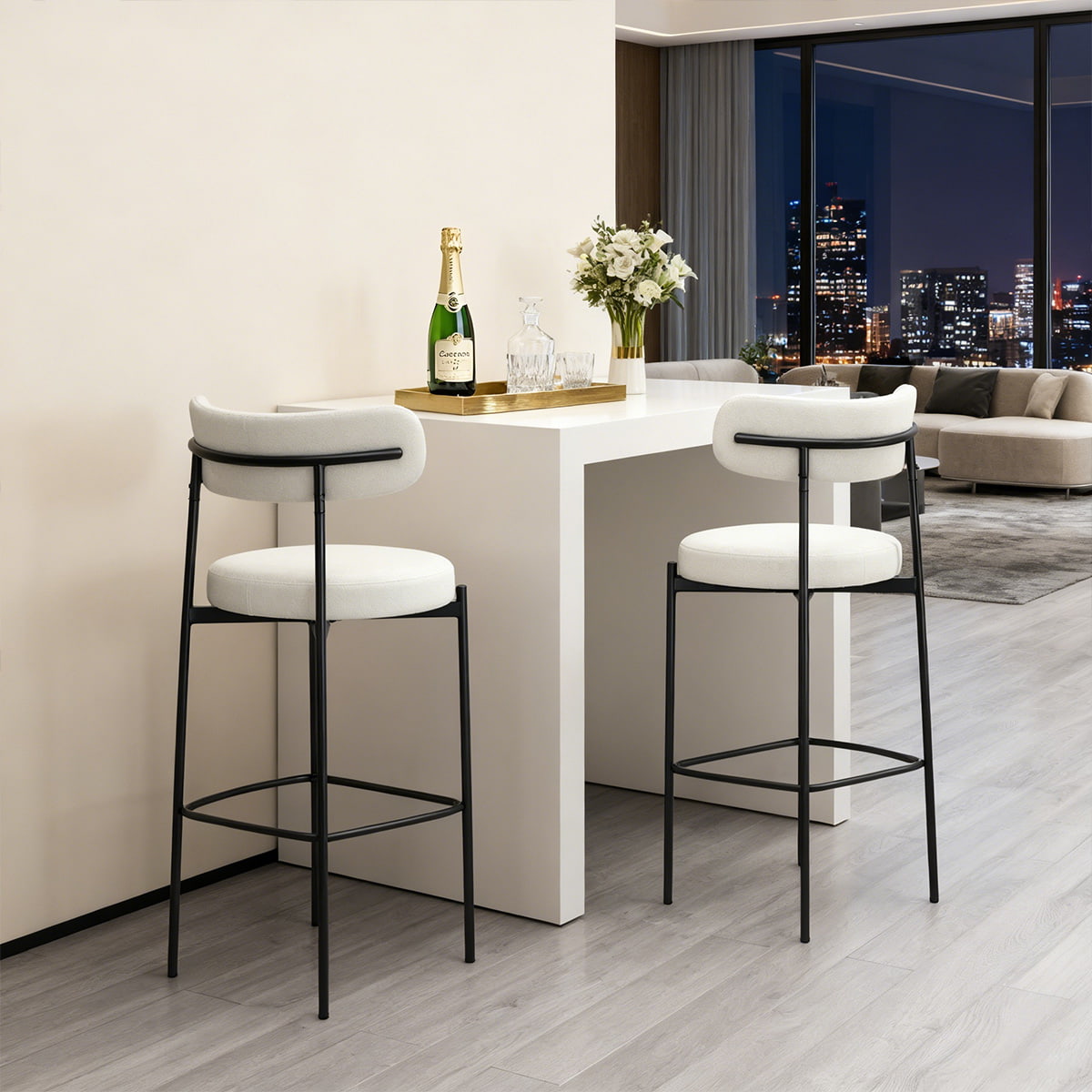 Custom Modern White Bouclé Bar Stool with Black Metal Legs — Upholstered CounterAnji Duomei Intelligent Furniture Technology Co., Ltd is China Custom OEM/ODM Modern White Bouclé Bar Stool with Black Metal Legs — Uphol...View Product →
Cutting and sewing accuracy
Fabric arrives in rolls and is laid out on cutting tables. Patterns for the seat, backrest, and armrests are cut by hand or with a CNC cutter. When the fabric has a visible pile, as velvet does, the direction must stay consistent across all pieces, or the chair shows a color difference under light. Fully upholstered backrests are sewn before wrapping; seam allowance and stitching tension decide how crisp the final seams look.
If you are sourcing for high-traffic venues, review our guide to durable textiles for fabric-covered bar stools before finalizing the fabric specification.
4. Upholstery — Hand Skill Decides the Finished Look
The upholstery stage turns cut fabric and padded shells into a finished seat. The operator positions the fabric over the cushion, pulls it tight, and staples it into the shell in a controlled sequence — typically from the center outward, so the tension stays even and no wrinkles form around the corners.
Fixed covers versus removable covers
Two cover systems are common. Fixed covers are stapled permanently to the shell; they look tighter and generally last longer in commercial use. Removable covers use a zipper or hook-and-loop closure so the cover can be taken off for cleaning — a practical option for kitchen stools and food-service areas where spills are frequent.
Decorative details
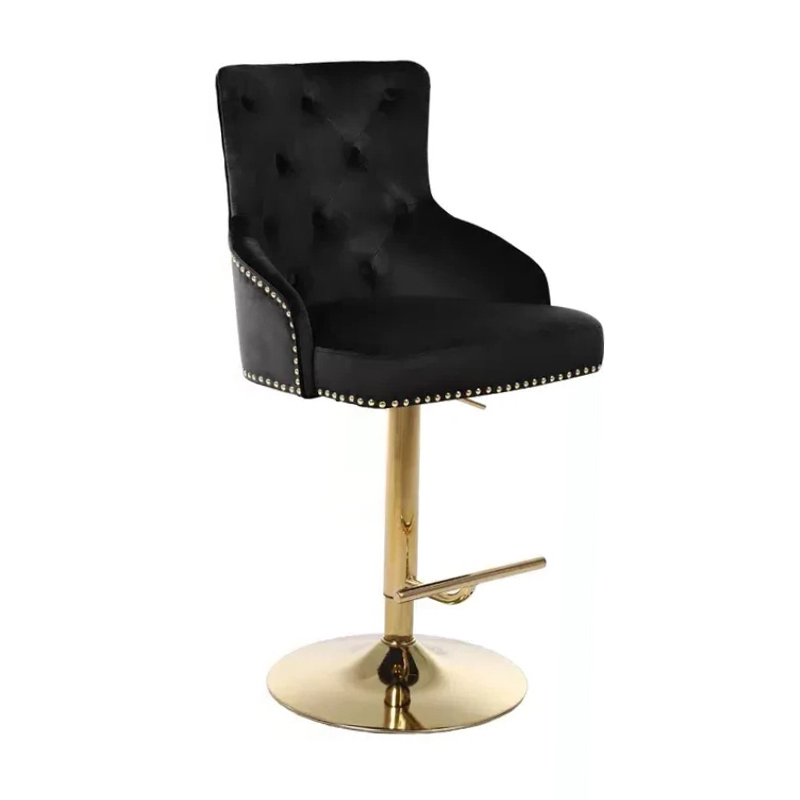
Button tufting, nailhead trim, and contrast stitching are added at this stage. Because upholstery is still largely a hand process, operator skill appears directly in the finish. Uneven tufting, loose staples, wrinkled corners, and mismatched patterns are the typical defects a qualified inspector catches before shipping.
5. Mechanism Fitting and Final Assembly
Once the upholstered seat is ready, the chair moves to final assembly. Height-adjustable models receive a gas lift cylinder inserted into a steel sleeve fixed to the seat base. Swivel models get a ball-bearing mechanism between the seat and the frame, sometimes with an auto-return cam for venues where chairs must face the counter again after a guest leaves.
The assembly station bolts the seat to the frame, fits the footrest ring, installs floor glides or casters, and checks that every movement is smooth. Torque settings matter: loose hardware is the most common cause of a wobbly new chair.
At this point, a manufacturer that controls its own process can make practical modifications — a different seat height range, a heavier-duty gas lift, or a stronger swivel. This is why commercial buyers often prefer a factory-led supplier over a trading company. For example, adjustable 360-degree swivel tufted bar stools show how one frame design can combine gas-lift height adjustment, rotation, and tufted upholstery in a single product.
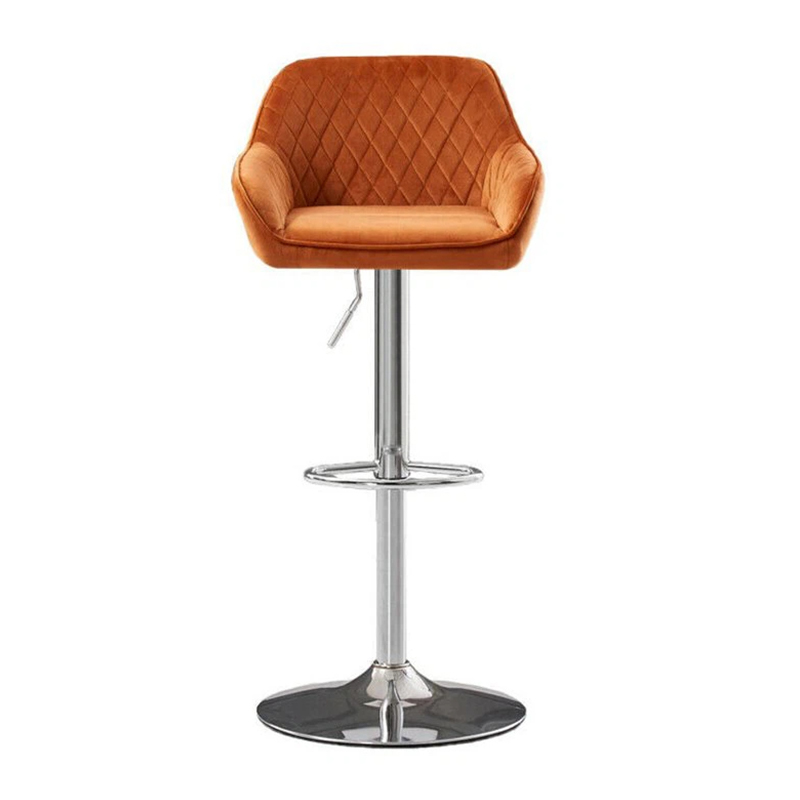 Custom Adjustable Height 360°Swivel Tufted Swivel Bar Stools Suppliers, ManufactAnji Duomei Intelligent Furniture Technology Co., Ltd is China Custom OEM/ODM Adjustable Height 360°Swivel Tufted Swivel Bar Stools Suppl...View Product →
6. Quality Control — What Should Be Tested Before Shipping
Export factories that take contract business seriously test at several checkpoints. The tests that matter most for fabric bar chairs are straightforward to verify.
Load, stability, and structure
The finished chair is loaded with a test weight, typically 100 kg to 160 kg, to simulate a heavy user sitting down. The chair is then pushed forward and sideways to confirm the frame holds and the chair does not tip over.
Fabric, foam, and seam testing
Fabric abrasion is measured with the Martindale method, which rubs a textile sample under controlled pressure. For residential stools, 20,000 cycles can be enough; for cafés, restaurants, and bars, contract buyers usually require a Martindale rating of 30,000 cycles or more. The seat cushion is compressed repeatedly to check foam recovery, and seams are pulled to confirm they hold. Finally, a pre-shipment inspection checks a sample from each batch for loose staples, uneven stitching, misaligned legs, and mechanism defects.
A supplier that cannot share fabric abrasion data or foam density figures should be approached with caution. These numbers are the only objective way to predict what a fabric bar chair will look like after six months of daily use.
7. What This Production Route Means for Buyers
Reading the manufacturing process backward gives a practical supplier checklist.
Price differences almost always map to hidden specifications. Thinner steel, lower-density foam, weaker fabric, and cheaper gas lifts are the silent reasons one bar chair costs half as much as another. Customization is easiest when one factory controls frame, foam, sewing, and assembly. Ask whether your supplier produces in-house or assembles parts from multiple vendors.
Fabric choice defines both appearance and operating cost. A bar with frequent spills needs an easy-clean textile; a hotel lounge may prioritize plush texture with high abrasion resistance. Reviewing how current style trends in fabric-covered bar stools align with your target market can help you avoid committing to a look that feels dated before the container arrives.
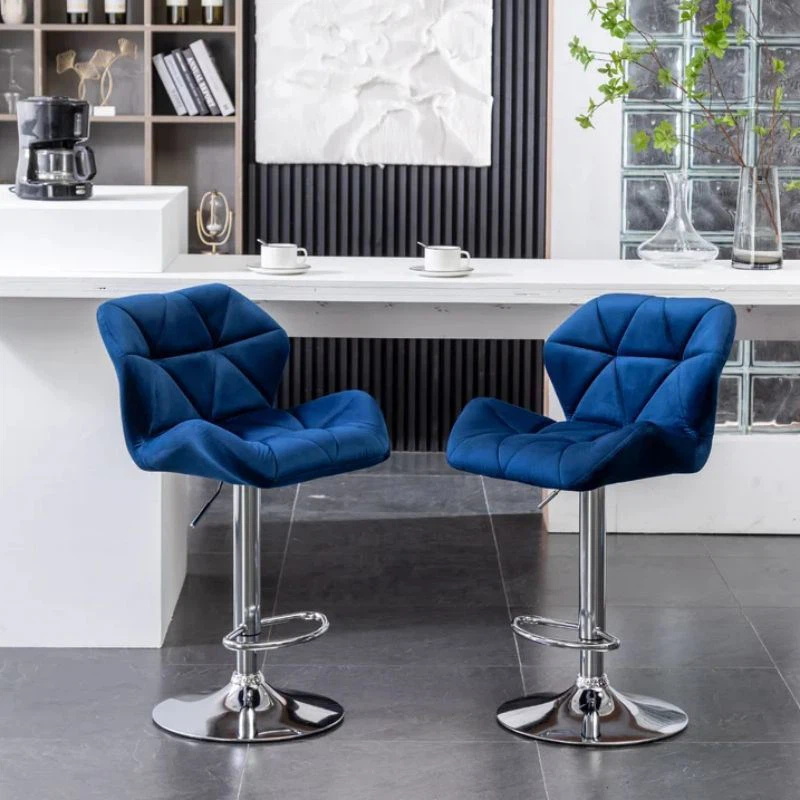
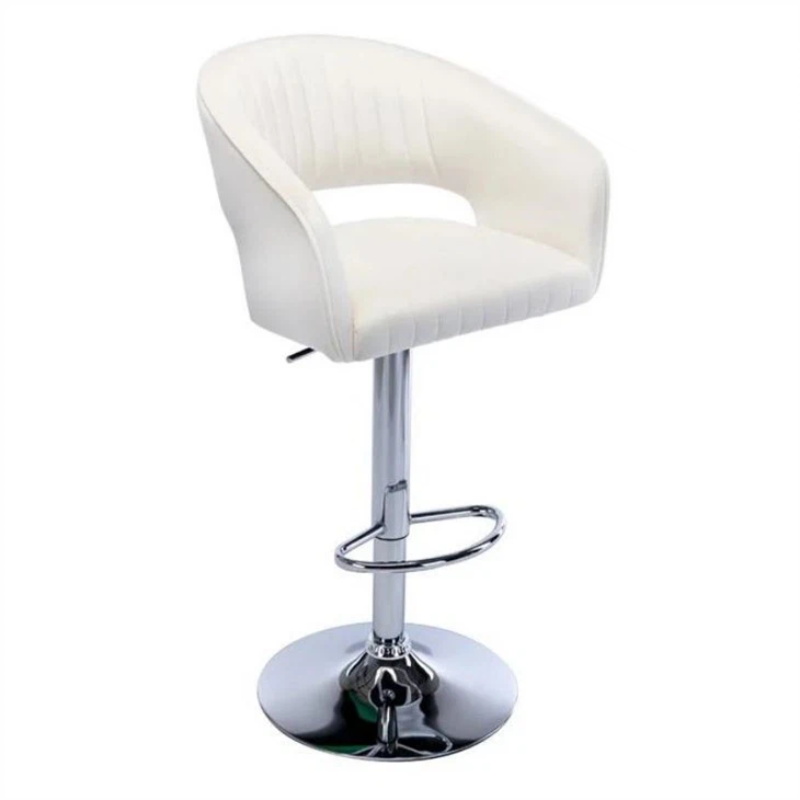
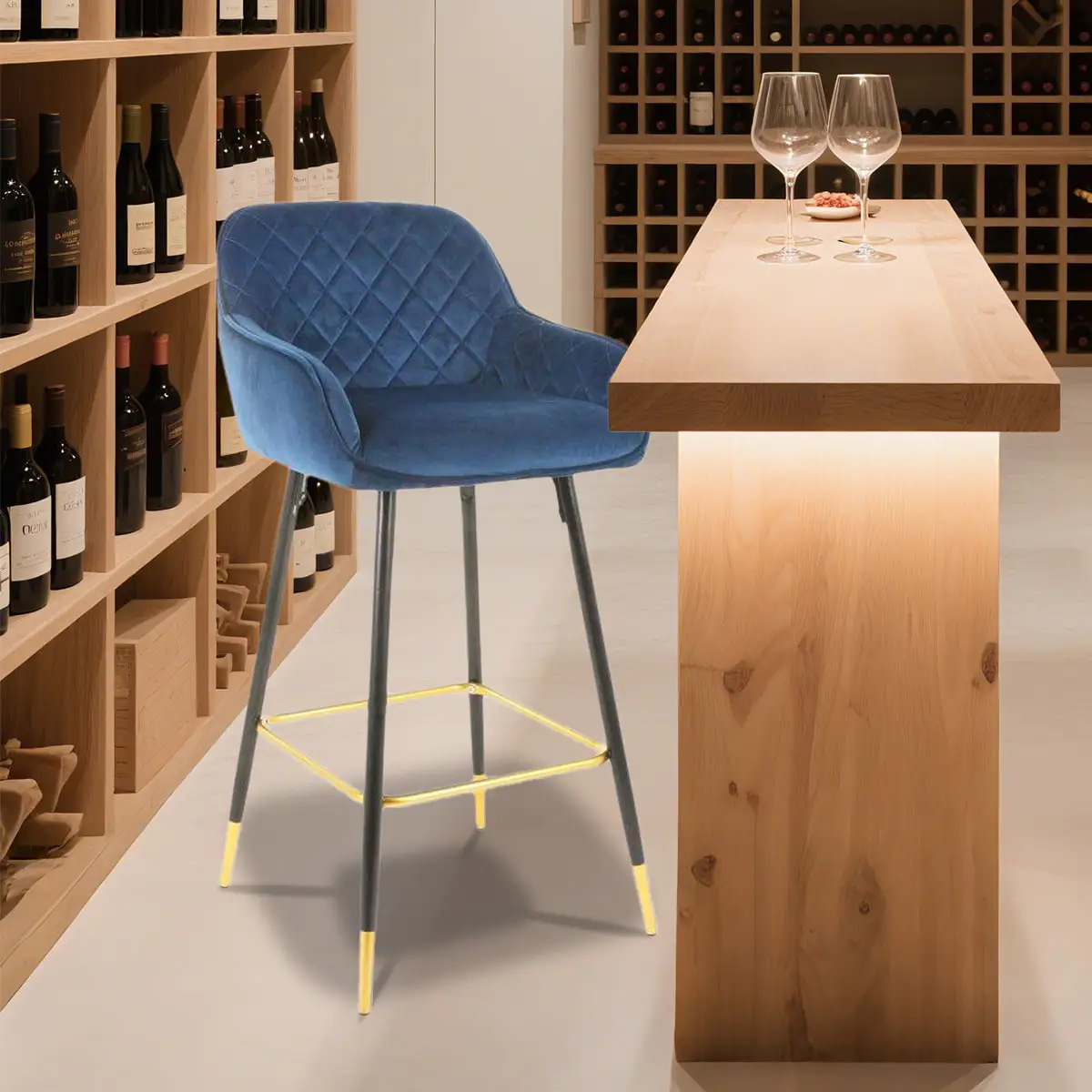
For buyers who need multiple models from one source, reviewing the full collection of fabric bar chairs — from fixed four-leg designs to mechanism-equipped swivel versions — is a faster route than chasing individual patterns through a catalog. A sample check remains the final gate: sit on it, twist it, push it sideways, and inspect the seams. If the chair survives that short test, the manufacturing process behind it will likely hold up to your project's daily use.
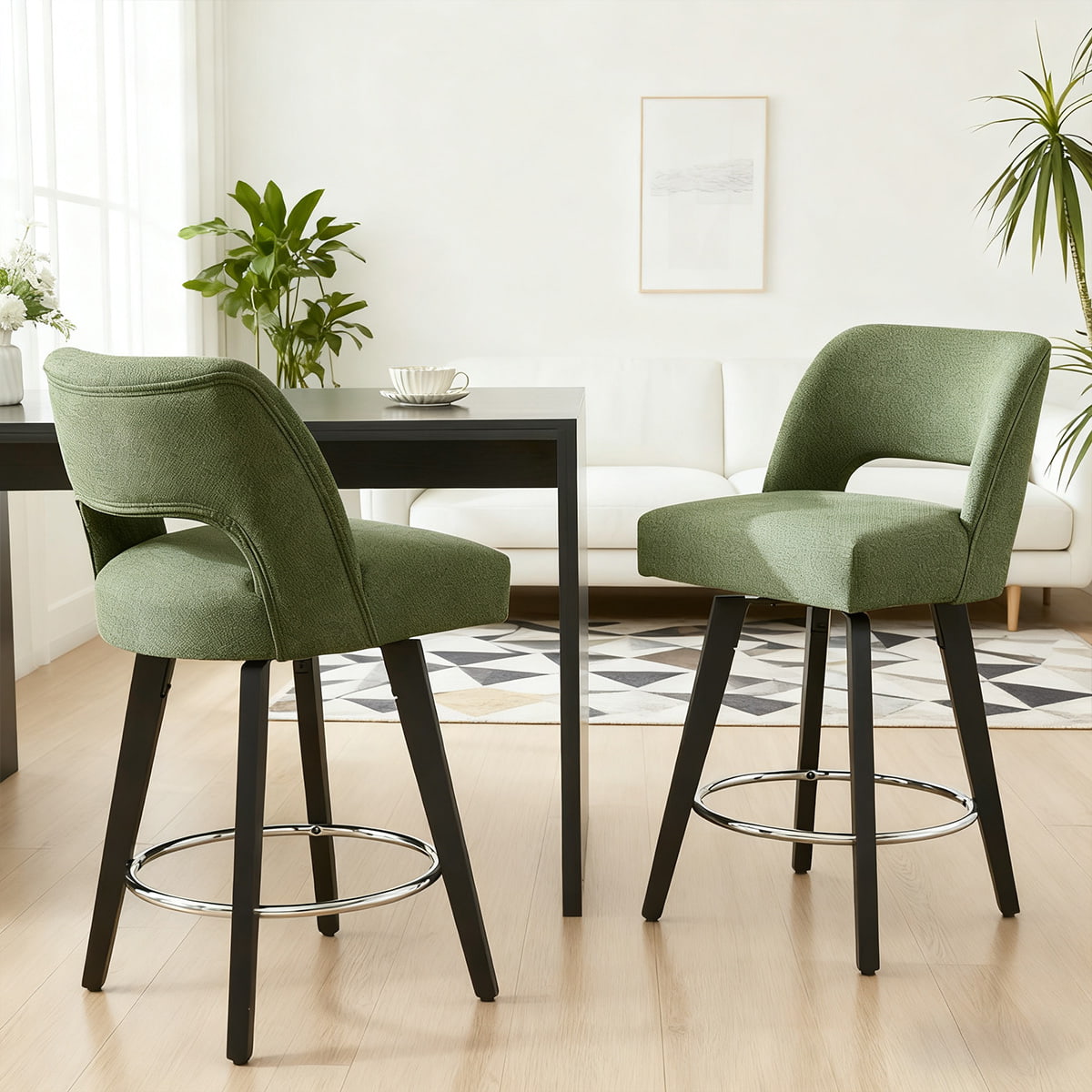 Custom Fabric Bar Chairs With Back Manufacturers, FactoryAs China Custom Fabric Bar Chairs With Back Manufacturers and Factory, Anji Duomei Intelligent Furniture Technology Co., Ltd Offer OEM/OD...View Product →
Related Products
-
 Yangguang Industrial Park 2, Anji County, Huzhou City, Zhejiang Province, China
-
 [email protected]
[email protected]
[email protected]
[email protected]
[email protected]
[email protected]
-
 +86-18357268872
QR CODE

