


 En
En English
 Français
 Español
Bar Chair Frame Construction: Key Strength and Stability Requirements Explained
Posted by Admin | 18 Sep
Content
Twelve upholstered bar stools were pulled from a busy cocktail bar after fourteen months of service. The fabric still looked right; the frames did not. Hairline cracks had opened where the footring welds meet the front legs, and three bases rocked on the slab floor. The buyer had selected on color and unit price, not on frame construction. For any contract purchase, that is the wrong order of priorities.
Bar chair frame construction determines how long a high seat survives the daily cycle of mounting, leaning, and dismounting that no other chair type experiences. At a 75 cm seat height, a 90 kg customer produces lateral forces that a dining chair frame never sees. Strength and stability are not marketing adjectives; they are engineering requirements that a buyer can specify, inspect, and test.
What "Strong" and "Stable" Actually Mean
A bar chair frame is the load-bearing skeleton of the seat, and its strength and stability are the direct results of material grade, joint method, and base geometry.
Strength covers the ability of the frame to carry static and dynamic loads without permanent deformation or fracture. Stability covers the resistance of the chair to tipping under horizontal force. The two are connected but not identical: a frame can be strong yet unstable if the base is too narrow, or stable yet weak if the welds fail early.
Frame Materials and the Strength Numbers That Matter
Welded steel tube dominates commercial bar chair frames because it delivers the highest strength-to-cost ratio; hardwood and cast aluminum occupy specific niches in style and working conditions.
Contract manufacturers such as Anji Duomei Intelligent Furniture Technology Co., Ltd. start with mild steel tube, bend it on CNC tube benders, punch the seat brackets, and weld the frames on automatic welding machines in the company's 4,000 square meter factory in Anji, Zhejiang, a region known as China's swivel chair capital. The equipment list matters to a buyer because it shows whether the supplier controls the frame process in-house or buys ready-made frames that can vary between batches.
| Material | Typical form | Approx. yield strength | Best commercial use |
| Mild steel tube | Welded, powder-coated | 235 MPa | Most indoor contract interiors |
| Stainless steel tube | Welded, brushed or polished | 520 MPa | Wet areas, coastal venues, terraces |
| Cast aluminum | Die-cast base or legs | 225 MPa | Pedestal bases, lightweight stools |
| Hardwood | Beech or oak, doweled and glued | 90 MPa | Classic residential-style interiors |
Approximate yield strength in MPa; actual values depend on alloy grade, wall thickness, and wood species.
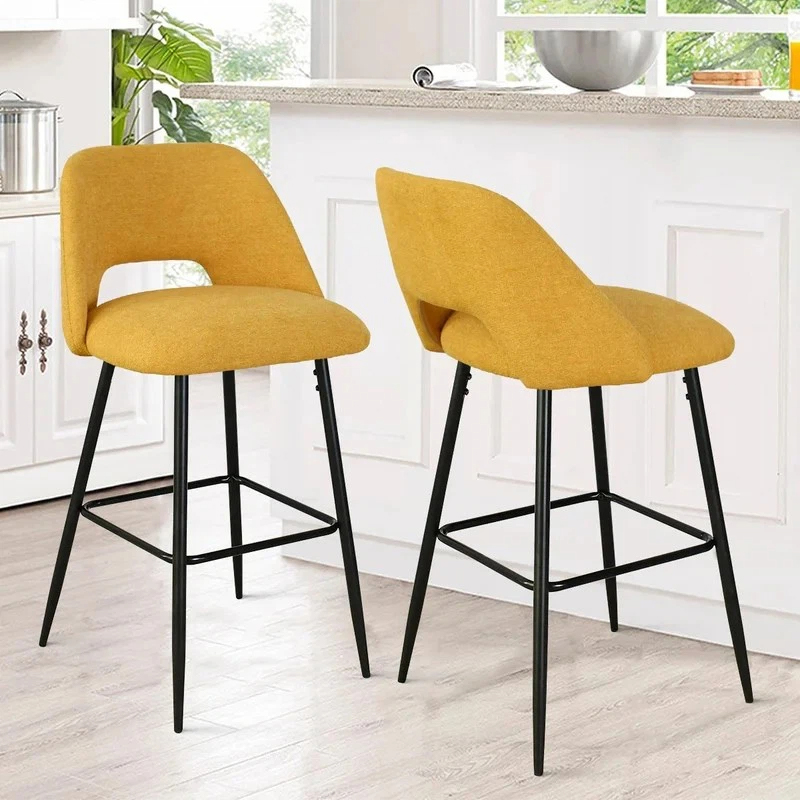 Yellow High Bar Stool with Sturdy Powder-Coated Steel FrameThis vibrant yellow stool combines a durable powder-coated steel frame with a cushioned seat, making it a practical choice for high-traffic bars, cafes, or kitchen islands.View Product →
Welds, Joints, and the Points That Fail First
Weld quality is the single most decisive factor in bar chair frame durability, because most structural failures start at the junction between the footring and the front leg, not in the tube itself.
Commercial frames rely on MIG or TIG welding. Automatic welding machines, which Anji Duomei uses in its production line, produce more consistent beads than hand welding and reduce the porosity and undercut that turn into early cracks. A properly welded footring joint is continuous around the full circumference of the tube; a partial weld concentrates stress in a single point and shortens the service life dramatically.
- Seat bracket to tube: the bracket must be fully welded, not tack-welded.
- Footring to front leg: a continuous full-circle weld is the standard for a repair-free joint.
- Foot caps and glides: welded caps protect the tube end and keep moisture out.
- Weld cleaning: slag and spatter must be removed before powder coating.
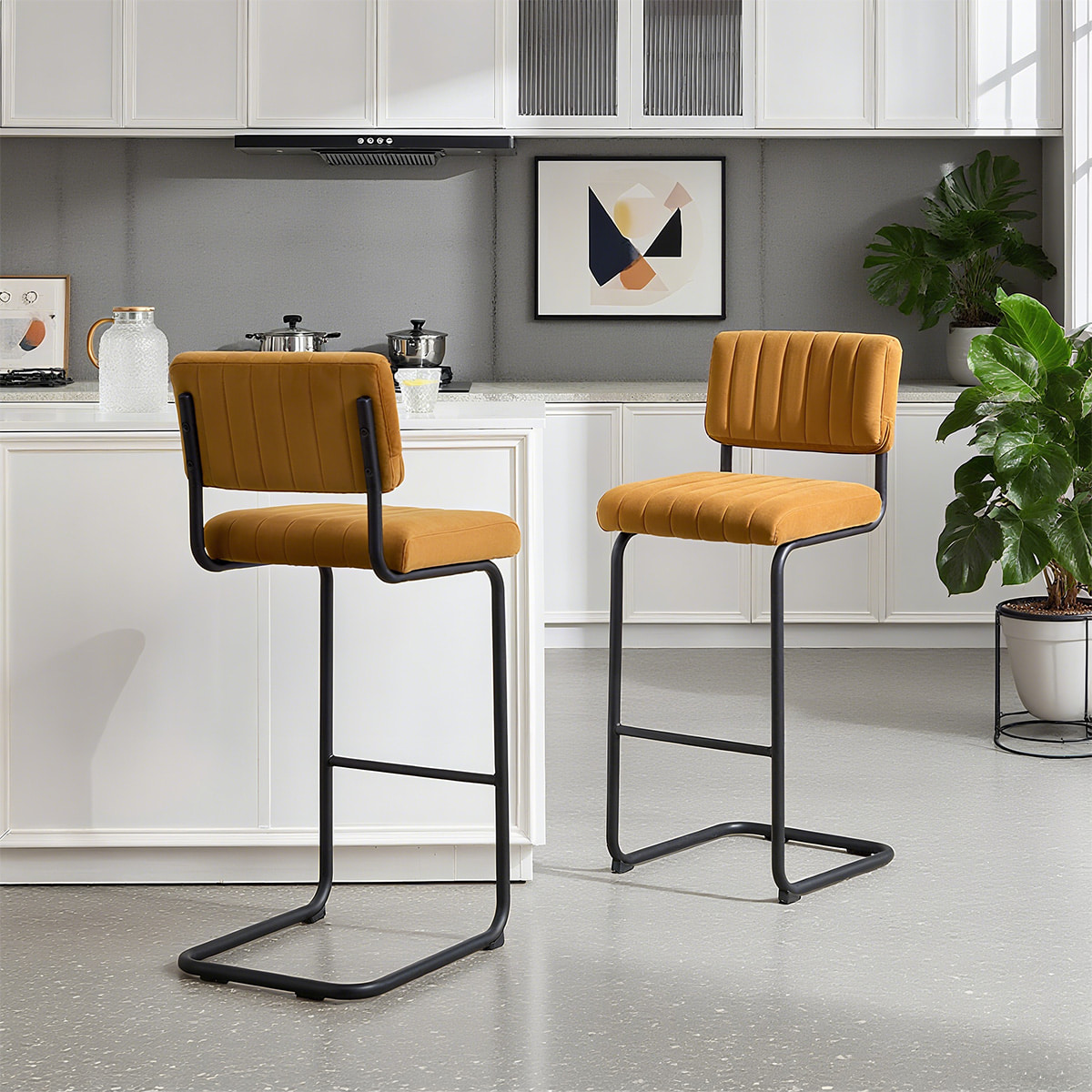 Mid-Century Modern Velvet Cantilever Bar Stool with BackrestFeaturing orange velvet upholstery, a tufted seat and backrest, and a matte black steel frame, this cantilever stool offers ergonomic support and stable seating for home or commercial use.View Product →
Stability: Footprint, Base Geometry, and Floor Contact
A bar chair is stable when the vertical projection of the user's weight stays inside the support polygon formed by the floor contact points under leaning and dismounting loads.
Stability is decided by geometry as much as by material. A wide base with floor contact points spread outward resists tipping far better than a narrow base made from heavier steel. Three base families cover the commercial market, and each reacts differently to lateral force.
Four-leg frame
Cantilever C-frame
Pedestal ring base
On swivel models, the gas lift class and the base mass matter as much as the frame. A Class 3 lift rated for 150 kg with a steel or die-cast aluminum base gives predictable behavior, while a lightweight base turns a tall stool into a tipping hazard. The front footring should sit at the user's shin height, usually 40 to 45 cm above the floor, to reduce the torque created when stepping up.
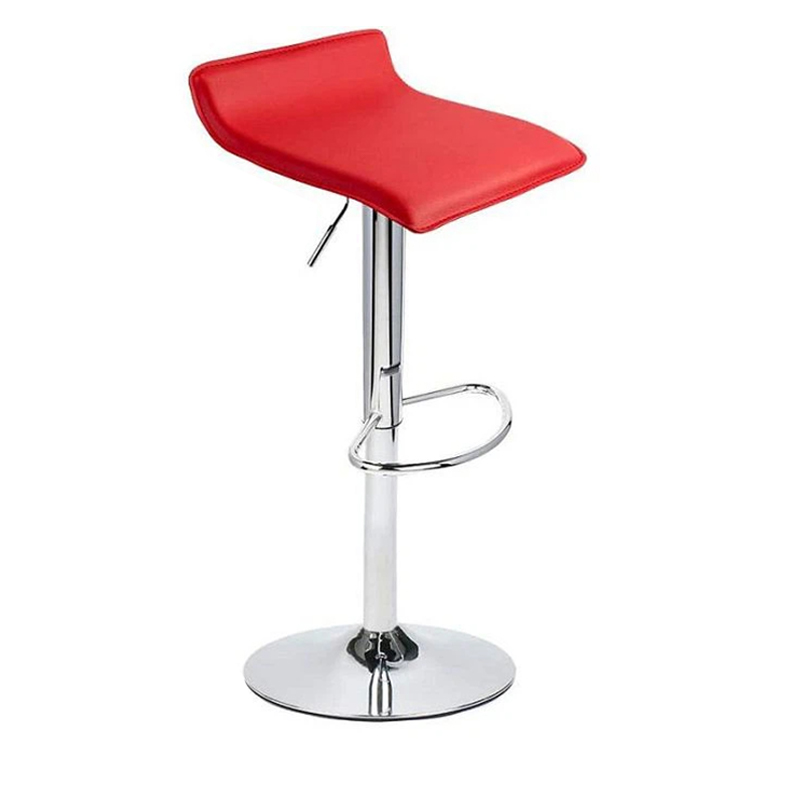 Classic Leather Bar Stool Set of Two with Pedestal BaseThis pair of chrome-finished bar stools features a pedestal base, adjustable gas lift, and cushioned faux leather seats, providing stable and comfortable seating for bars or dining areas.View Product →
What a Contract Buyer Should Put in Writing
Put frame requirements in the purchase specification, not in a casual email: tube wall thickness, steel grade, weld standard, base type, weight capacity, and the test standard the model must pass.
- Tube wall thickness of 1.5 to 2.0 mm for welded steel commercial frames; below 1.2 mm is domestic grade.
- Steel grade S235JR or equivalent for powder-coated frames; stainless 304 for wet or outdoor conditions.
- Minimum weight capacity of 150 kg per seat, verified by a static load test.
- Fatigue rating of 100,000 cycles according to EN 16139 or BIFMA X5.4 test methods.
- Stability test with a 500 N horizontal force applied at the seat surface, without tipping.
- Glides or floor-protection caps included on every leg.
Contract manufacturers respond well to written specifications. Anji Duomei Intelligent Furniture Technology Co., Ltd., a producer of bar chairs, dining chairs, and contract seating in Anji since 2014, accepts OEM and ODM orders and can adjust tubing diameter, seat height, base type, and weld details on existing models. Before accepting a certificate, verify the structural certification requirements that apply in your destination market.
Frame Construction FAQ
What is the strongest material for a bar chair frame?
Stainless steel tube offers the highest strength among common frame materials, with a yield strength around 520 MPa, followed by mild steel at about 235 MPa. For most indoor contract projects, welded mild steel with a 1.5 to 2.0 mm wall thickness gives the best balance of strength, cost, and repairability.
How much weight should a commercial bar chair hold?
A commercial-grade bar chair should hold at least 150 kg per seat in a static load test and survive 100,000 fatigue cycles according to EN 16139 or BIFMA X5.4. If the supplier cannot state these numbers, ask for the test report before placing an order.
What makes a bar chair stable?
Stability comes from base geometry: the floor contact points must form a support polygon wide enough to keep the user's weight projection inside it. A pedestal ring base of 60 cm or more, or splayed four-leg frames with glides, resists the 500 N horizontal force used in standard stability tests.
Which bar chair frame type is best for a restaurant?
For static seating rows in a restaurant, a splayed four-leg welded steel frame with rubber glides is the most durable and space-efficient option. For counters where customers swivel or adjust height, a pedestal or ring base with a Class 3 gas lift provides better 360-degree stability.
A bar chair that fails in month fourteen costs more than the purchase price; it costs the operator service hours, replacement logistics, and the impression left on every guest who sat on a wobbling seat. Specify the frame first, and the upholstery becomes a style detail instead of a structural gamble.
Related Products
-
 Yangguang Industrial Park 2, Anji County, Huzhou City, Zhejiang Province, China
-
 [email protected]
[email protected]
[email protected]
[email protected]
[email protected]
[email protected]
-
 +86-18357268872
QR CODE

