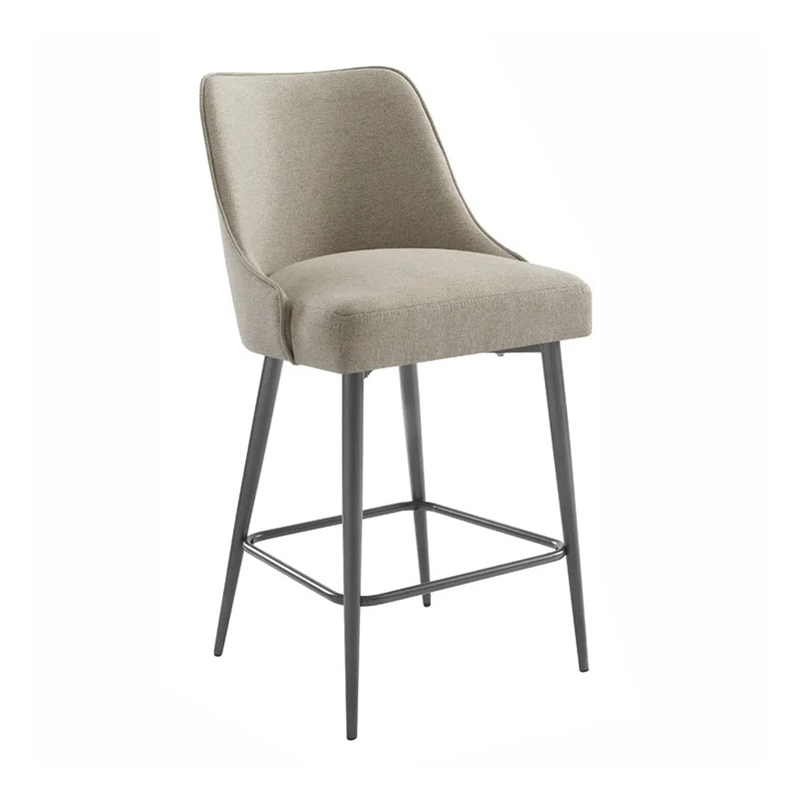
Content
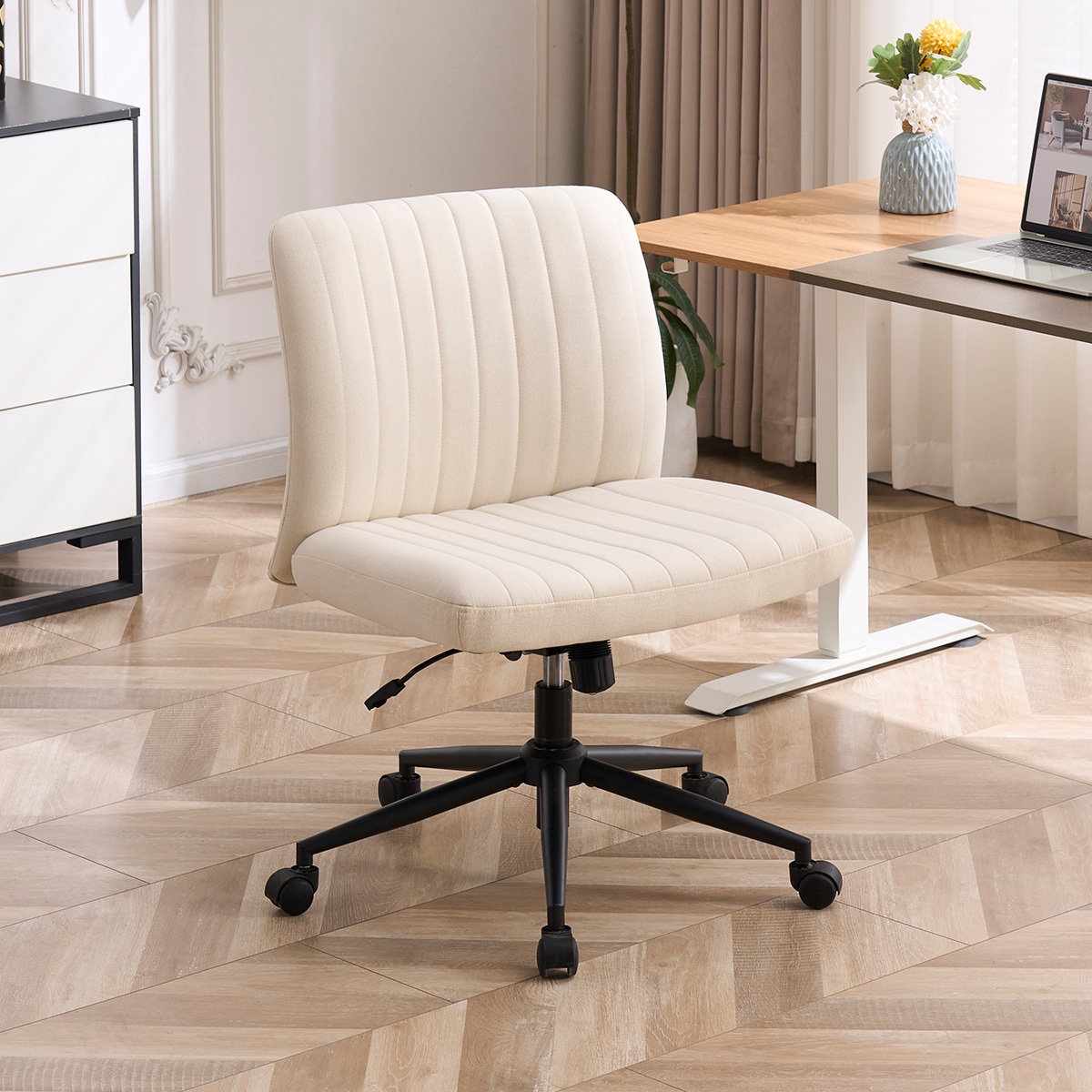
Remote workers spend an average of 7.7 hours per day seated — more than their office-based counterparts. Fabric home office chairs are purpose-built for that reality: upholstered seats that distribute weight evenly, regulate surface temperature, and provide the structured support that rigid mesh and hard-shell alternatives cannot match across a full workday.
Fabric home office chair comfort is grounded in surface mechanics. A woven or foam-backed fabric seat deforms slightly under load, distributing pressure across a larger contact area than rigid polypropylene or taut mesh. This reduces peak pressure at the ischial tuberosities — the sit bones — which are the primary pain sites in prolonged seated work. Research from the Human Factors and Ergonomics Society found that seats with compliant upholstered surfaces reduced reported discomfort scores by 34% after four hours compared to rigid-surface alternatives.
Fabric seating comfort is not softness — it is controlled compliance. The seat surface yields enough to eliminate pressure points, while the foam or suspension layer beneath maintains postural support without bottoming out under sustained load.
Seat foam density is the hidden variable in fabric chair comfort longevity. Consumer-grade chairs use 25–35 kg/m3 foam that compresses permanently within 12–18 months. Contract-grade fabric chairs specify 45–55 kg/m3 high-resilience foam that returns to original thickness after each use, maintaining consistent comfort over a 5–10 year service life. When comparing fabric chairs, always request foam density specifications — not just seat thickness.
Fabric home office chair ergonomics begins at the seat pan, not the backrest. A correctly sized fabric seat pan positions the user's knees at 90–100 degrees with thighs fully supported to within 3–4 fingers of the knee — without compressing the popliteal area behind the knee. Seat depth adjustment is the mechanism that achieves this for users of different leg lengths, and it is the most underspecified feature in entry-level fabric chairs.
The lumbar support in a fabric chair must contact the natural inward curve of the lower spine — typically between L3 and L5 vertebrae, 6–10 cm above the seat surface. Adjustable lumbar height and depth are essential for users outside the 160–180 cm height range.
A synchronized tilt mechanism reclines the backrest and seat simultaneously at a 2:1 ratio — for every 2 degrees of backrest recline, the seat tilts 1 degree. This maintains thigh support and prevents the user from sliding forward during recline, a common failure in fixed-seat designs.
Fabric chairs with height-adjustable armrests reduce trapezius muscle load by up to 45% versus armrest-free designs. The armrest pad surface should be at elbow height when the shoulder is relaxed — not elevated to reach an overly high pad.
Standard pneumatic cylinders provide 42–52 cm seat height range. Users shorter than 160 cm or taller than 190 cm should verify the chair's specific height range against their own knee-to-floor measurement before purchasing.
Fabric home office chair breathable fabric is a construction claim that requires scrutiny. Not all woven fabrics breathe equally. Open-weave polyester and Type-A woven fabrics allow air circulation through the weave structure itself, preventing heat accumulation at the seat contact surface. Close-woven velvets and bonded fabric composites block airflow entirely and perform worse than mesh in warm environments.
| Fabric Type | Breathability | Durability | Best For |
| Open-weave polyester | High | High — 100,000+ rub cycles | Warm climates, long sessions |
| Woven nylon blend | Medium-high | Very high — abrasion resistant | High-use environments |
| Close-woven polyester | Low | Medium — pills over time | Low-humidity, cool rooms only |
| Bonded fabric composite | None | Low — delamination within 2–3 yr | Appearance only — avoid |
| Recycled PET weave | High | High — equivalent to virgin polyester | Sustainability-focused buyers |
Independent breathability is rated by the Moisture Vapor Transmission Rate (MVTR) in g/m2/24hr. Fabric seating with MVTR above 800 maintains comfortable surface temperatures during extended use. Manufacturers rarely publish MVTR values — a useful proxy is the Martindale abrasion rating: fabrics rated above 80,000 cycles are typically open-weave constructions with inherently higher breathability.
A fabric home office chair for remote work operates in a fundamentally different environment from commercial office seating. Home use means variable temperatures, irregular cleaning schedules, exposure to household dust and pet hair, and often a single chair serving multiple seated activities — video calls, focused work, casual reading, and meal breaks. These conditions demand a different specification than a chair used 9–5 in a climate-controlled open-plan office.
Fabric chairs with zip-off seat and back covers can be machine washed — a critical advantage in home environments where professional cleaning services are not available.
Fluorocarbon or C0 DWR-treated fabrics repel liquid spills for 30–60 seconds, allowing blotting before absorption. Essential for home workers eating or drinking at their desk.
Home offices predominantly use hardwood, laminate, or tile floors. Standard twin-wheel nylon casters scratch these surfaces within weeks. Specify polyurethane-coated casters rated for hard floors.
Video call posture differs from focused keyboard work. A multi-position recline lock allows the backrest to be fixed at 100 degrees for calls and released for dynamic work postures throughout the day.
The fabric home office chair vs mesh chair debate is not a question of which is objectively better — it is a question of which is better for a specific user, climate, and use pattern. Both materials have genuine advantages, and the correct answer changes based on environment and body type.
For most remote workers in temperate climates logging 6+ hours daily, fabric home office chairs deliver better sustained comfort than mesh equivalents at the same price point. Choose mesh only if ambient temperature regularly exceeds 26°C and the room lacks climate control — in all other conditions, fabric's pressure distribution and lumbar contouring advantage is the deciding factor.
Related Products
NO.8, NO.1 Road, Sunshine Industrial Park 2, Anji County, Huzhou City, Zhejiang Province, China.
[email protected]
+86-13567991394