


 En
 English
 Français
 Español
Dining Chair Frame Construction: Key Structural Performance Factors for B2B Buyers
Posted by Admin | 13 Nov
Content
- 1 What dining chair frame construction actually covers
- 2 Frame materials and what each one does well
- 3 Load path and member sizing: why three millimetres changes the result
- 4 Joint method decides where a frame fails
- 5 How to verify frame construction before you commit to a container
- 6 What to put in a dining chair frame specification
- 7 Practical answers on frame specification
A dining chair rarely fails because the fabric wore through. It fails where the frame meets itself: the joint between a back post and a seat rail, the dowel above a front leg, the weld at the base of a steel tube. When a hotel takes delivery of 400 side chairs and 30 develop a wobble in year two, the cause is nearly always frame construction rather than upholstery.
That distinction has a commercial cost. Re-covering a chair is a planned expense that can be quoted in advance; a collapsed frame is a warranty claim, a return shipment, and a replacement cycle that pulls the supplier back into the project long after final payment. The four variables below decide how a frame behaves, and each one appears somewhere in a specification, a sample approval, or a container inspection.
What dining chair frame construction actually covers
Dining chair frame construction is the combination of member material and cross-section, joint method, and load path that carries seat and back loads into the floor. Foam, fabric, and finish sit on top of that structure and cannot compensate for it.
Working definition
A frame is structurally adequate when it absorbs repeated seat, back, and side loads at its joints without permanent deformation, loosening, or cracking, and passes the strength, durability, and stability tests named in the purchase specification.
Four decision variables control whether a frame reaches that bar:
- Member material and section: the species or tube grade, and the actual millimetres of each leg, rail, and stretcher.
- Joint method: mortise-and-tenon, dowel, corner block, welded tube, or bolted bracket, and how each connection is reinforced.
- Load path and bracing: how seat loads travel to the legs, and where stretchers or braces shorten the span that resists bending.
- Verification: the test standard, the use level, the sample tested, and the report that documents the result.
Buyers who specify shape, colour, and fabric first and structure last usually learn this ordering backwards in year two. The frame is the only part of a dining chair that cannot be upgraded after delivery.
Frame materials and what each one does well
Solid hardwood, engineered wood panels, welded steel tube, and hybrid wood-and-steel frames account for nearly every contract dining chair, and each has a different failure mode rather than a different level of quality.
Hardwood frames, most often beech, oak, ash, or rubberwood, depend on clear, straight-grained stock and joints with real glue surface. Knots, short grain run-out, and a connection held by two screws will give way before the wood itself does. A 2024 study published in Maderas. Ciencia y tecnología (volume 26, DOI 10.22320/s0718221x/2024.26) tested 108 full-size chairs in three loading directions using an American Library Association cyclic stepped loading method. Oriental beech plywood frames delivered the best cyclic performance, MDF came close except under side thrust, and oriented strand board finished last.
| Frame type | Typical members and joints | Structural behaviour | Verification focus |
| Solid hardwood | 30 to 45 mm square or shaped legs, mortise-and-tenon or dowel joints | Stiff and repairable, with stiffness varying by grain and moisture | Moisture window, joint fit, grain run-out |
| Engineered panel | 15 to 18 mm plywood or MDF seat frames, CNC interlock or dowels | Predictable in cyclic loading, side thrust separates panel grades | Panel grade, screw holding, edge sealing |
| Welded steel tube | 22 to 32 mm tube, MIG or TIG welds, cross braces | High strength per kilogram, stress concentrates at welded nodes | Wall thickness, weld penetration, coating adhesion |
| Hybrid wood and steel | Steel legs and base with a wood or plywood seat shell | Combines stiffness with softer contact edges, depends on brackets | Bracket torque, interface washers, coating at joints |
Moisture content belongs in the specification rather than in a general statement about quality. A common window for kiln-dried hardwood used in indoor seating is roughly 6% to 10%, and the target should be agreed with the factory according to the destination climate. A frame dried for a humid market can open at the joints once it sits in a heated dining room.
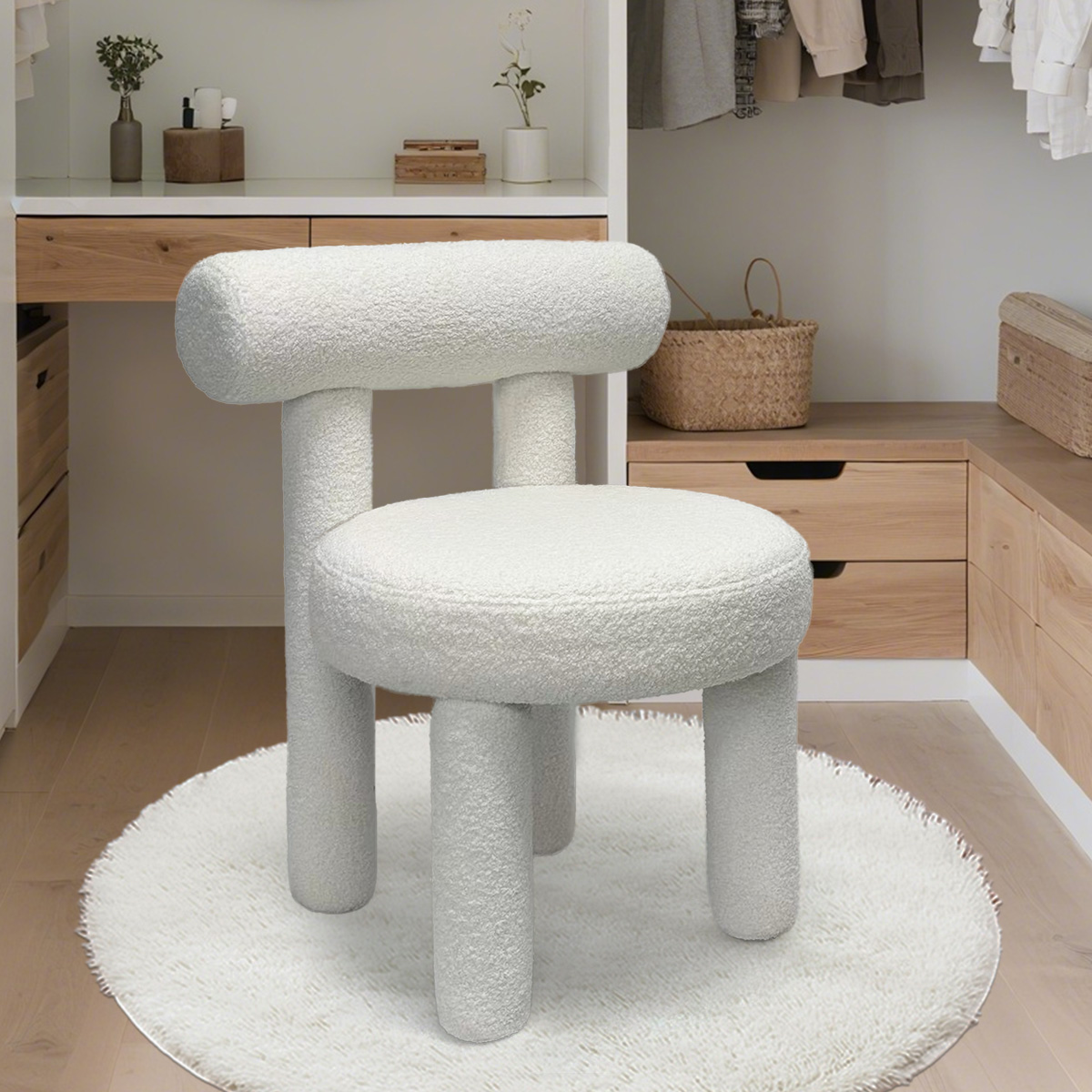
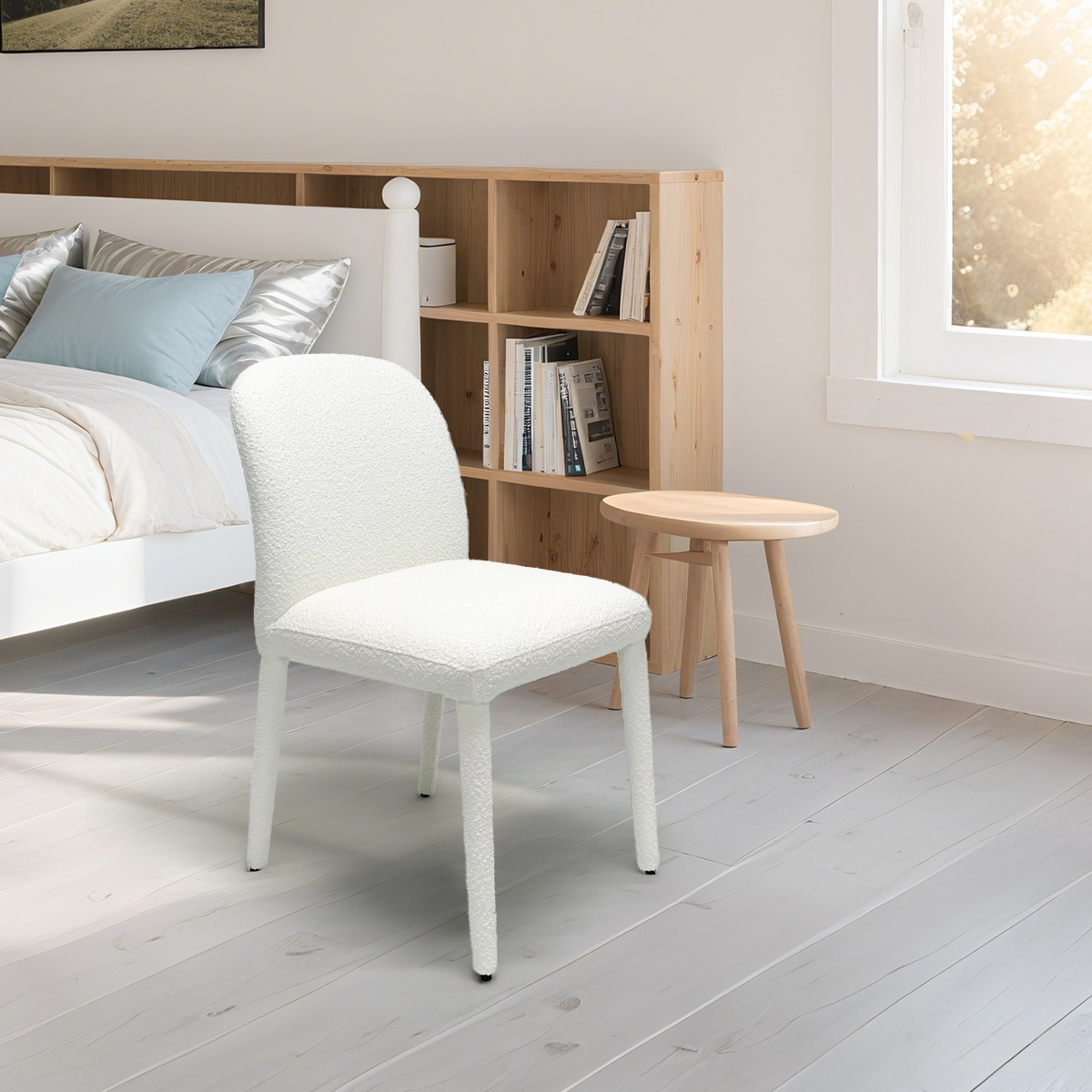
 Ivory Bouclé Armless Dining Chair with Birch Wood and Steel FrameThis armless bouclé chair combines a padded seat with a birch and steel frame, making it worth checking for moisture-spec and hybrid-structure discussions.View Product →
A birch wood and steel frame is an example of a hybrid structure in which the metal base carries bending loads while the wood shell provides the contact surfaces.
Load path and member sizing: why three millimetres changes the result
Frame stiffness scales with the fourth power of member thickness, so a small increase in leg section changes how a chair behaves under load far more than a thicker cushion does.
Seat load travels from the seat platform into the side rails, then down the legs to the floor. Back load enters through the back posts and is transferred into the seat frame. Splay angle lengthens the lever arm at each leg, and bracing shortens the span that must resist bending. That is why seating designed for higher body weight uses side stretchers and middle braces under the seat rather than extra upholstery, the reinforcement approach described in BioResources research on chair design for heavier users.
Relative bending stiffness of solid square hardwood legs, 32 mm indexed at 100
Calculation example: (s / 32)^4 for an isolated cantilever leg of equal length and material. Stretchers, glue lines, grain effects, and joint stiffness are excluded.
Weight is a poor proxy for strength. A hollow steel tube with a larger diameter and adequate wall thickness can match a solid hardwood leg at a fraction of the mass, because section geometry and material placement carry the load.
Joint method decides where a frame fails
In laboratory cyclic tests and in field returns alike, the joint is where wood frames fail first, and the weld is the equivalent point in steel frames.
Mortise-and-tenon joints resist racking because the tenon shoulders spread load across a wide glue face. Dowel joints depend more heavily on hole tolerance and glue coverage. Corner blocks add a second load path when they are glued and screwed rather than screwed alone. In steel frames, the welded node between leg and seat frame concentrates stress, so weld penetration and post-weld treatment decide whether the frame or the coating fails first.
Solid wood frame
- Repairable joints and locally available spare parts
- Stiffness sensitive to moisture and grain direction
- Failure usually shows as a loose joint before a broken member
- Section increases add shipping weight quickly
Welded steel frame
- High strength per kilogram and consistent section tolerance
- Welded nodes and coating edges concentrate stress
- Failure usually shows as a cracked weld or chipped coating
- Field repair is limited, replacement is the normal route
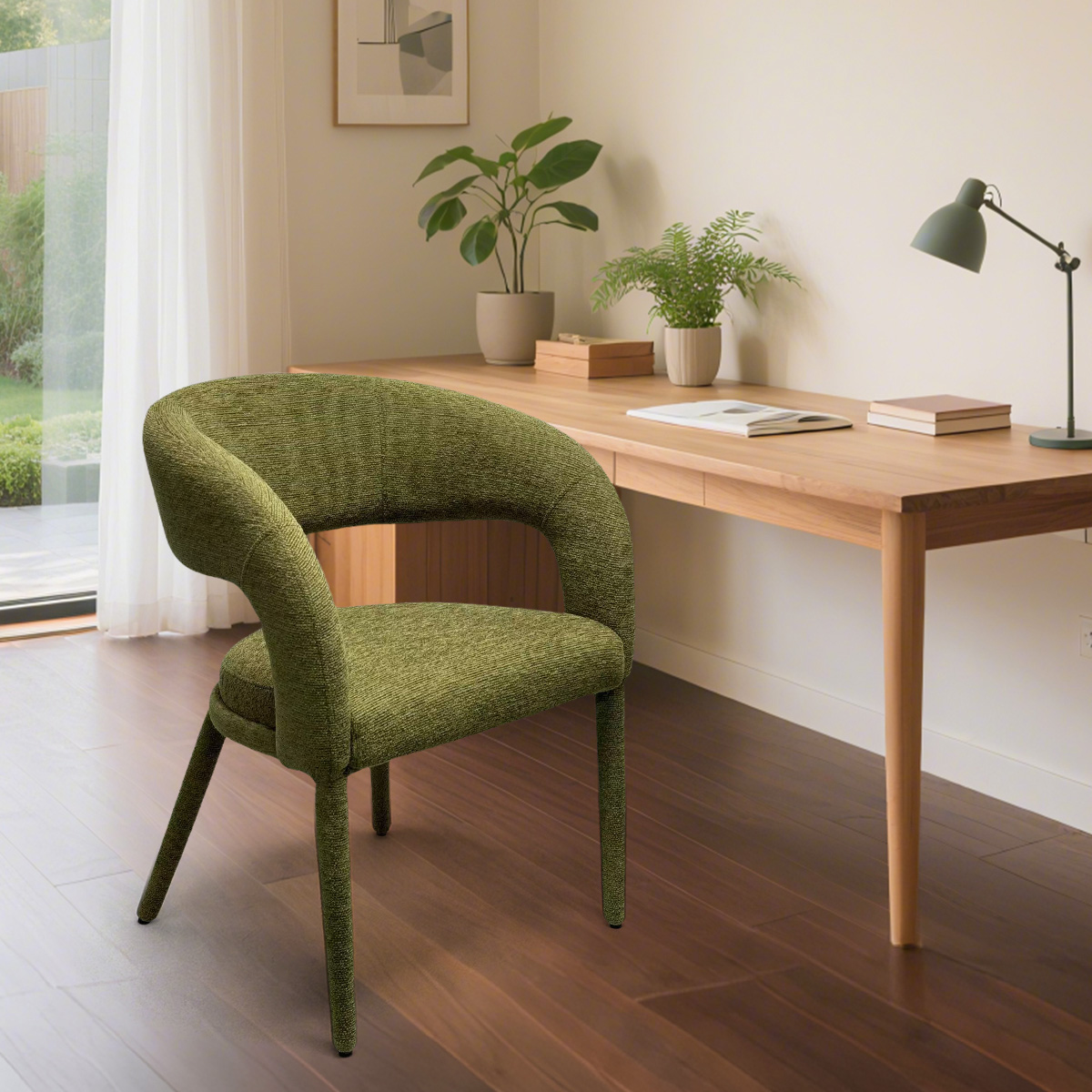
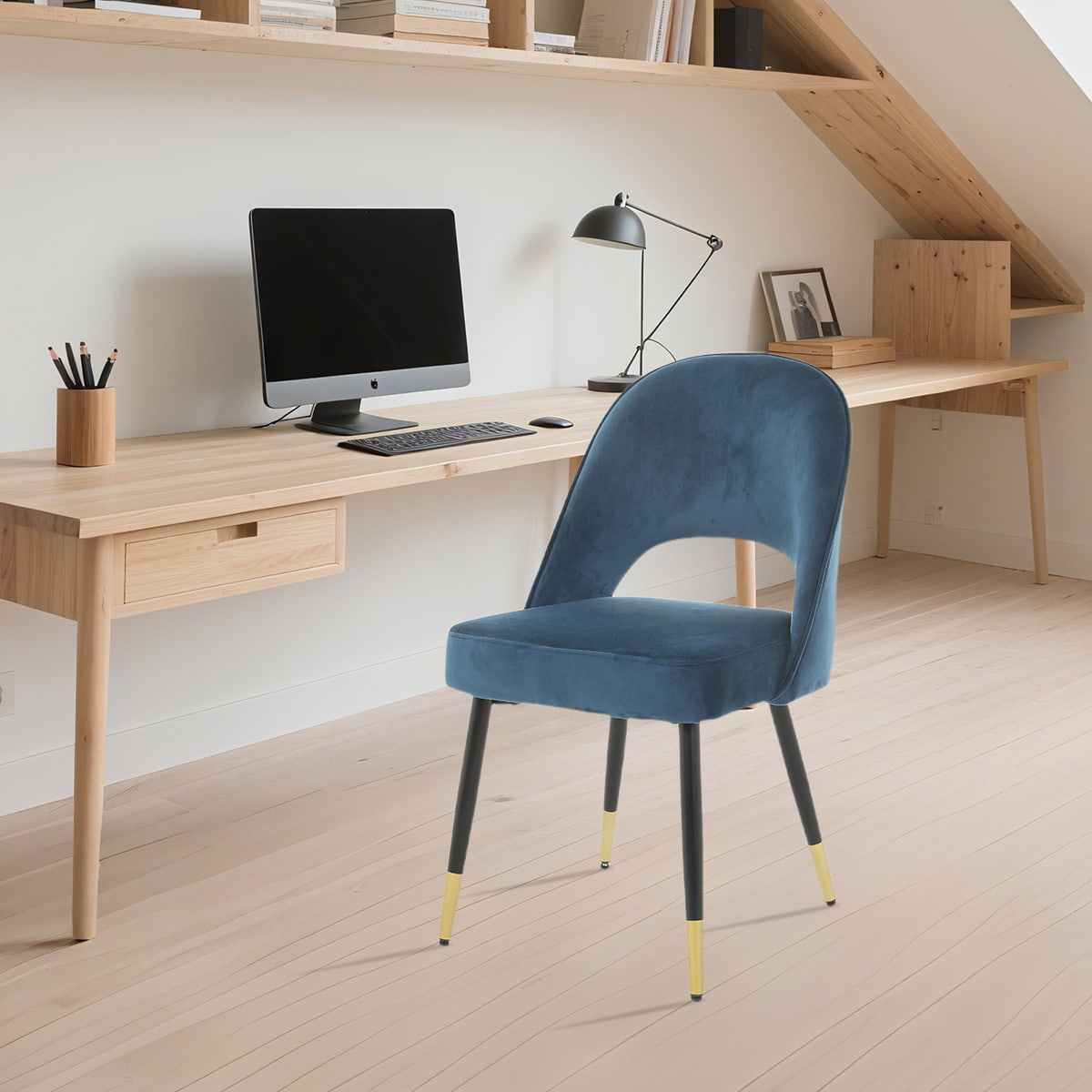
 Steel-Leg Hollow-Back Dining Chair with Anti-Scratch Foot PadsA modern dining chair with hollow back, steel legs, and protective foot pads, relevant to welded-frame and leg-to-frame connection considerations.View Product →
Steel-leg dining chairs show how much of the structural work sits in the leg-to-frame connection and in the foot pads that protect both floor and coating.
How to verify frame construction before you commit to a container
Ask for a test report against EN 16139:2013 for non-domestic seating in Europe, or ANSI/BIFMA X5.1 and X5.4 for the North American market, and confirm which use level the chair was tested to.
EN 16139:2013 sets the requirements, EN 1728:2012 provides the test methods, and stability is assessed under EN 1022:2018. Level 1 covers general contract use; Level 2 applies to severe use such as restaurants and bars where chairs are dragged, tilted, and pushed all day. A report that omits the level is not evidence of anything specific.
- Match the standard to the end use: domestic standard EN 12520 is not a substitute for EN 16139 for a commercial dining room.
- Request the full report with the standard number, the performance level, and the tested sample identity.
- Approve a physical golden sample and retain one copy at the factory and one at your office.
- Inspect production joints, weld nodes, and joint gaps during manufacture, not only at the sample stage.
- Record moisture readings, weld checks, and bracket torque values in the inspection plan before packing.
Production checks carry the same weight as the sample report. The sequence used for bulk orders, from joint-gap inspection to moisture and weld checks before packing, is set out in this walkthrough of how dining chairs are manufactured and checked for bulk orders.
What to put in a dining chair frame specification
A frame specification needs five measurable items, and each one should be stated as a value or a method rather than as a quality adjective.
- Material and section: species or tube grade, plus the minimum millimetres for legs, rails, and stretchers.
- Joint method: the joint type at every connection and whether glue, dowels, corner blocks, or welds are required.
- Use level and standard: EN 16139 Level 1 or Level 2, or the relevant ANSI/BIFMA X5 clause, with the sample to be tested named.
- Acceptance criteria: moisture content window for wood, weld and coating checks for steel, and joint gap tolerance.
- Commercial terms: structural warranty period, spare-part availability, and the replacement process for glides and brackets.
Three documents turn a frame specification into something inspectable: a test report that names the standard and level, a golden sample retained by both parties, and a production checklist covering moisture, weld quality, and fastener torque.
Buyers working from a project drawing rather than a catalogue should raise frame questions before cutting lists and tooling are fixed. Engineering support at that stage, such as the custom design and engineering service offered by contract seating manufacturers, costs far less than changing a joint after the first container ships.
 Green Velvet High-Back Tufted Dining Chair with Wooden LegsThis tufted high-back chair uses green velvet and solid wooden legs, useful when reviewing back-height, leg-section, and frame engineering before production.View Product →
A tufted high-back chair on wooden legs illustrates how back height and leg section interact: a taller back increases the bending moment that the rear legs and seat frame must resist.
Practical answers on frame specification
Which frame construction holds up best in a restaurant?
Welded steel tube frames and mortise-and-tenon hardwood frames both suit severe-use dining rooms, provided the chair has passed EN 16139:2013 Level 2 or the equivalent ANSI/BIFMA clause. A chair tested only to the domestic standard EN 12520 is a light-use product, not a chair for a room where seats are dragged across hard floors throughout service.
How many load directions should a frame test cover?
Three at minimum: front to back, back to front, and side thrust. The 2024 Maderas study applied exactly those three directions across 108 chairs, and the ranking changed with direction, with Oriental beech plywood strongest overall and MDF closing the gap except under side thrust.
Is a heavier dining chair always stronger?
No. Structural performance follows section geometry, material placement, and joint quality rather than mass. Because stiffness rises with the fourth power of member thickness, a 45 mm square hardwood leg reaches roughly 3.9 times the bending stiffness of a 32 mm leg of the same material and length, while a correctly sized steel tube can match a solid leg at lower weight.
Which document should a buyer request first?
The test report, complete with the standard number such as EN 16139:2013 or the relevant ANSI/BIFMA X5 clause, the performance level, and the identity of the tested sample. A supplier able to match a report to a specific model and revision gives the buyer a verifiable starting point for sample approval and production inspection.
Frame construction decides how a dining chair behaves in year three, not how it photographs in a catalogue. Specifying material and section, joint type, use level, and acceptance criteria turns a subjective sample approval into a structural decision that can be tested, inspected, and warranted.
Related Products

-
 Yangguang Industrial Park 2, Anji County, Huzhou City, Zhejiang Province, China
-
 [email protected]
[email protected]
[email protected]
[email protected]
[email protected]
-
 +86-18357268872
QR CODE

