


 En
En English
 Français
 Español
How Do You Keep Fabric Covered Bar Stools Clean in High-Traffic Kitchens with Kids and Pets?
Posted by Admin | 01 Jan
Content
- 1 Advanced Material Selection: The First Line of Defense
- 2 Engineered Cleaning Protocols for Daily Use
- 3 Structural Durability and Swivel Mechanism Maintenance
- 4 Frequently Asked Questions (FAQ)
- 4.1 1. How do I remove pet hair from fabric covered bar stools?
- 4.2 2. Can I use a steam cleaner on stain resistant fabric bar stools for families?
- 4.3 3. What are the benefits of swivel bar chairs for kitchen islands with kids?
- 4.4 4. How do I deal with sticky handprints on upholstered counter stools?
- 4.5 5. Why should a heavy duty fabric bar stool for kitchen island be preferred?
Maintaining the aesthetic appeal and hygiene of fabric covered bar stools in a bustling household is a significant challenge for interior designers and homeowners alike. In high-traffic kitchens where children and pets are present, upholstery is constantly exposed to food spills, dander, and abrasive wear. Anji Duomei Intelligent Furniture Technology Co., Ltd., located in the world-renowned "metropolis of swivel chairs," has specialized in producing high-quality leisure and bar seating since 2014. With our 4,000 m² modern plant and rigorous quality control, we engineer furniture that balances sophisticated design with practical durability. Understanding the technical aspects of fabric maintenance is essential for preserving the "life" of the enterprise's products in real-world environments.
Advanced Material Selection: The First Line of Defense
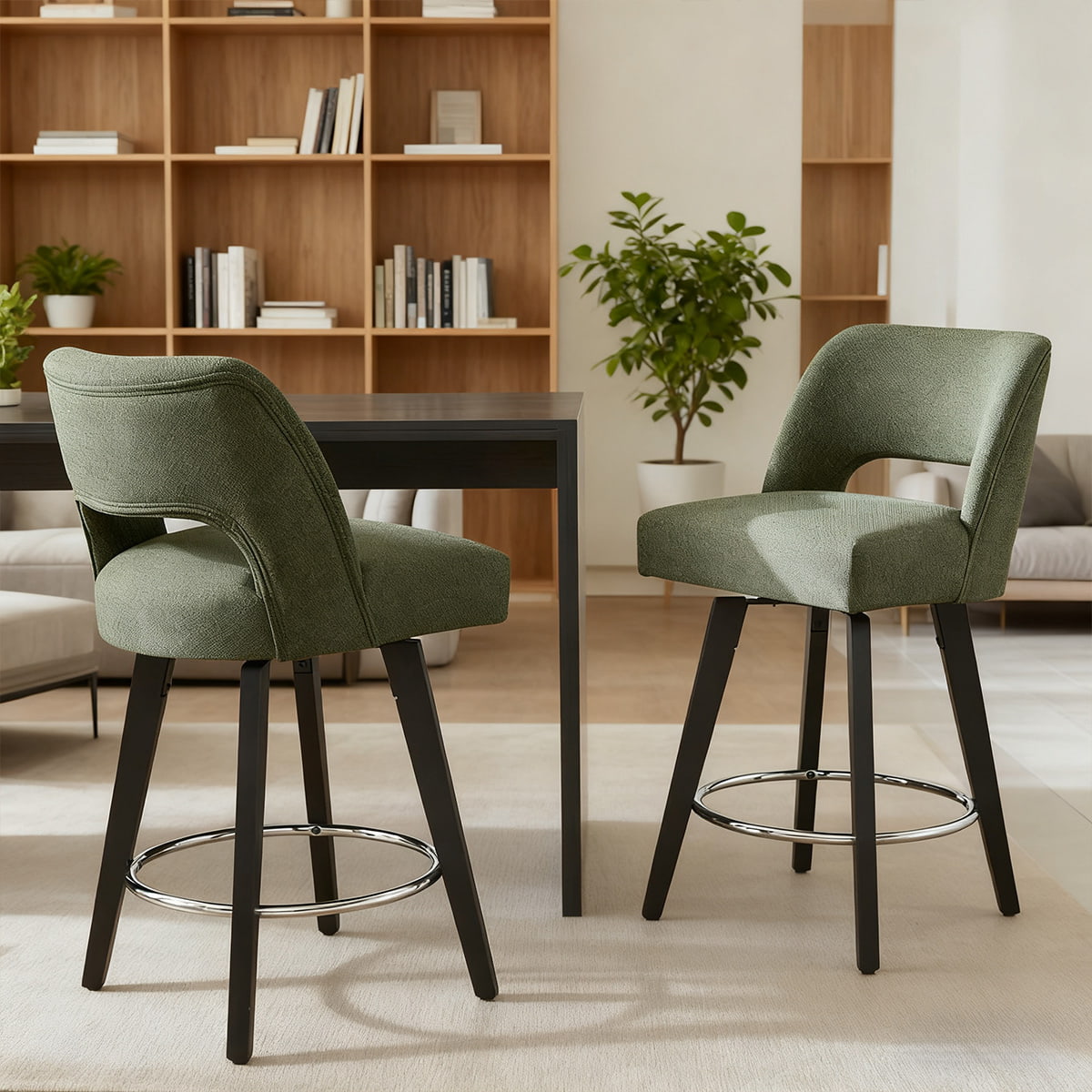
The longevity of a bar stool begins with the technical specifications of its textile. For families, selecting stain resistant fabric bar stools for families is the most effective proactive strategy. Modern performance fabrics are engineered at the molecular level to repel liquids and resist deep-fiber staining. According to the 2024-2025 Global Furniture Textiles Market Report by the International Fabrics Association (IFA), there has been a 25% increase in the integration of "nano-coated" upholstery in residential furniture. This technology creates an invisible barrier that prevents spills from penetrating the primary weave, allowing for easy "bead-off" cleaning. When compared to traditional natural fibers, these synthetic blends offer significantly higher double-rub counts, which are essential for resisting pet claws and frequent movement.
Source: International Fabrics Association - 2024 Textile Innovation Trends
Comparison: Performance Fabrics vs. Natural Fiber Upholstery
While natural fibers like cotton or linen offer a soft hand-feel, they are highly absorbent and prone to permanent staining. In contrast, performance synthetics used in durable upholstered counter stools for high traffic areas provide superior moisture wicking and abrasion resistance.
| Performance Metric | Traditional Natural Fibers | Performance Synthetics (Polyester/Olefin) |
| Liquid Absorption | High (Immediate soaking) | Low (Hydrophobic properties) |
| Abrasion Resistance | 15,000 - 20,000 Double Rubs | 50,000+ Double Rubs (Heavy Duty) |
| Cleaning Complexity | Professional solvent-based cleaning | Water-based cleaning / Soap and water |
| Pet-Friendly Rating | Low (Easily snagged by claws) | High (Tight-weave snag resistance) |
Engineered Cleaning Protocols for Daily Use
In a kitchen environment with kids and pets, daily maintenance must be efficient yet thorough. For washable fabric bar stools with backs, the cleaning protocol involves the immediate removal of particulates before they become embedded. Using a vacuum with a HEPA filter is recommended to remove pet dander and crumbs from the seams. If a spill occurs, the "blot, don't rub" technique is a standard engineering practice to avoid damaging the fabric's pile. Furthermore, the Association of Contract Textiles (ACT) released updated 2025 guidelines suggesting that the use of high-pH cleaners should be avoided on performance fabrics as they can degrade the factory-applied fluorocarbon-free water repellents over time.
Source: ACT - Voluntary Performance Guidelines for Upholstery 2025
Maintenance Intensity Comparison
The intensity of maintenance is often determined by the stool's design. A modern fabric bar stool with easy clean upholstery requires significantly fewer labor hours per year to maintain its original appearance compared to delicate tufted designs.
| Maintenance Task | Light-Use Residential Design | Durable upholstered counter stools for high traffic |
| Vacuuming Frequency | Weekly | Bi-weekly (to prevent dander buildup) |
| Spot Treatment | Specialized solvents required | Mild detergent and water |
| Professional Deep Clean | Every 6 months | Every 12-18 months (due to stain resistance) |
Structural Durability and Swivel Mechanism Maintenance
Cleaning fabric covered bar stools involves more than just the textile; the structural components must also be maintained to ensure safety. At ANJI DUOMEI, we specialize in the production of swivel bar chairs for kitchen islands, where the swivel mechanism must be kept free of hair and debris to prevent friction-induced wear. For high-traffic areas, a heavy duty fabric bar stool for kitchen island use features reinforced frames and precision-engineered gas lifts or swivel plates. Dusting the metal or wood base with a microfiber cloth prevents the accumulation of kitchen grease, which can otherwise migrate to the fabric portions and cause discoloration.
- Integrated Quality Control: Our 1,500 m² warehouse and modern plant allow for rigorous testing of material compatibility before shipping.
- OEM/ODM Flexibility: We provide engineering assistance to help B2B clients select fabrics that meet specific "rub tests" and fire retardancy standards.
- Honesty in Marketing: We only market high-quality products that have undergone mechanical stress tests to ensure they withstand the weight of daily family use.
- Efficient Sourcing: Our customer service center assists in selecting fabrics that are "pet-claw proof," reducing long-term maintenance costs for end-users.
Frequently Asked Questions (FAQ)
1. How do I remove pet hair from fabric covered bar stools?
The most effective way to remove pet hair is by using a rubber squeegee or a specialized silicone brush. These tools create static electricity that lifts hair from the weave of durable upholstered counter stools for high traffic more efficiently than traditional vacuuming.
2. Can I use a steam cleaner on stain resistant fabric bar stools for families?
While steam is effective for sanitizing, you should check the manufacturer's care code. Some stain resistant fabric bar stools for families use heat-sensitive coatings. Excessive heat may cause the protective layer to delaminate from the fibers.
3. What are the benefits of swivel bar chairs for kitchen islands with kids?
Swivel bar chairs for kitchen islands allow children to get in and out of the seat without sliding the stool across the floor. This reduces mechanical wear on the legs and prevents the stool from tipping, which is a common safety concern in busy kitchens.
4. How do I deal with sticky handprints on upholstered counter stools?
For a modern fabric bar stool with easy clean upholstery, a simple solution of distilled water and a drop of clear dish soap usually suffices. Gently dab the area and rinse with a clean, damp cloth to ensure no soap residue is left to attract future dirt.
5. Why should a heavy duty fabric bar stool for kitchen island be preferred?
A heavy duty fabric bar stool for kitchen island is engineered with a higher weight capacity and a more robust frame. This is crucial for high-traffic areas where the furniture is subjected to varied loads and frequent repositioning by pets or children.
Related Products
-
 Yangguang Industrial Park 2, Anji County, Huzhou City, Zhejiang Province, China
-
 [email protected]
[email protected]
[email protected]
[email protected]
[email protected]
[email protected]
-
 +86-18357268872
QR CODE

